Ghana's aspiration to industrialize, modernize agriculture, and create sustainable employment faces significant obstacles. Despite the necessity and achievability of this goal, fundamental challenges persist, making local production expensive and weakening the competitiveness of Ghanaian businesses. The cost and reliability of electricity are major concerns, as manufacturing, agro-processing, and other industries heavily depend on affordable and dependable energy.
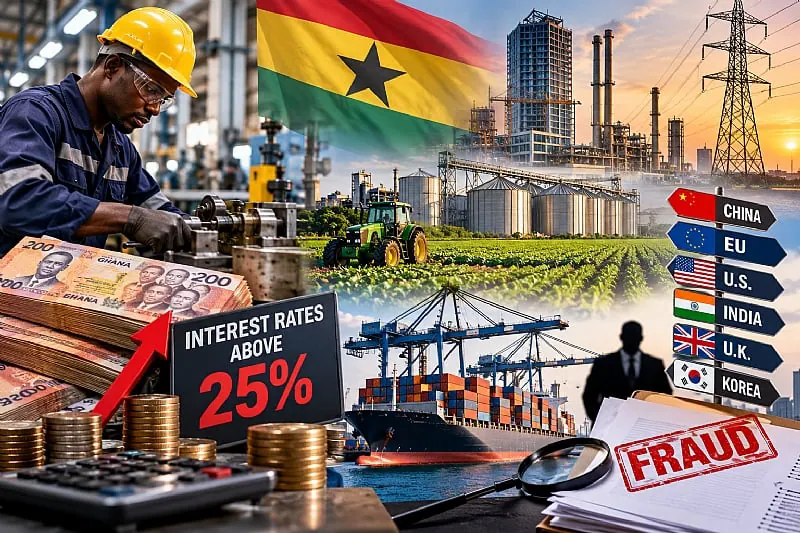
The financial difficulties within the energy sector have far-reaching implications, representing more than just an electricity problem; they are an industrialization problem. Access to affordable capital is another major obstacle, with commercial lending rates frequently exceeding 25 percent, making it difficult for businesses to borrow sustainably. This creates a contradiction, as Ghana wants businesses to manufacture locally and create jobs, yet the financial environment can make importing finished products easier than borrowing money to manufacture locally.
The government's fiscal position also affects the business environment, with high public debt constraining procurement and infrastructure investment. Payment arrears can create serious cash-flow difficulties for contractors, suppliers, and investors doing business with the public sector. For companies operating on borrowed capital, delayed payments can quickly turn profitable contracts into financial liabilities. This highlights the need for improved payment discipline and a more favorable business environment.
Foreign companies entering Ghana face intense international competition, with businesses from China, India, the European Union, and other economies competing aggressively for Ghanaian customers. European and British companies benefit from longstanding commercial relationships and established distribution networks, while Chinese suppliers have become particularly competitive in price-sensitive sectors. Ghanaian purchasing decisions are frequently determined by affordability, which explains the significant market for used and reconditioned machinery and equipment.
Fraud is another challenge facing international businesses in Ghana, with the U.S. Commercial Service in Ghana identifying 16 fraudulent entities targeting American companies in 2024. This is damaging not only to individual victims but also to Ghana's international business reputation. Government agencies and the private sector must strengthen verification systems and make it easier for foreign companies to authenticate procurement opportunities and potential business partners.
Despite these challenges, Ghana remains an attractive destination for businesses willing to understand the market. The country has political stability, a growing consumer market, significant agricultural resources, and strategic access to West African markets. Ghana's role in hosting the Secretariat of the African Continental Free Trade Area also strengthens its potential as a platform for companies seeking wider African opportunities.
To build a competitive industrial economy, Ghana must create an ecosystem that supports local businesses. This requires reliable and competitively priced electricity, access to affordable long-term capital, improved payment discipline, and support for local manufacturers to acquire modern machinery and technology. The country's industrialization agenda will ultimately be judged by whether entrepreneurs can establish factories, obtain affordable financing, produce competitively, and sell successfully at home and abroad.
Key points
- High commercial lending rates exceeding 25 percent hinder businesses' ability to borrow sustainably.
- The cost and reliability of electricity are major concerns for Ghana's industrialization ambitions.
- Ghana's industrialization agenda requires an ecosystem that supports local businesses with affordable capital, reliable electricity, and improved payment discipline.