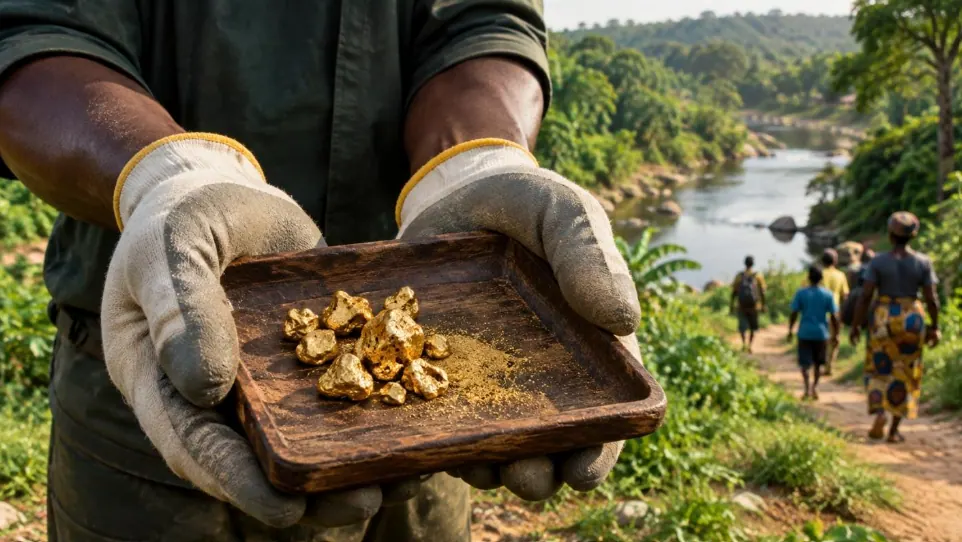
Ghana has an opportunity to make gold work not only for national wealth but also for healthier people, protected rivers, and resilient communities. The country's history with gold dates back to the colonial era when European traders named the territory the Gold Coast for its extraordinary wealth. However, this wealth came at a cost, drawing conquest, extraction, and unequal exchange. Today, Ghana's GoldBod aims to change this narrative by building a better relationship between gold, national development, and public wellbeing.
GoldBod's emphasis on responsible sourcing, traceability, and the formalization of artisanal and small-scale mining offers a practical foundation for Ghana's ambition. The organization aims to help the country retain more value from its natural resources, reduce illicit activity, and direct the gains of gold towards national progress. This includes decent livelihoods, safer work, clean water, functioning farms, healthy children, and communities that can prosper after mining has ended.
Mining creates livelihoods, and for many rural families, artisanal and small-scale mining is a vital source of income. However, poorly managed extraction can expose workers and nearby communities to dust, toxic chemicals, unsafe pits, and contaminated water. The health and environmental stakes are real, and GoldBod's goal is to help mining become safer, lawful, and more beneficial to the people living closest to it.
GoldBod can help change the equation by bringing more miners into a lawful and accountable system, one that rewards responsible practice, improves transparency, and makes it harder for illicit gold to enter the market. A traceability system can help establish where gold comes from and create a stronger incentive for legal operations to meet environmental and social standards.
The public should expect GoldBod's progress to be measured in practical outcomes, not only national figures. This includes improvements in safety for miners, water protection, land restoration, and reduced space for illegal and destructive mining. Mining communities should gain better livelihoods, stronger local services, and a meaningful voice in decisions affecting their land.
A gold sector that is trusted by communities and protects natural resources is more stable, more investable, and more valuable to Ghana in the long run. Ghana's task is not to abandon gold but to make gold serve the country's people. If GoldBod succeeds in supporting responsible mining, improving traceability, curbing illicit trade, and placing community wellbeing at the centre of the gold economy, it can help Ghana fulfil the promise of a modern Gold Shore.
GoldBod's model has drawn interest from seven African countries seeking gold governance lessons. The organization has also teamed up with the Economic and Organized Crime Office (EOCO) to track illicit financial flows in gold. In 2025, GoldBod supplied GH¢128.5 billion worth of gold to the Bank of Ghana and recorded a GH¢3.78 billion net supply gap payable to the BoG.
Key points
- GoldBod aims to strengthen oversight of the gold trade and support formal, traceable mining.
- The organization seeks to direct the gains of gold towards national progress, including decent livelihoods and healthier communities.
- GoldBod's progress will be measured in practical outcomes, including improvements in safety, water protection, and land restoration.