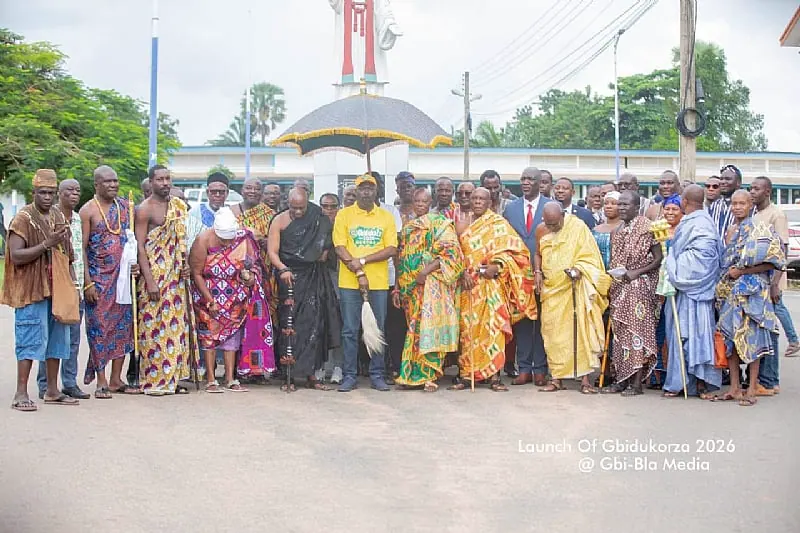
The 31st edition of the Gbi-dukor Za festival was launched on September 9, 2026, in Hohoe, Volta region. The festival, instituted in 1995, is a celebration of the cultural and traditional values of the Gbi-Dzigbe and Gbi-Nyigbe traditional areas. It is organized annually on a rotational basis between the Chiefs and people of the two Gbi-States. This year's theme, "Transforming Lives Through The Gbi-dukor Education Endowment Fund," highlights the importance of education in societal development.
The Gbi-dukor Za festival has socio-cultural and economic objectives, aiming to promote the cultural and traditional values of the two Gbi States. The festival also seeks to advertise the economic potentials of the two States, attracting investors to tap into their rich mineral resources, create employment, and drive development. The celebration has grown from strength to strength since its inception, bringing development projects to the two traditional areas and providing a platform for the Chiefs and people to address issues confronting their areas.
Historically, the Gbi-Dzigbe and Gbi-Nyigbe traditional areas share a common ancestral lineage, dating back to the migration of the Ewe ethnic groups from Nigeria to their present-day settlements. The two areas parted ways due to geographical factors such as arable land and proximity to water systems. The common cultural similarities, including language, testify to their shared heritage. The festival has cemented the bonds of friendship between the Chiefs and people of the Gbi States, reuniting them after over three hundred years of separation.
The annual celebration of the festival has unearthed the economic potentials of the two States and the creative talents of the youth. It has also placed the two traditional areas on the tourism map, locally and internationally, generating revenue for the country. The Gbi-dukor Za has become one of Ghana's celebrated traditional and cultural festivals, attracting local and foreign participation. For the people of the Gbi States, it has become a unifying force in their cultural diversity.
Despite notable achievements, some argue that thirty years of celebrating the festival could have registered more accomplishments. However, the festival has played a pivotal role in the development, progress, and unity of the two Gbi States. The adoption of this year's theme is expected to transform the level of education in the two traditional areas. The festival's founders, who have since passed away, will be remembered for their vision, which lives on.
Preparations are underway to showcase the rice traditional and cultural festival of the two states in December. The expectation is that this year's festival will be another shining example, adding to the glory of previous ones. The Chiefs and people of the two Gbi States are commended for their efforts in preserving their cultural heritage.
The Gbi-dukor Za festival has undoubtedly become an integral part of Ghana's cultural landscape. As the country looks forward to another colourful celebration, the significance of the festival in promoting unity, cultural heritage, and development cannot be overstated. The festival's impact will continue to be felt for years to come.
Key points
- The Gbi-dukor Za festival has promoted cultural heritage and unity among the Chiefs and people of the Gbi States.
- The festival has driven development and economic growth in the two traditional areas.
- This year's theme focuses on education, aiming to transform the level of education in the two traditional areas.