Ghana's strategy to accumulate foreign exchange reserves and gold has a high fiscal cost that could undermine recent improvements in public finances, according to S&P Global. The international credit rating agency published a report on Ghana's macroeconomic conditions, highlighting the potential risks associated with the government's reserve accumulation policy. This policy aims to leverage Ghana's gold resources to strengthen national reserves and support macroeconomic stability.
The Ghana Accelerated National Reserve Accumulation Policy (GANRAP) seeks to improve confidence in the economy and enhance the country's capacity to withstand external pressures. However, S&P Global estimates that implementing the programme could cost between 0.8% and 2.6% of annual Gross Domestic Product (GDP). The agency notes that the gold sector is driving reserve accumulation, but the government's strategy carries significant local currency costs.
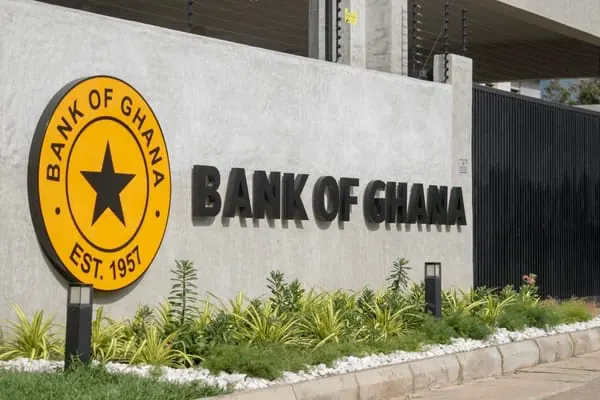
The establishment of GoldBod, a gold trading entity, is expected to insulate the Bank of Ghana from losses associated with gold trading. However, open-market sterilisation operations will continue to carry substantial costs. S&P Global estimates that GoldBod's operational costs will be close to 1.5% of GDP annually. This could put pressure on the Bank of Ghana, which recorded an operating loss of $1.25 billion in 2025.
The Bank of Ghana's balance sheet has deteriorated substantially, with its negative equity position worsening to 6.7% of GDP. The agency notes that the government's phased capital restoration programme, aimed at recapitalising the central bank through 2032, may require issuing additional government debt. This could impact Ghana's public debt, which remains susceptible to exchange rate movements.
Nearly 41% of Ghana's public debt is denominated in foreign currency, making it vulnerable to exchange rate fluctuations. S&P Global warns that these fluctuations could have a material effect on Ghana's debt-to-GDP ratio. The agency's estimates suggest that public debt may decline more slowly than expected based on headline fiscal deficits.
The implementation of GANRAP and GoldBod's operations may have significant implications for Ghana's economy. S&P Global's report highlights the need for careful consideration of the potential risks and costs associated with the government's reserve accumulation policy. The agency's warnings come as Ghana seeks to strengthen its macroeconomic stability and improve confidence in the economy.
The Ghana News Agency reported that the Finance Minister has engaged with the Association of Ghana Industries (AGI) and other leaders ahead of the 2027 Budget. This engagement may be crucial in addressing the challenges posed by the government's reserve accumulation policy and its potential impact on Ghana's economy. The government will need to carefully balance its policy objectives with the potential risks and costs associated with its strategy.
Key points
- S&P Global estimates that Ghana's FX, gold reserve strategy could cost between 0.8% and 2.6% of annual GDP.
- The Bank of Ghana's balance sheet has deteriorated substantially, with an operating loss of $1.25 billion in 2025.
- Nearly 41% of Ghana's public debt is denominated in foreign currency, making it vulnerable to exchange rate fluctuations.