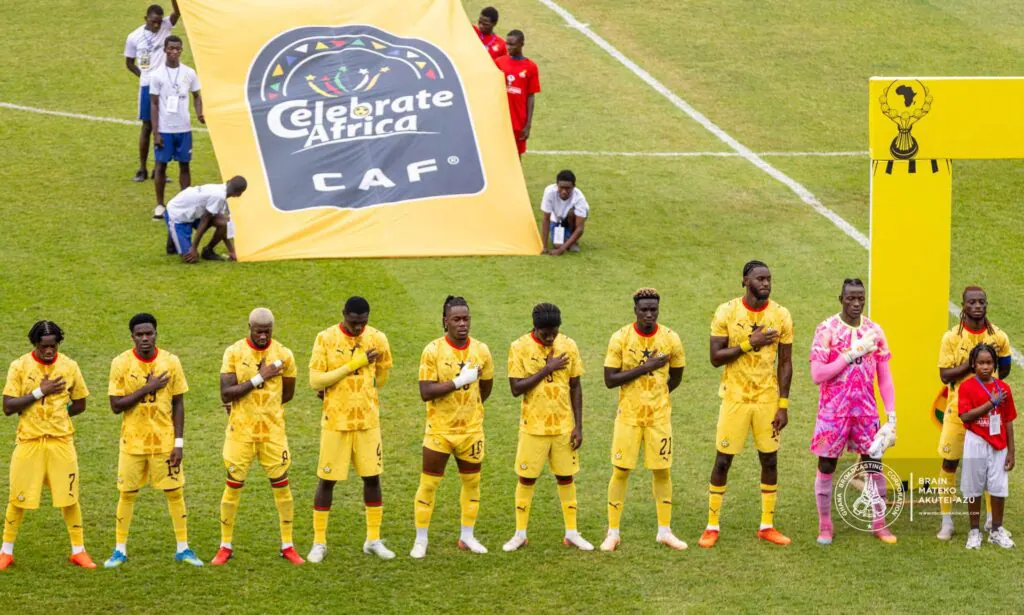
Ghana's national football team, the Black Stars, is in a precarious situation after suffering a 4-2 home defeat to The Gambia in an AFCON 2027 qualifier. The loss, coupled with a 2-0 defeat to Côte d'Ivoire, has left Ghana with zero points in Group C. The Gambia, on the other hand, has six points from two matches. The recent performances have raised concerns about the team's technical capabilities and the coaching staff's strategy.
The defeat to The Gambia has exposed deep-seated problems within the team, including defensive organisation, game management, and the team's response to momentum shifts. Despite dominating possession with 71%, Ghana only managed three shots on target, while The Gambia had four from six attempts. These statistics have sparked a renewed debate about the team's tactical decisions, substitutions, and defensive structure.
The position of coach Carlos Queiroz has come under scrutiny, with many questioning his future with the team. Queiroz has stated that resignation is not the solution and that his future rests with the Ghana Football Association (GFA) and the team's results. The GFA now faces a critical decision: to back Queiroz's project with concrete expectations or change direction. Uncertainty about the coach's position could have a detrimental impact on the team's qualification campaign.
The players have also been urged to take responsibility for their performances. Ghana was two goals ahead at home, but the team's experienced internationals failed to recognise when the game was turning against them and protect the result. This has led to accusations that the players are too quick to blame the coach for the team's shortcomings. The GFA needs to assess the team's overall performance and identify areas for improvement.
The GFA needs to look beyond the next match and develop a comprehensive football strategy that addresses the team's long-term challenges. This includes improving Black Stars recruitment and player development, coaching appointments and contracts, youth-to-senior transition, and technical structures within the GFA. The association also needs to ensure player availability and commitment, set performance standards, and establish accountability mechanisms when targets are not met.
The next qualifiers are not until the November 9-17, 2026 FIFA window, giving Ghana roughly six weeks to analyse their performances and make meaningful changes. The team needs to regroup and reassess their strategy to avoid a disastrous campaign. The 4-2 defeat has raised questions about the team's ability to qualify for AFCON 2027, and the GFA must provide clear answers about their vision, leadership, and expectations.
As Ghana prepares for the next round of qualifiers, the team faces a daunting task: a major turnaround in the remaining matches. The GFA must provide a clear direction and demonstrate a willingness to make changes to get the team back on track. The question on everyone's mind is: what exactly is the GFA building, who is responsible for it, and what changes are they prepared to make now?
Key points
- Ghana's football problems run deeper than coach Queiroz, with issues in technical review, player responsibility, and a need for a comprehensive football strategy.