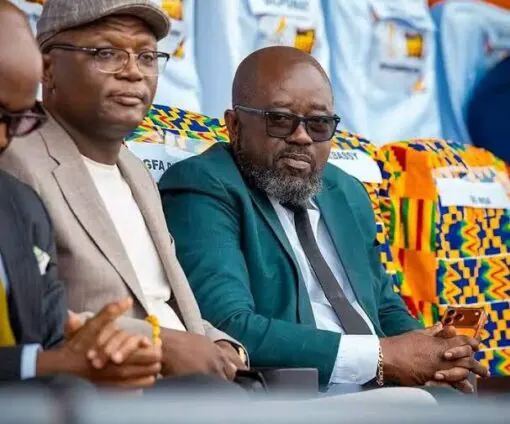
Ghana's football landscape is marred by turmoil, with the ongoing strike by pre-tertiary teachers and the protracted search for a new Black Stars coach. The five-member committee tasked with finding a suitable candidate faces a daunting challenge. Comprising experienced administrators and former players, including Stephen Appiah, Tony Baffoe, Fred Pappoe, Faisal Chibsah, and Agbesi Dzakpasu, the committee boasts a mix of institutional knowledge and understanding of the Black Stars culture. Their appointment, however, may not be enough to guarantee success.
The relationship between Ghana's national teams is symbiotic, with the fortunes of the Black Starlets (U-17), Black Satellites (U-20), and the Black Stars interlinked. Ghana's golden era from 2005 to 2017 was built on strong youth teams, which produced talented players like Derek Boateng, Addoquaye Pappoe, and Sulley Muntari. The Black Stars benefited from the success of these youth teams, qualifying for their first World Cup in 2006 and making it to the semi-finals of six consecutive AFCON tournaments.
However, the conveyor belt that feeds the Black Stars has stopped, and the national team has suffered as a result. Ghana has failed to qualify for eight men's tournaments, including the 2020 Olympics and the 2023 U-17 AFCON. The team's struggles are reflected in their poor performance in recent tournaments, including a round-of-16 exit at AFCON 2019 and consecutive group-stage exits at AFCON 2021 and AFCON 2023.
The allegations of interference in player selections at youth levels are similar to those at the senior level. The coaching turnover has also been a major issue, with seven coaches hired and fired in seven years for the Black Stars. The situation is even more dire for the Black Starlets, where nine coaches have been hired and fired in seven years. This instability has resulted in poor coaching appointments, poor squad selections, and ultimately, poor teams.
The lack of a well-thought-through, properly resourced, and credible youth program has contributed to Ghana's football woes. The best players only join the national team when they are already at the senior level, with no prior experience of playing together in a national team. This has led to the team shopping around the globe for players who can play for Ghana, rather than developing local talent.
The GFA's efforts to address these issues have been hampered by the ongoing strike by pre-tertiary teachers, which has disrupted the country's education system. The strike, which began on October 6, 2026, has left many schools closed, and the impact on the country's football development programs is yet to be seen.
As Ghana's football woes deepen, it remains to be seen how the GFA will address these challenges. The appointment of a new Black Stars coach is crucial, but it is only a short-term solution. The GFA must prioritize the development of a credible youth program to ensure the long-term success of the national team. Without a concerted effort to address these issues, Ghana's football may continue to struggle.
Key points
- Ghana's football woes are attributed to the lack of a well-thought-through, properly resourced, and credible youth program.
- The country's football landscape is marred by turmoil, with the ongoing strike by pre-tertiary teachers and the protracted search for a new Black Stars coach.
- The GFA must prioritize the development of a credible youth program to ensure the long-term success of the national team.