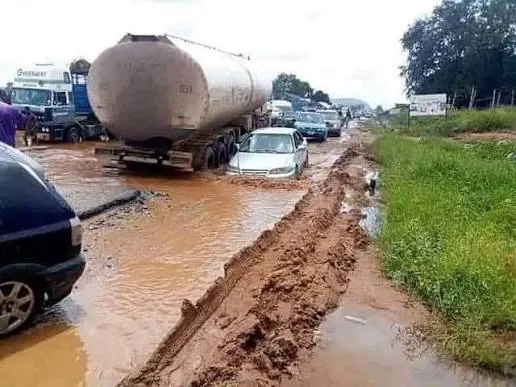
Heavy rainfall in Ghana has once again highlighted the country's struggle with poor road conditions and inadequate infrastructure. The floods have caused widespread damage, disrupting businesses, and posing a significant threat to the lives and properties of residents. As the country grapples with the aftermath of the floods, a critical question arises: are Ghana's roads being constructed and maintained to withstand the realities of its environment?
Ghana's roads are often washed away, and asphalt surfaces collapse, leaving many streets impassable. The consequences are immediate, with motorists, commuters, traders, and residents facing damaged vehicles, longer travel times, and disrupted businesses. In severe cases, lives and property are lost. The floods have presented Ghana with an uncomfortable but necessary question: are the country's roads being built and maintained to the required standards?
Ghana has several institutions responsible for road construction and quality control, including the Ministry of Roads and Highways, the Ghana Highway Authority, and the National Road Safety Commission. These institutions have the mandate to ensure that roads are properly designed, constructed, and maintained. However, despite their existence, the state of many roads across the country suggests that there is a failure to enforce these responsibilities with the required independence, professionalism, and accountability.
A lifecycle approach to road infrastructure is essential, from soil investigation and drainage design to the selection of construction materials, laying of asphalt, supervision of contractors, and subsequent maintenance. Drainage, in particular, deserves greater attention, as a well-paved road without adequate drainage is little more than an expensive temporary structure waiting for its first serious confrontation with nature. Water is one of the greatest enemies of road infrastructure, and when rainwater is not properly channeled away, it penetrates the pavement, weakens the subgrade, and accelerates deterioration.
The authorities should move beyond emergency repairs and establish systematic inspection and preventive-maintenance programs. Every major road should have a maintenance history showing when it was constructed, the contractor responsible, the materials and specifications used, the defects subsequently identified, the repairs undertaken, and the agencies responsible for inspection. Such records would make it easier to determine whether a road failed due to exceptional circumstances, poor design, defective materials, inadequate workmanship, or simply years of neglect.
To address the issue of poor road quality, quality-control processes should be transparent, technically driven, and independently verifiable. Materials should be tested by accredited laboratories, project specifications should be publicly accessible where appropriate, construction milestones should be independently certified, and payments should be tied to verifiable work rather than political connections. Professional bodies, such as the Ghana Institution of Engineers, have an important role to play in ensuring that engineering standards are not merely documents sitting on shelves.
Ultimately, the current flooding in Ghana presents an opportunity for the government to identify roads and bridges that require urgent intervention and determine the reasons for their poor condition. The government should use this opportunity to develop a comprehensive plan to address the country's infrastructure deficits and ensure that roads are built and maintained to the required standards. This will require a coordinated effort from all stakeholders, including government agencies, contractors, and professional bodies, to ensure that Ghana's roads are safe, durable, and sustainable.
Key points
- Poor road conditions and inadequate infrastructure are major contributors to the impact of floods in Ghana.
- Ghana needs to establish systematic inspection and preventive-maintenance programs to address its infrastructure deficits.
- Quality-control processes should be transparent, technically driven, and independently verifiable to ensure that roads are built and maintained to the required standards.