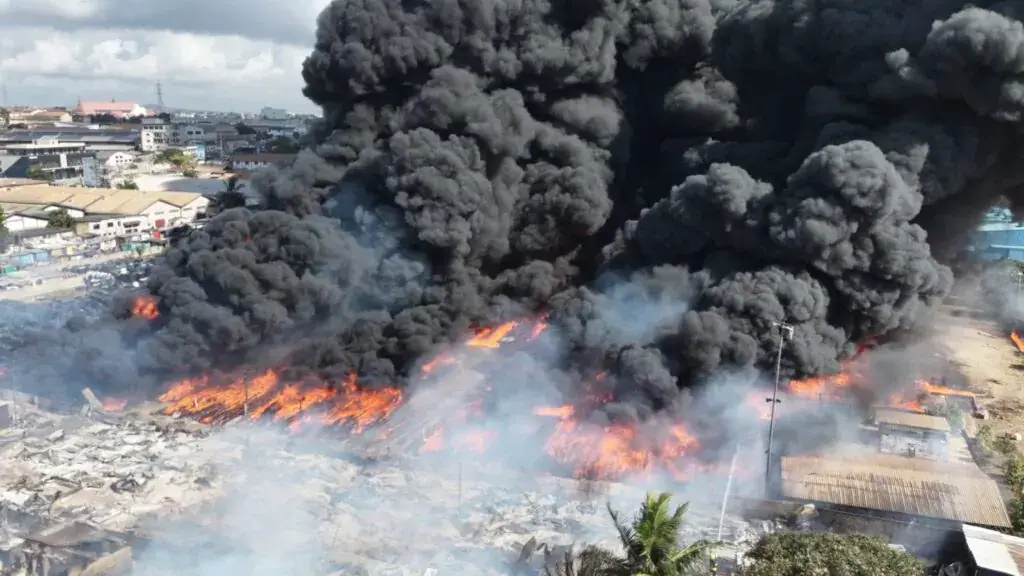
The Ghana National Fire Service reports that non-functional hydrants and the proliferation of wooden squatter settlements are significantly impeding their ability to combat fires nationwide. Firefighters often have to leave a fire scene in search of water, as nearby hydrants are not operational. This has resulted in delayed containment of fires, raising concerns about the safety of communities, especially during Ghana's dry and harmattan periods.
According to the Greater Accra Regional Fire Commander, ACFO II Rashid Nisawu, fire tenders rely on hydrants close to a fire scene to replenish their water supply while crews continue to douse the flames. However, when these hydrants are not functioning, crews are forced to pause operations and either search for alternative water sources or call for reinforcement from other stations. This adds precious minutes to every operation, which can be the difference between containing a fire and it spreading out of control.
The Ghana National Fire Service has identified a second major challenge: the increasing number of informal settlements built primarily from wood and densely packed together. These structures and their arrangement enable flames to quickly spread from one building to another. Furthermore, the tight clustering of these structures makes it difficult for fire tenders to access the area once a fire starts, exacerbating the risk.
The combination of limited water access and difficult-to-reach wooden settlements means that fires in these areas are often harder to control than those elsewhere. This raises the stakes for communities living in such settlements, particularly during periods when fires tend to spread rapidly. The GNFS is now taking steps to address these challenges and mitigate fire risks in these high-risk communities.
In response to these challenges, the GNFS has initiated a mapping exercise to identify and gather data on settlements across the country that exhibit similar risk conditions. District fire commanders have been directed to compile information on such communities, with areas like Madina, Weija, Adenta, and Amasaman already under review. This exercise aims to provide a clearer picture of the scope of the problem and inform measures to reduce fire risk in these communities.
The GNFS has not specified when the mapping exercise will be completed or what specific interventions, such as hydrant repairs or settlement clearance, might follow its findings. However, the Service emphasizes that this effort is crucial in understanding and addressing the complex issues surrounding fire safety in Ghana. By taking proactive steps, the GNFS hopes to enhance its response to fires and protect communities at risk.
The challenges faced by Ghana's fire service highlight the need for a multi-faceted approach to fire safety, involving not only the GNFS but also other stakeholders, including local authorities and community leaders. Addressing the root causes of these challenges, such as non-functional hydrants and hazardous settlements, will be essential in reducing the risk of fires and ensuring the safety of Ghanaian communities.
Key points
- The Ghana National Fire Service is mapping high-risk settlements to inform measures aimed at reducing fire risk.
- Non-functional hydrants and wooden settlements are major challenges to firefighting efforts nationwide.
- The GNFS is working to enhance its response to fires and protect communities at risk.