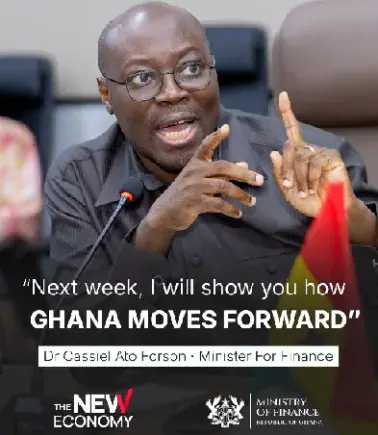
Ghana's Finance Minister, Dr. Cassiel Ato Forson, is set to present the 2027 Budget Statement and Economic Policy to Parliament on November 12, 2026. The budget will outline the government's New Economy Agenda, which aims to translate Ghana's economic recovery into tangible opportunities and prosperity for its citizens. The Minister's presentation will focus on converting the gains made in restoring the economy into jobs, improved incomes, and business growth.
The Ministry of Finance has announced that the upcoming budget will demonstrate how the government intends to deliver meaningful improvements in the livelihoods of Ghanaians. Citizens have made significant sacrifices towards getting the economy back on its feet, and the next phase must deliver productive economic activities, employment, and improved household incomes. The government's New Economy agenda forms part of its broader ambition to build a productive and competitive economy.
A major feature of the budget is the government's US$10 billion New Economy Programme, a four-year investment initiative covering 2027 to 2030. The programme aims to strengthen domestic production, promote local processing and value addition, support Ghanaian enterprises, expand exports, and create employment opportunities, particularly for young people. The programme was announced by President John Dramani Mahama.
The 2027 Budget Statement and Economic Policy is expected to signal a shift in emphasis from economic stabilisation towards productivity, investment, enterprise development, and inclusive growth. The presentation will provide an opportunity for the government to outline policies, programmes, and resource allocations intended to strengthen productive sectors, support local businesses, and create sustainable employment opportunities.
Deputy Finance Minister Thomas Nyarko Ampem announced the presentation date on October 29, 2026, during the launch of the Ghana Statistical Service's Ghana in Numbers 2025 report in Accra. He explained that the budget would mark the next phase of the government's economic agenda, moving the country from macroeconomic stabilisation towards productivity, competitiveness, job creation, and improved living standards.
Ghana has made significant progress in its economic recovery efforts, with the economy growing by 6 per cent in 2025 and inflation declining from 23.8 per cent in December 2024 to 5.4 per cent in December 2025. The country also completed the final review of its three-year, US$3 billion International Monetary Fund (IMF) Extended Credit Facility programme in July 2026.
The November 12 presentation will provide details on how the government intends to consolidate the gains made in stabilising the economy while directing investment towards productive sectors capable of generating employment and sustainable growth. Particular attention will be on proposed allocations, financing arrangements, and policy measures to support agriculture, agribusiness, industrialisation, local manufacturing, and private-sector development.
Key points
- The 2027 Budget Statement will focus on translating Ghana's economic recovery into jobs and improved incomes.
- The government's US$10 billion New Economy Programme aims to create employment opportunities and promote local processing and value addition.
- The budget presentation signals a shift in emphasis from economic stabilisation towards productivity, investment, and inclusive growth.