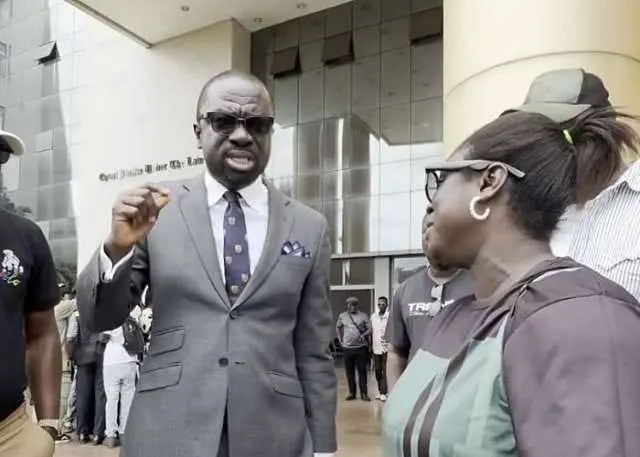
A confrontation between Ghana's Economic and Organised Crime Office (EOCO) and a sitting Member of Parliament, Nana Agyei Baffour Awuah, has sparked a public dispute over the legitimacy of EOCO's arrest attempts and the extent of parliamentary privileges. According to reports from MyJoyOnline, EOCO claims that Baffour Awuah ignored two invitations issued in February 2026, prompting the agency to attempt his arrest. However, Baffour Awuah disputes the claims, stating that the invitations were addressed to his former law firm's senior partner, not him personally.
The incident in question involved a woman EOCO agent approaching Baffour Awuah, who claims she produced neither identification nor an arrest warrant. Fearing kidnapping, he declined to get into the EOCO vehicle and instead drove to Parliament, which is currently on recess. EOCO maintains that it respects parliamentary privileges but insists that holding a parliamentary seat does not exempt anyone from the law or terminate an ongoing investigation. The agency argues that Baffour Awuah's actions were unjustified and that he should have cooperated with the agent.
A key aspect of the dispute is the route Baffour Awuah took after the encounter. MyJoyOnline's analysis raises questions about why he did not simply ask for identification and settle the matter on the spot, rather than driving off to Parliament. The outlet suggests that this detail remains unexplained and is crucial in determining the legitimacy of Baffour Awuah's claims. Furthermore, MyJoyOnline argues that if the invitations were genuinely not addressed to Baffour Awuah, he should produce the correspondence to prove it, rather than relying on public statements.
The Baffour Awuah affair is unfolding against the backdrop of a larger controversy involving France's seizure of 3.9 tonnes of cocaine linked to Ghana-connected suspects. This scandal has drawn in Ghana's narcotics enforcement apparatus, including the Narcotics Control Commission (NACOC). There have been reports of friction between various stakeholders, including a presidential running mate's aide and the maritime authority, over Ghana's sea surveillance capacity. The situation has sparked concerns about the country's international reputation and the need for a coordinated response.
The dispute has also sparked a wider conversation about citizens' rights during arrest encounters. Broadcaster Samson Lardy Anyenini has advised Ghanaians that they have a constitutional right to demand identification before submitting to any arrest. This guidance is particularly relevant in a country where public trust in law enforcement is still a concern. The Baffour Awuah case highlights the need for clarity on the rights of citizens and the powers of law enforcement agencies.
The case has significant implications for the balance between parliamentary privileges and the rule of law. Article 117 of the Ghanaian Constitution protects MPs only in matters connected to parliamentary proceedings, not as a shield from criminal investigation generally. EOCO's actions have raised questions about the extent to which MPs are accountable to the law. The situation also underscores the need for EOCO to follow due process and respect citizens' rights during arrest attempts.
The dispute is yet to be formally resolved, with no hearing, deadline, or fresh invitation date announced. Parliament remains in recess, and the wider cocaine-trafficking scandal continues to generate political and public scrutiny. The Centre for Democratic Development (CDD-Ghana) has urged the governing New Patriotic Party and the opposition National Democratic Congress to prioritize Ghana's international reputation over partisan blame.
Key points
- The dispute between EOCO and MP Baffour Awuah raises questions about the legitimacy of EOCO's arrest attempts and the extent of parliamentary privileges.
- The case has significant implications for the balance between parliamentary privileges and the rule of law in Ghana.
- The situation highlights the need for clarity on citizens' rights during arrest encounters and the powers of law enforcement agencies.