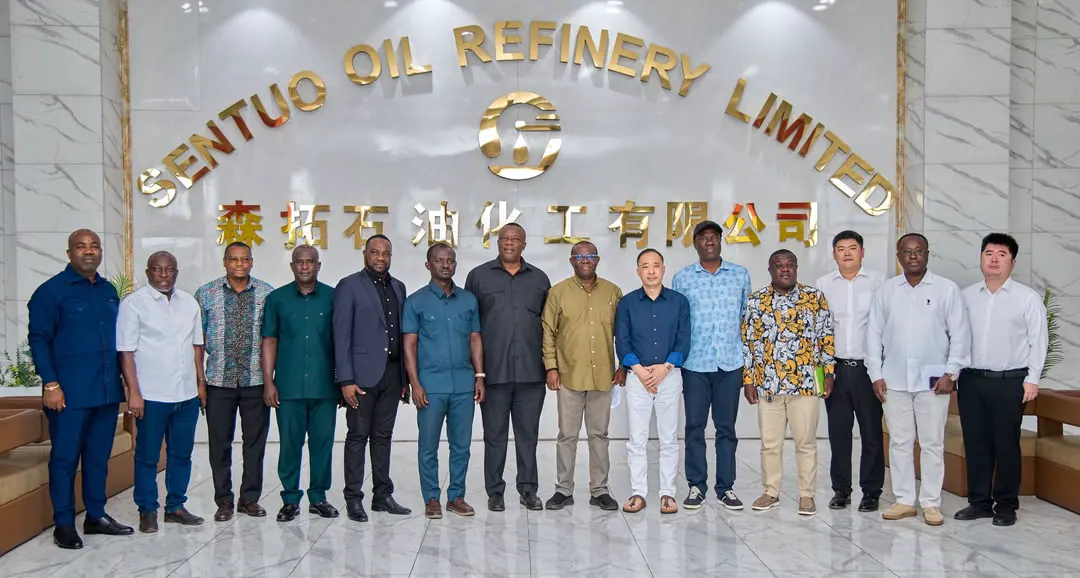
Ghana's Parliamentary Select Committee on Energy has announced plans to review the foreign-currency payment system for locally sourced crude oil. This decision follows an engagement with Sentuo Oil Refinery, where committee members toured the facility in Tema on September 22, 2026. The review aims to address concerns about the implications of the current arrangement on sustainable refinery operations. The committee acknowledged that local refineries purchase crude in foreign currency but sell refined products in Ghana cedis, creating a currency mismatch.
The Energy Committee's review, slated for October, will consider proposed changes to the National Petroleum Authority legislation and the Petroleum Revenue Management legislation. Committee Chairman Emmanuel Kwasi Bedzrah stated that the review will examine the treatment of locally produced petroleum products sold domestically. He commended Sentuo for investing in Ghana's refining capacity, creating employment, and contributing to efforts to reduce dependence on imported refined petroleum products.
Ranking Member George Kwame Aboagye emphasized the need for a workable framework that supports domestic refineries while protecting consumers and the wider economy. He urged the government to examine the operational challenges facing local processors and consider support measures to prevent them from operating at a loss. Aboagye's comments highlight the delicate balance between promoting local refining and safeguarding consumer interests.
Sentuo Group Executive Chairman and President Xu Ningquan stressed that local refining requires patient, long-term investment backed by a stable policy environment. He questioned the rationale for requiring dollar payments for crude used to produce petroleum products for Ghana's domestic market. Ningquan's remarks underscore the importance of a supportive policy framework for the sustainability of local refineries.
The Energy Committee's visit to Sentuo Oil Refinery also covered product quality, health and safety, environmental performance, and plans to improve storage and distribution infrastructure. Management's operational briefing provided valuable insights into the refinery's operations and challenges. The committee's engagement with Sentuo highlights the government's efforts to promote local refining and reduce dependence on imported refined petroleum products.
The review of crude payment arrangements is part of a broader drive towards local processing in Ghana. In August, Minister for Energy and Green Transition John Jinapor announced that President John Dramani Mahama had directed a review of whether Ghanaian crude supplied to Tema Oil Refinery could be paid for in cedis. This initiative aims to reconsider crude payment arrangements and promote local value addition.
The planned consideration of crude payment rules, refinery operations, and consumer interests in October provides an opportunity for stakeholders to examine the complex issues surrounding local refining. The Energy Committee's review will likely have significant implications for Ghana's downstream petroleum sector and the country's ambitions for stronger domestic refining.
Key points
- The Energy Committee will review foreign-currency payments for locally sourced crude oil in October.
- The review aims to address concerns about the implications of the current payment system on sustainable refinery operations.
- The committee's engagement with Sentuo Oil Refinery highlights the government's efforts to promote local refining and reduce dependence on imported refined petroleum products.