A recent incident in Ghana has brought attention to the country's emergency healthcare system, which failed to provide adequate care to a critically ill patient. Dr. Abigail Afful, a medical professional, recounted the events of the night shift when she identified a patient with refractory hypoxia. Despite her efforts to initiate an ICU referral, the ambulance crew was hesitant to transport the patient due to her critical status.
The ambulance crew requested a clinician escort from the ER to facilitate the transfer, which Dr. Afful agreed to. However, during the transfer, the oxygen tubing, which was the patient's lifeline, tore, causing oxygen to leak into the air. The crew attempted to tape the tube, but it snapped again, and they were forced to divert to a nearby facility to source mobile oxygen. This delay resulted in the patient's condition deteriorating, and she eventually went into cardiac arrest.
The situation worsened when the medical team discovered that the ambulance was not equipped with essential medical supplies, including adrenaline and syringes. Dr. Afful had to provide these from her own pocket. Furthermore, the crew was uncertain about basic resuscitation drug dosing, and the Automated External Defibrillator was not functional. Despite their best efforts, the patient sadly passed away.
Dr. Afful attributed the patient's death to systemic failures, including faulty oxygen tubing, lack of backup oxygen source, and inadequate emergency drug supply. She also highlighted the crew's inadequate training on drug administration during cardiac arrest and the absence of a protocol for primary oxygen delivery failure. These failures, she emphasized, are preventable and someone's responsibility.
The incident has sparked concerns about the state of Ghana's emergency healthcare services. Dr. Afful formally called for an immediate audit of ambulance emergency drug stocks, oxygen delivery equipment, and resuscitation readiness. She also advocated for mandatory crew training on drug administration during cardiac arrest. The National Ambulance Service has faced criticism in the past for its response to emergencies and equipment maintenance.
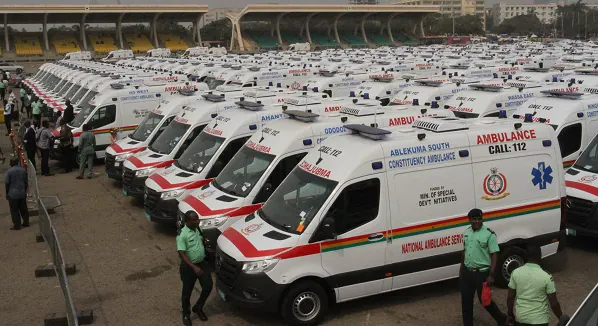
According to reports, 127 out of 318 ambulances in Ghana are currently grounded due to their age. The country's healthcare system has also been criticized for lacking local paramedic training programs. The Deputy Health Minister recently revealed that Ghana has only about eight paramedics in the whole country. These statistics raise concerns about the country's preparedness to handle medical emergencies.
The incident has sparked a national conversation about the need for improvements in Ghana's emergency healthcare services. Dr. Afful's account highlights the need for a systematic approach to addressing these issues, rather than relying on individual improvisation. The Ministry of Health and the National Ambulance Service have yet to comment on the incident and the proposed audit and training programs.
Key points
- The incident highlights systemic failures in Ghana's emergency healthcare services, including inadequate equipment and training.
- The country's ambulance fleet is aging, with 127 out of 318 ambulances currently grounded.
- Ghana lacks local paramedic training programs, with only about eight paramedics in the country.