The Ministry of Education in Ghana has proposed setting aside 2% of the Ghana Education Trust Fund (GETFund) annual allocation as an emergency intervention fund. This fund aims to enable the government to respond swiftly to crises affecting schools and learners. Education Minister Haruna Iddrisu announced the proposal, which has the backing of the Minister for Finance, Dr. Cassiel Ato Forson. The goal is to provide the Ministry with greater financial flexibility to address emergencies such as conflicts, floods, and other disasters that disrupt teaching and learning.
The proposal comes amid growing concerns over the impact of conflicts, disasters, and other emergencies on children's access to education, particularly in vulnerable communities. Research by Associates for Change, a Ghanaian research and consulting organization, indicates that West Africa accounts for the largest proportion of out-of-school children on the African continent. Many of these children live in communities affected by insurgencies and other forms of conflict, exposing them to prolonged disruptions to their education.
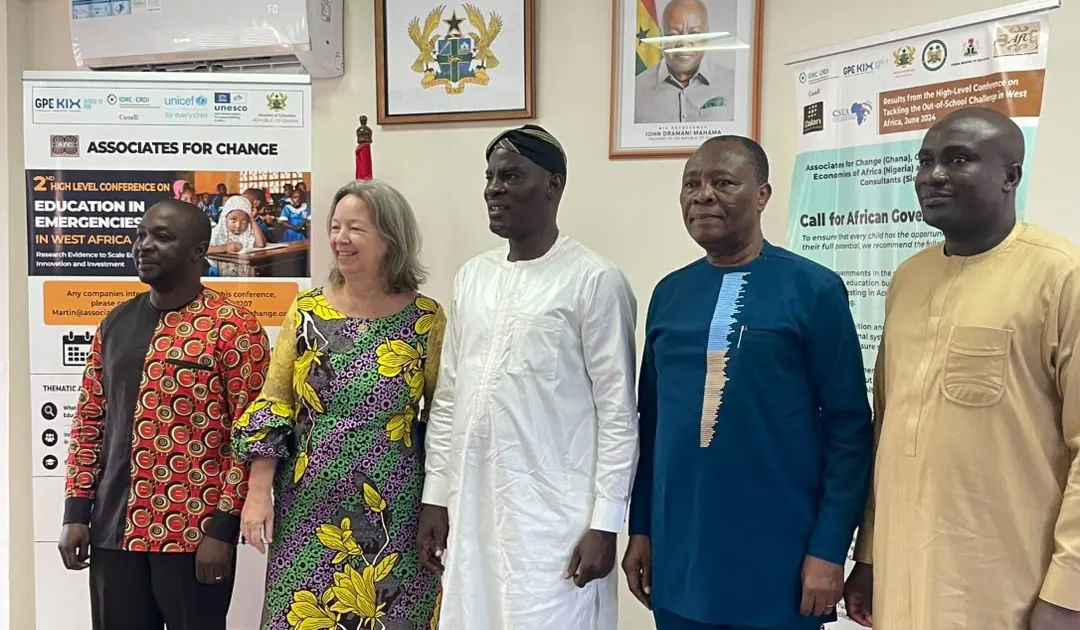
The Education Minister made the announcement during an engagement with Associates for Change on September 24. The discussion formed part of preparations for the second High-Level Conference on Education in Emergencies in West Africa. This conference is expected to explore African-led approaches to protecting children and ensuring continuity of education during periods of crisis. The Minister emphasized that the proposed emergency fund would provide the Ministry with the resources needed to respond more quickly when crises occur.
Director and Founder of Associates for Change, Dr. Leslie Casely-Hayford, shared findings from the organization's research on education in emergencies in Ghana and across the region. She highlighted the importance of preparing teachers to work effectively in communities that face recurring challenges such as flooding, climate-related disasters, and insecurity. Dr. Casely-Hayford recalled an earlier policy under which trainee teachers were bonded to district education offices to encourage them to return and serve in their communities after completing their training.
According to Dr. Casely-Hayford, research by Associates for Change suggests that such an approach can help teachers better understand and respond to the specific circumstances of the communities in which they work. This approach allows teachers to contextualize their training programs, making them more equipped to serve in districts affected by flooding, climate change, or insurgencies. Additionally, Dr. Casely-Hayford stressed the need to equip teachers with skills to provide psychosocial support to children and colleagues affected by emergencies.
Stakeholders at the engagement emphasized that conflicts, disasters, and other emergencies pose a significant threat to children's access to education and can deepen existing inequalities. They stressed that stronger emergency preparedness, adequate financing, and sustained investment in education would be essential to maintaining learning when crises occur. The proposed 2% GETFund emergency allocation is expected to form part of broader efforts to strengthen Ghana's capacity to respond to emergencies and minimize disruptions to schooling.
The upcoming high-level conference will bring stakeholders together to examine how countries in West Africa can develop and implement African-led solutions to protect children and ensure continuity of education during emergencies. The Ministry's proposal and the conference reflect a growing recognition of the need for proactive measures to address the impact of crises on education in West Africa. By investing in emergency preparedness and response, Ghana and other countries in the region can work towards ensuring that children's education is protected and continued, even in the face of adversity.
Key points
- The Ministry of Education proposes a 2% allocation from GETFund for emergency interventions in crisis-affected schools.
- The proposal aims to enhance the Ministry's financial flexibility to address emergencies disrupting teaching and learning.
- Stakeholders stress the importance of emergency preparedness, adequate financing, and sustained investment in education to maintain learning during crises.