The Bank of Ghana has reported a significant improvement in consumer and business confidence, according to its August 2026 confidence surveys. The increasingly positive sentiment is attributed to a comparatively stable macroeconomic environment and stronger expectations for economic expansion. This development is a welcome sign for Ghana's economy, which has been working to recover from past challenges.
The Central Bank's latest assessment reveals a marked acceleration in economic activity, with the Composite Index of Economic Activity recording an annual growth of 14.9 per cent in July 2026. This represents a substantial increase from the 6.1 per cent registered during the corresponding period of 2025. The Bank attributed the stronger performance to developments across several important components of economic activity.
The improvement in economic momentum comes against a backdrop of substantially lower inflation than a year earlier. However, consumer price pressures edged upwards in August, with headline inflation climbing to 5.0 per cent from 4.6 per cent in July 2026. Despite this modest increase, the inflation rate remains considerably below the 11.5 per cent recorded in August 2025.
The latest increase in inflation was principally associated with developments in the non-food segment of the economy. Non-food inflation rose to 6.8 per cent in August from 6.1 per cent in July, reflecting the transmission of higher utility tariffs into consumer prices as well as elevated crude oil prices. In contrast, food inflation eased marginally to 3.0 per cent from 3.1 per cent in July.
The Ghana Statistical Service reported that services continued to constitute a significant source of inflationary pressure during August. Housing, water, electricity, gas, and other fuels represented the largest contributor to the overall inflation rate. Despite the month-to-month increase in headline inflation, the Bank of Ghana emphasised that the 5.0 per cent rate remained comfortably below the lower boundary of its medium-term inflation target range.
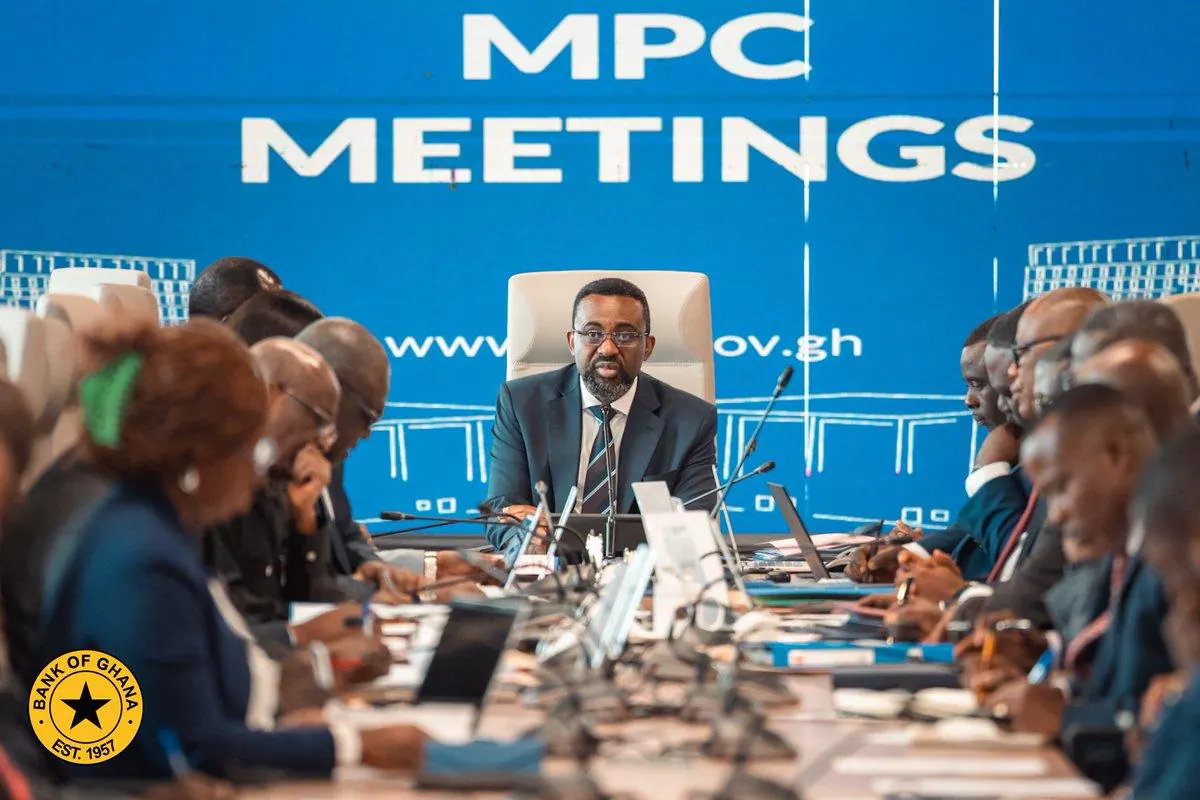
The Central Bank's September 2026 economic data indicate that private sector credit has strengthened significantly, while banking sector conditions have remained relatively robust. At the September MPC briefing, Governor Dr Johnson Pandit Asiama said private sector credit growth had rebounded strongly, while the banking sector remained solvent, profitable, and liquid.
The Bank of Ghana's 132nd Monetary Policy Committee meeting maintained the monetary policy rate at 14 per cent for the third consecutive time. The decision was taken against the backdrop of continued improvements in domestic economic conditions alongside renewed external and inflationary risks. The latest indicators present an economy experiencing stronger real sector activity and improved sentiment.
Key points
- Ghana's economy grew 14.9% in July 2026.
- Consumer price pressures edged upwards in August, with headline inflation climbing to 5.0 per cent.
- The Bank of Ghana maintained the monetary policy rate at 14 per cent for the third consecutive time.