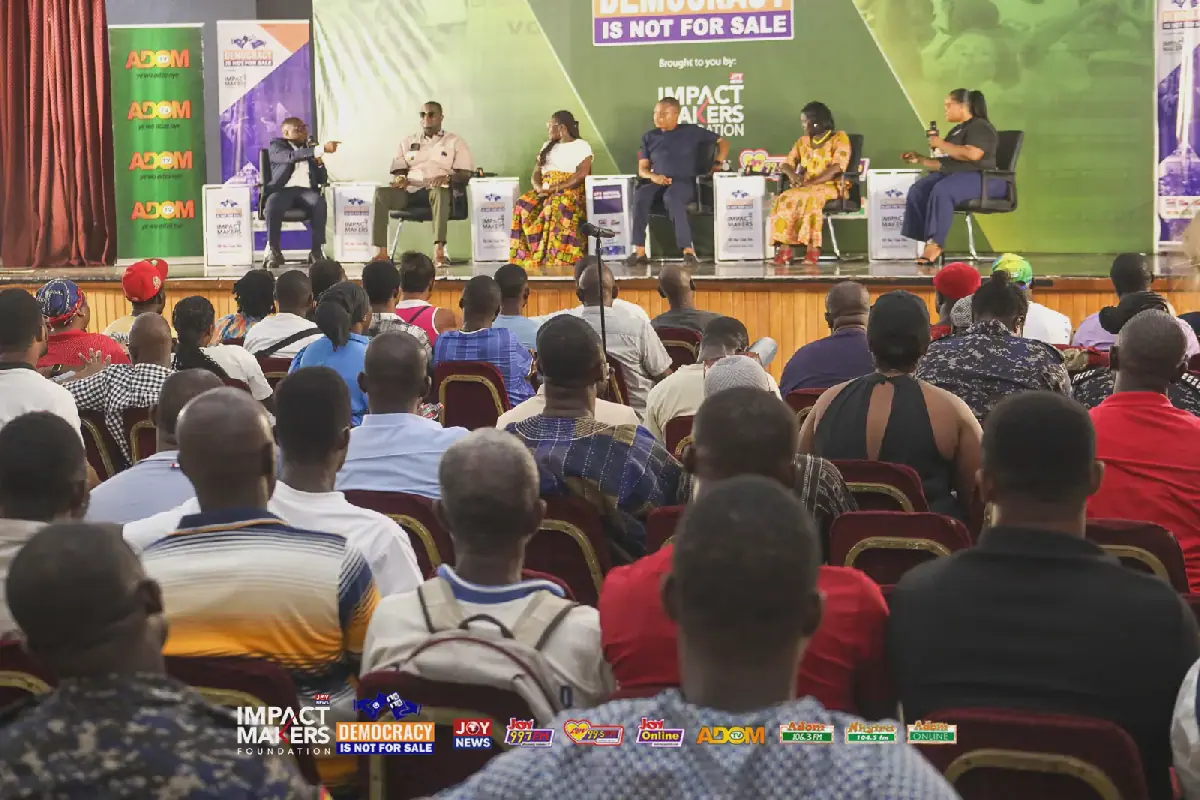
The Central Regional edition of the "Democracy Is Not For Sale" programme was held in Cape Coast, bringing together political actors, electoral officials, and members of the public to discuss the causes and consequences of vote-buying. Participants expressed concerns that the practice is undermining democratic accountability and threatening Ghana's political future. The forum, held at the Centre for National Culture, aimed to explore ways to address the issue.
Participants at the forum had divergent views on the issue of vote-buying. Some argued that they would continue accepting money and gifts from politicians because elected leaders often fail to deliver development to their communities. Others condemned the practice, saying it encourages corruption by allowing individuals with deep pockets to secure political positions at the expense of candidates with credible ideas and development plans.
Prof Jonathan Asante Okyere, a Political Science lecturer at the University of Cape Coast, identified poverty and greed as major factors driving the practice of vote-buying. He warned that the increasing monetisation of elections could erode democratic trust and lead to state capture. According to Prof Okyere, this could result in political power being concentrated in the hands of wealthy individuals who can afford to finance expensive campaigns and offer inducements to voters and delegates.
Richard Takyi-Mensah, Central Regional Secretary of the New Patriotic Party (NPP), called on political parties to sanction aspirants found culpable of vote-buying. He cited the controversy surrounding the NDC's Ayawaso East parliamentary primaries, where allegations emerged that aspirant Baba Jamal distributed television sets to delegates. Takyi-Mensah's comments were echoed by Metropolitan Chief Executive of Cape Coast, George Justice Arthur, who noted that vote-buying had extended beyond political elections into churches, associations, and family leadership contests.
Gloria Boahemaa Asante, District Electoral Officer for Abura-Asebu-Kwamankese, cautioned that voters who sell their conscience risk losing the ability to demand accountability from elected leaders. She said accepting inducements could compromise voters' freedom to choose candidates they genuinely believe can represent their interests. The discussions highlighted the complex factors sustaining vote-buying, including economic hardship, greed, broken campaign promises, and declining public confidence in political leadership.
The forum concluded with calls for stronger enforcement of electoral rules, greater accountability from political parties, and sustained civic education to protect the integrity of Ghana's democratic process. Participants and speakers emphasised the need for collective action to address the issue of vote-buying and ensure that Ghana's democracy is not undermined by the practice. The Central Regional edition of the "Democracy Is Not For Sale" programme is part of a broader effort to engage stakeholders in discussions on the issue.
The issue of vote-buying has significant implications for Ghana's democracy, and stakeholders are urging for immediate action to be taken to address the problem. With the country's political future at stake, it remains to be seen how effective the efforts to curb vote-buying will be.
Key points
- Poverty and greed are major factors driving the practice of vote-buying in Ghana.
- Vote-buying has extended beyond political elections into churches, associations, and family leadership contests.
- Stakeholders are calling for stronger enforcement of electoral rules and greater accountability from political parties to address the issue.