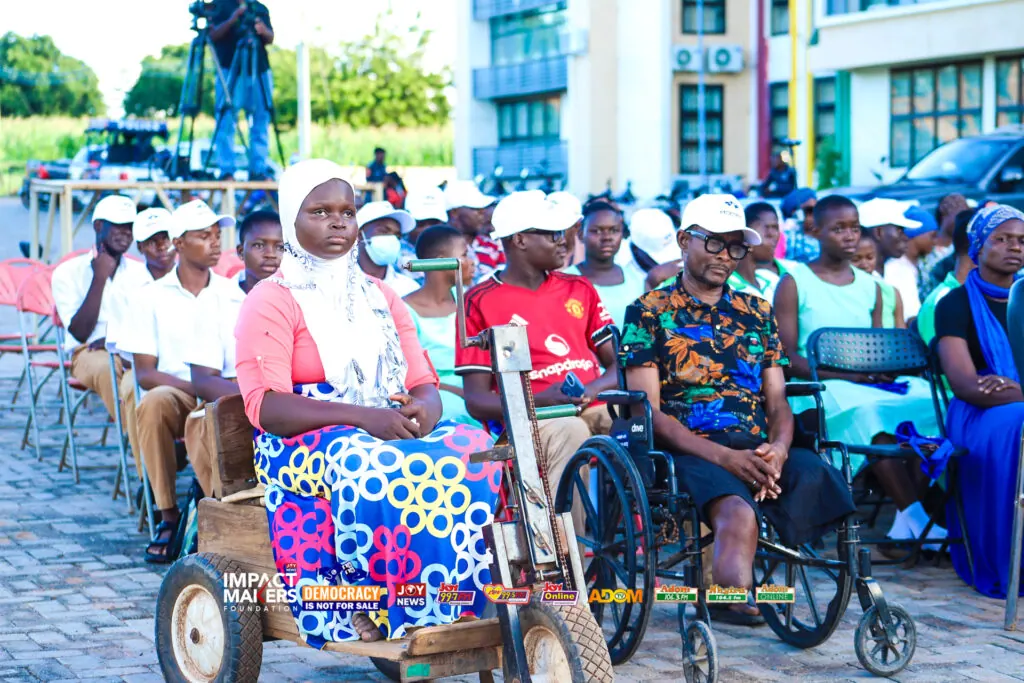
The Queen Mother of the Damongo Traditional Area, Alijata Haruna, has identified poverty, illiteracy, and limited employment opportunities as key factors contributing to the acceptance of vote-buying among some women in Ghana's Savannah Region. She made these remarks at the "Democracy is Not For Sale" forum in Damongo, organized by JoyNews on September 25. According to Alijata Haruna, economic hardship makes some women more willing to accept money and other items offered by political actors during election periods.
Alijata Haruna noted that the immediate economic needs of some women can make it difficult for them to reject offers of money or goods from political actors. She emphasized that addressing the underlying socio-economic conditions affecting women is crucial in tackling the acceptance of vote-buying. The Queen Mother's comments were in response to a question about why some voters regard cash received during elections as a normal gesture, despite concerns that such inducements could influence their voting decisions.
The "Democracy is Not For Sale" forum is part of efforts to encourage public discussion on electoral integrity and the factors that can undermine the democratic process. The forum brought together stakeholders to discuss the issue of vote-buying and its implications for Ghana's democracy. Alijata Haruna's remarks highlight the need for a more nuanced approach to addressing the root causes of vote-buying, rather than just its symptoms.
According to Alijata Haruna, the high illiteracy rate among women in the Savannah Region is a significant contributor to the acceptance of vote-buying. She noted that women in the region often prioritize their immediate economic needs over the potential long-term consequences of accepting money or goods from political actors. This mindset, she argued, can be changed through education and economic empowerment.
The Queen Mother's comments have sparked a renewed debate about the role of socio-economic factors in shaping voting behavior in Ghana. Many have called for increased investment in education and economic empowerment programs for women, as a way to reduce the vulnerability of women to vote-buying. The government and civil society organizations have been urged to work together to address these underlying issues.
The "Democracy is Not For Sale" forum has generated significant interest and discussion in Ghana's Savannah Region. The forum has provided a platform for stakeholders to engage with the issue of vote-buying and explore potential solutions. Alijata Haruna's remarks have been seen as a significant contribution to the debate, highlighting the need for a more comprehensive approach to addressing the root causes of vote-buying.
The issue of vote-buying remains a significant challenge to Ghana's democracy. Despite efforts to address the problem, vote-buying continues to be a feature of Ghana's electoral landscape. The "Democracy is Not For Sale" forum has highlighted the need for a sustained and multi-faceted approach to addressing the issue, including education, economic empowerment, and electoral reforms.
Key points
- Poverty, illiteracy, and unemployment are key factors driving the acceptance of vote-buying among some women in Ghana's Savannah Region.
- Addressing the underlying socio-economic conditions affecting women is crucial in tackling the acceptance of vote-buying.
- Education and economic empowerment programs for women can help reduce the vulnerability of women to vote-buying.