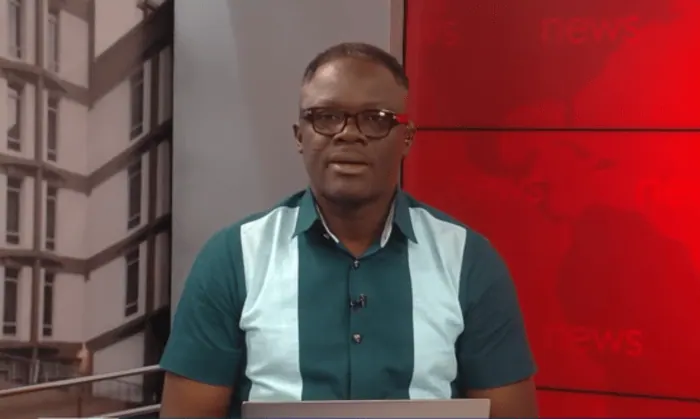
The attempted arrest of Ghanaian Member of Parliament for Manhyia South, Nana Agyei Baffour Awuah, at the Accra High Court on September 23, 2026, has sparked a renewed debate about the constitutional provisions governing the arrest of MPs. This incident has brought to the fore questions about the extent of parliamentary immunity and the procedures required for the arrest of a sitting MP. According to Article 117 of Ghana's 1992 Constitution, civil or criminal processes from any court or place outside Parliament shall not be served on, or executed in relation to, the Speaker or a member or the Clerk to Parliament while they are on their way to, attending at, or returning from, any proceedings of Parliament.
The Constitution does not explicitly grant MPs immunity from arrest throughout the entire duration of a parliamentary meeting or session. Article 117 aims to protect Parliament from interference with its proceedings, but it does not extend to personal immunity from the ordinary criminal law. Article 17 of the Constitution emphasizes that all persons are equal before the law and prohibits discrimination on grounds including social or economic status. This implies that parliamentary privilege should not be used to shield MPs from the law.
The issue of parliamentary immunity and arrest procedures has been a subject of contention in Ghana. In 2021, the MP for Madina, Dr. Francis-Xavier Sosu, was sought by the Police following incidents associated with a demonstration he led in his constituency. He invoked parliamentary privilege, sparking resistance from his party and others. Lawyer Samson Lardy Anyenini issued a writ at the Supreme Court, challenging aspects of the parliamentary arrangement governing the service of process and arrest of an MP.
The Supreme Court case, which remains pending, seeks to determine whether the Speaker's permission is required before an MP can be arrested and whether the constitutional expressions "attendance" and "proceedings of Parliament" can be stretched to encompass the entire duration of a parliamentary session or meeting. The plaintiffs argue that the Speaker's role should be limited to notification, rather than permission, to ensure that parliamentary privilege is not abused.
On May 21, 2026, Speaker Alban Sumana Kingsford Bagbin clarified that security agencies do not require his permission to arrest or invite an MP but must notify him to determine any applicable parliamentary privilege or immunity. This distinction between notification and permission is crucial in ensuring that the constitutional rights of MPs are protected while also allowing for the effective administration of justice.
Another misconception exposed by this controversy is that not every lawful arrest requires a warrant. Section 10 of the Criminal and Other Offences (Procedure) Act, 1960 (Act 30) permits arrest without a warrant in specified circumstances, such as where an offence is committed in the presence of a police officer or where there are reasonable grounds for suspecting that a person has committed an offence.
The Economic and Organised Crime Office (EOCO) and the Office of the Special Prosecutor have police powers that allow them to arrest without a warrant in certain circumstances. However, the absence of a requirement for a warrant does not create an unlimited power of arrest; there must still be lawful authority and lawful grounds for the particular arrest. The circumstances surrounding the attempted arrest of Baffour Awuah by EOCO officers are still unclear, and the matter is likely to continue to generate debate about the balance between parliamentary privilege and the rule of law.
Key points
- The Constitution does not grant MPs immunity from arrest throughout the entire duration of a parliamentary meeting or session.
- The Speaker's role in the arrest of an MP is limited to notification, rather than permission.
- Not every lawful arrest requires a warrant, and certain agencies have police powers to arrest without a warrant in specified circumstances.