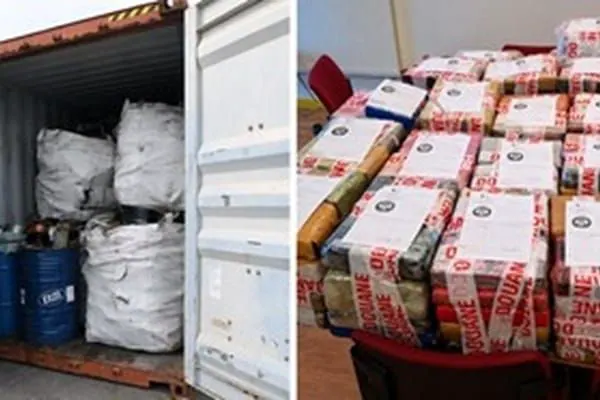
Ghana has re-emerged as a significant player in the global cocaine trade, nearly two decades after initial warnings about the country's involvement. In March 2025, National Intelligence Bureau operatives intercepted a tipper truck at Pedu Junction in Cape Coast, discovering 143 sacks of cocaine weighing 2,974 kilograms. Further operations yielded an additional 345.07 kilograms, totaling 3,319.66 kilograms of cocaine, valued at over $350 million.
The March 2025 seizure was a significant blow to the cocaine trade, with the driver and his mate arrested and subsequent suspects picked up. By July 2025, Interior Minister Mohammed Muntaka Mubarak informed Parliament that four individuals had been arrested and granted bail, while two prime suspects remained at large. The cocaine was eventually destroyed under a court order. This seizure highlighted Ghana's role in the cocaine trade, with the country's location making it an attractive transit point.
Ghana's connection to the cocaine trade was further solidified in June 2025, when Dutch customs officers discovered 4,500 kilograms of cocaine hidden in timber from a Ghanaian company at the port of Amsterdam. The Dutch Public Prosecution Service disclosed that the timber was destined for a company in Germany, which was suspected of being a front for international drug transportation. A 69-year-old Amsterdam man was detained as part of the investigation.
The Dutch authorities made another significant discovery in November 2025, at Amsterdam harbour, where a container carrying food products from Ghana was found to contain over 250 kilograms of cocaine. The Dutch authorities noted that there was no indication that the British company receiving the cargo was involved in the drugs. This seizure further emphasized Ghana's connection to the global cocaine trade.
There are concerns about the lack of transparency in Ghana's handling of high-profile cocaine cases. In February 2026, the National Anti-Crime Organisation (NACOC) arrested a suspect at Kotoka International Airport for allegedly attempting to export cocaine concealed in packaged gari. Despite the suspect being described as a senior figure connected to a well-known Ghanaian food business, NACOC declined to name the suspect or provide updates on the case.
The lack of transparency in high-profile cases has raised questions about whether there is a double standard in Ghana's justice system. While ordinary Ghanaians arrested with cannabis are publicly named and shamed, those involved in high-profile cocaine cases seem to be treated differently. This has sparked concerns about the influence of money and connections in Ghana's justice system.
To effectively combat the cocaine trade, Ghana's drug enforcement agencies must be prepared to follow the money and connections wherever they lead. This may involve investigating wealthy businessmen, security officials, politicians, or parliamentarians if the evidence dictates. With multiple tonnes of cocaine seized in recent years, it is clear that Ghana has a significant role to play in disrupting the global cocaine trade.
Key points
- - 3.3 tonnes of cocaine were intercepted in Ghana in March 2025, valued at over $350 million. - Dutch authorities discovered 4,500 kilograms of cocaine hidden in timber from a Ghanaian company at the port of Amsterdam in June 2025. - There are concerns about the lack of transparency in Ghana's handling of high-profile cocaine cases, with some suspects not being publicly named.