For fishing families along Ghana's coastline, climate change is a pressing concern that affects their homes, livelihoods, and future. Rising sea levels, coastal erosion, flooding, and changing marine ecosystems are putting growing pressure on communities that depend on the ocean. This challenge extends beyond Ghana, with coastal communities across Africa facing similar threats as governments seek to unlock the economic opportunities of the continent's blue economy.
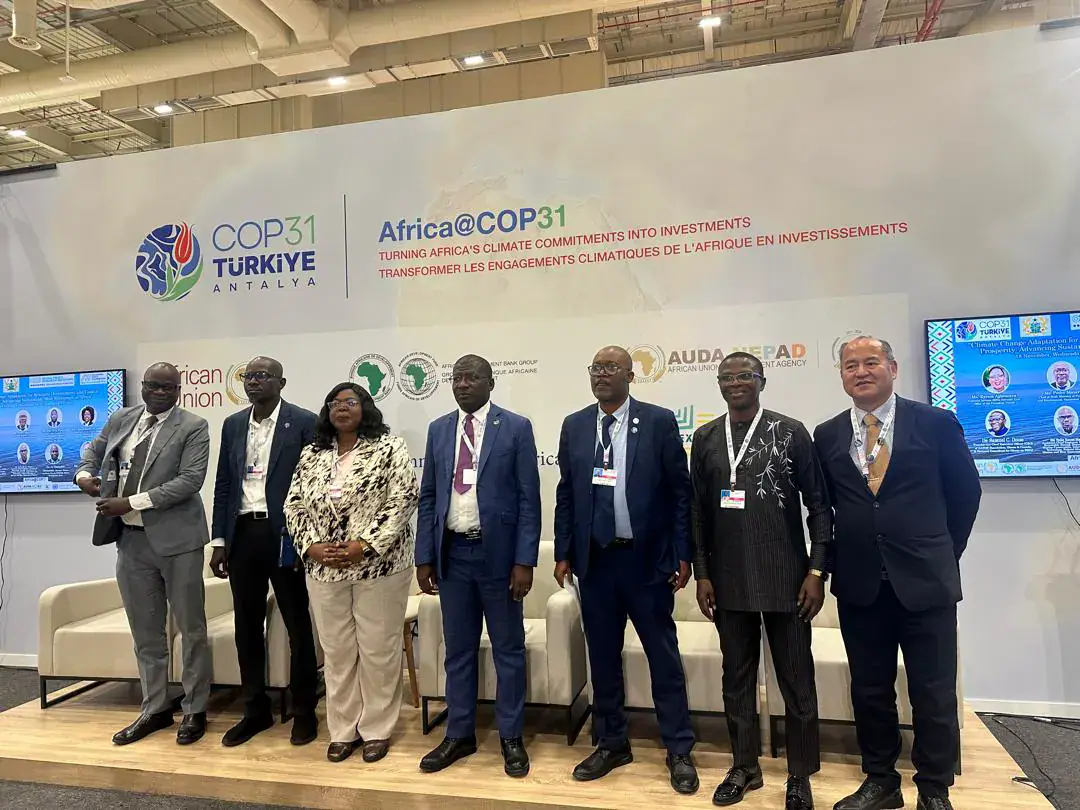
At a roundtable discussion on climate change adaptation at COP31 in Antalya, Türkiye, experts and development representatives warned that Africa's ambitions for a sustainable blue economy could be undermined without climate adaptation, coastal protection, and sustainable financing. Ghana's situation is particularly urgent, with its coastline supporting approximately 30% of its population and fishing providing livelihoods for about 10% of the people. The country's coastline is eroding at an average rate of 0.86 meters annually, with sea levels projected to rise by 23.4 centimeters by 2060.
Technical Advisor to the SDGs Advisory Unit at the Office of the President, Eyram Agbemava, emphasized that climate adaptation and coastal resilience are fundamental to Ghana's economic development, food security, livelihoods, and long-term national prosperity. To address the challenge, Ghana is pursuing a combination of policy, institutional reforms, and practical interventions. The country published its Sustainable Ocean Plan in November 2025, providing a national framework for managing and protecting its marine and coastal environment.
Ghana's National Blue Economy Policy and Strategy aims to align ocean wealth, knowledge, finance, equity, safety, and security within a coordinated development framework. The country also launched its first National Adaptation Plan in December 2025 to identify climate vulnerabilities and prioritize interventions across sectors. At the district level, climate hazard and vulnerability assessments are being undertaken across 39 districts, including adaptation planning for vulnerable coastal areas.
Ghana has undertaken several interventions, including mangrove and wetland restoration, coastal protection, early warning systems, and the integration of climate risks into infrastructure planning. The country has also declared its first marine protected area, covering approximately 703 square kilometers in the Western Region, with further areas expected to follow. These efforts aim to move beyond emergency responses towards long-term adaptation measures.
The growing pressure on coastal settlements necessitates a sustained and coordinated response. Ghana's experience highlights the need for climate adaptation, coastal protection, and sustainable financing to be central to development planning. The country's progress in developing and implementing policies and strategies is a step towards addressing the challenges facing its coastal communities.
As Ghana continues to implement its commitments, translating these into lasting protection remains a challenge. The country's experience and lessons learned can inform efforts to support coastal communities across Africa in addressing the threats posed by climate change. Effective adaptation and resilience measures will be crucial in ensuring the long-term sustainability of the blue economy and the well-being of coastal communities.
Key points
- Climate change poses significant threats to coastal communities in Ghana and across Africa, affecting livelihoods and homes.
- Ghana is taking steps to address the challenge through policy, institutional reforms, and practical interventions, including the development of a Sustainable Ocean Plan and a National Blue Economy Policy and Strategy.
Reporting sources
- Africa’s coastal communities face uncertain future as climate threats expose blue economy vulnerabilities · Ghana Broadcasting Corporation