Ghana's efforts to strengthen its resilience to climate change require substantial investment, with the Environmental Protection Authority (EPA) estimating that $22.6 billion will be needed to deliver the country's climate actions by 2030. This significant funding requirement highlights the scale of resources needed to move Ghana's climate commitments beyond policy documents and into practical interventions. The interventions aim to protect communities, infrastructure, and livelihoods from growing climate-related risks.
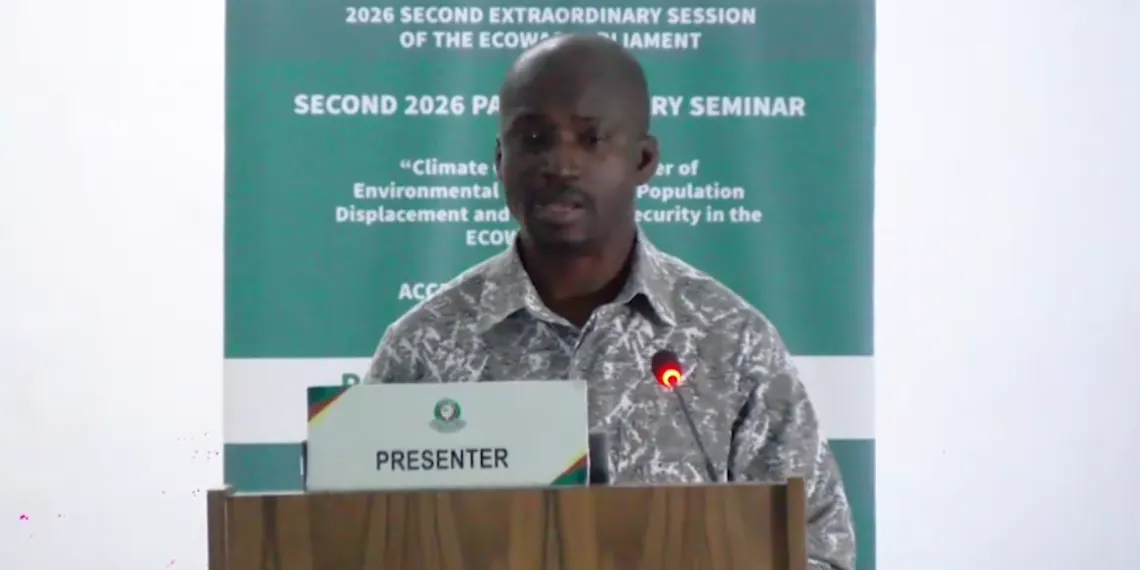
The EPA's Senior Programme Officer at the Climate Change and Ozone Directorate, Dr. Derek Sarfo-Yiadom, made the disclosure during a presentation at the 2026 Second Extraordinary Session of the Economic Community of West African States (ECOWAS) Parliament in Accra. He emphasized that climate vulnerability assessments must provide a clearer picture of the people and communities at risk, the obstacles they face in recovering from climate-related events, and the gaps that undermine effective responses.
Dr. Sarfo-Yiadom stressed that climate responses must be backed by responsible institutions, identifiable budgets, and measurable outcomes. He also called for stronger early warning systems, improved drainage, and resilient infrastructure, alongside measures to protect rural livelihoods through climate services, crop diversity, and better soil and water management. These measures are crucial to supporting Ghana's climate actions and achieving the country's resilience goals.
The funding requirement of $22.6 billion is a significant challenge for Ghana, and the EPA will need to work closely with stakeholders to secure the necessary resources. The country's climate commitments are critical to protecting its people, infrastructure, and economy from the impacts of climate change. Ghana's efforts to address climate change are also essential to achieving sustainable development and reducing poverty.
The presentation at the ECOWAS Parliament highlights the importance of regional cooperation in addressing climate change. Ghana's climate actions are part of a broader regional effort to address the impacts of climate change in West Africa. The EPA's work is critical to supporting Ghana's climate commitments and promoting sustainable development in the region.
Climate change poses significant risks to Ghana's economy, infrastructure, and people. Rising temperatures, changing precipitation patterns, and increased frequency of extreme weather events are some of the impacts of climate change that Ghana is facing. The country's climate actions aim to reduce greenhouse gas emissions, promote sustainable development, and support climate-resilient livelihoods.
The EPA's estimate of $22.6 billion in funding requirements is a critical piece of information for Ghana's climate actions. The agency will need to work with the government, private sector, and civil society to secure the necessary resources to deliver the country's climate commitments. Ghana's climate resilience plans are essential to protecting the country's people, infrastructure, and economy from the impacts of climate change.
Key points
- The Environmental Protection Authority (EPA) estimates that $22.6 billion is needed to deliver Ghana's climate actions by 2030.