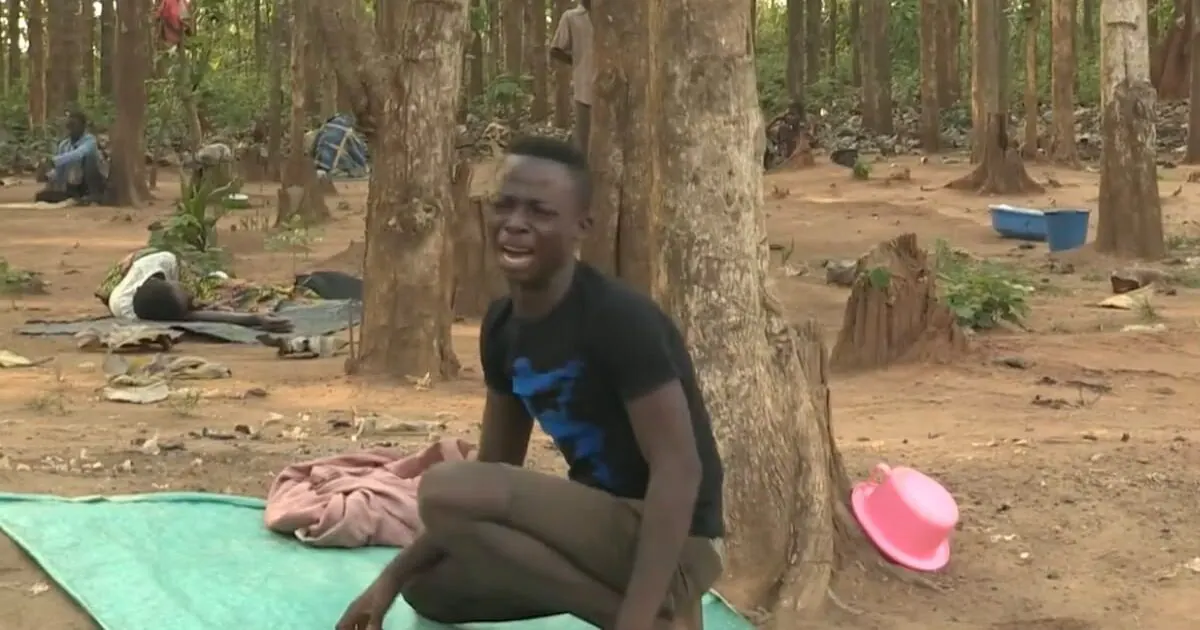
At just eight years old, Hafiz Abdallah was taken to Nyinbonya, a prayer camp in Paga, near Ghana's border with Burkina Faso. His mother says he has lived there for eight years without a clinical diagnosis. Hafiz's behaviour became increasingly difficult to manage after the death of his twin brother, leading to destructive outbursts and attacks on his mother. Despite trying herbal remedies, his mother turned to the prayer camp, saying she put her faith in Allah.
Hafiz's story highlights a wider problem in Ghana, where families often turn to prayer camps, churches, or traditional healers for mental health issues rather than seeking professional help. Clinical psychologist Emmanuel Asampong says this approach is rooted in how illness is understood in Ghanaian culture. "We have usually relied on what we would say is a biopsychosocial approach to seeking health," he said. "When things happen to people, and they are not able to explain it easily, then they are quick to attribute it to some spiritual dimension."
A visit to Nyinbonya revealed a facility with tightly controlled access, where children and adults walked barefoot, some appeared malnourished and disassociated. Staff were seen pinching and slapping patients to make them behave or stop screaming. A caregiver, who spoke anonymously, said the facility was doing its best and could accommodate almost 200 patients. Hafiz's mother says keeping him at the facility gives her reassurance that he will not wander into danger.
Sarah Adjei's experience at a prayer camp was similar. At seven years old, she was sexually assaulted by a family acquaintance, leading to severe distress and nightmares. Her parents took her to a church, believing she had a spiritual problem. She spent years at the church, subjected to intense prayer, healing, and deliverance. Now 21 and studying psychology, Sarah believes she needed professional mental health support. "I don't believe the solution is completely to reject faith because spirituality is deeply important to recovery for many Ghanaians," she said.
Psychiatrist Dr Abigail Harding says that while faith can be important to recovery, it should not come at the cost of an individual's human rights or dignity. She notes that practices such as chaining, forced fasting, and isolation can further traumatize patients and delay effective treatment. "Mental illness is a medical condition, point blank, and as such the treatment should be humane; it should be evidence-based and definitely should be aligned with Ghana's mental health acts," she said.
The problem is not only a matter of belief but also access to mental health services. Dr Josephine Stiles Darko, deputy head of communications at Ghana's Mental Health Authority, says the country does not have enough mental health professionals, with most psychiatrists based in Accra. The Authority is working to bring mental health care closer to communities by training district health personnel and conducting specialist outreach clinics.
Experts say the solution is not to dismiss traditional and faith-based providers but to work with them. Emmanuel Asampong compares the approach to integrating traditional birth attendants into Ghana's health system. "I think that is the approach we need to use for mental health," he said. "We need to bring on board all these relevant stakeholders because people go to them anyway." Some churches already refer severe cases to psychiatrists and psychologists, inviting clinics to their facilities.
Key points
- Many Ghanaian families turn to prayer camps and traditional healers for mental health issues rather than seeking professional help.
- The country faces a shortage of mental health professionals, with most psychiatrists based in Accra.
- Experts suggest working with traditional and faith-based providers to improve mental health care in Ghana.