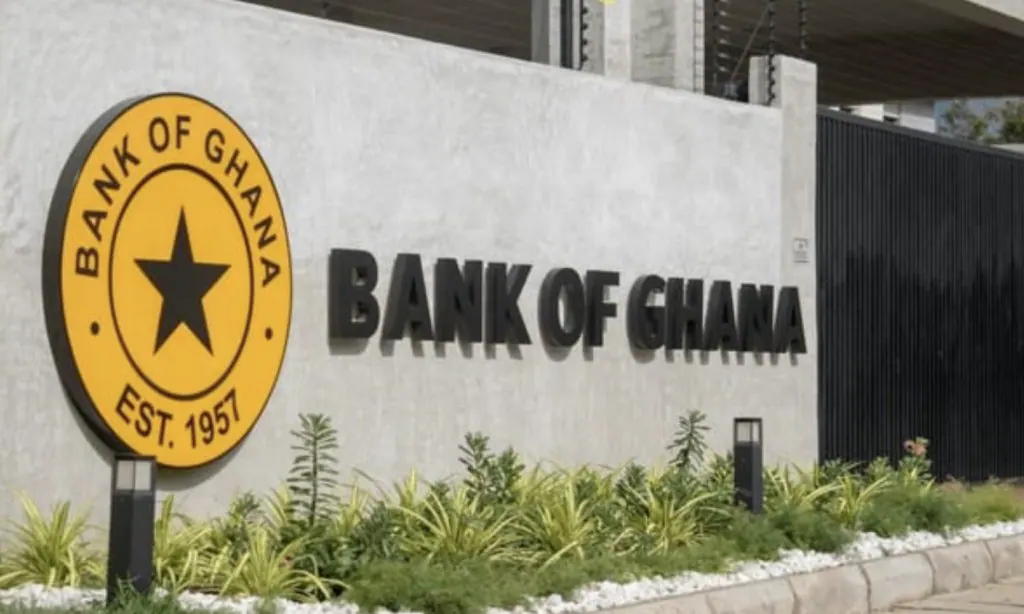
The Bank of Ghana's Monetary Policy Committee has begun its meeting to decide whether to raise interest rates to combat rising inflation and cedi pressure. The committee, which started its deliberation on Wednesday, 23 September 2026, will announce its decision on Thursday, 24 September. Inflation in Ghana climbed to 5% in August 2026, causing concern about further price pressures. The cedi has also come under renewed pressure, posing a challenge to the committee.
A higher policy rate can be used to rein in inflation and support the cedi, as it tends to cool spending and make the local currency more attractive to hold. However, this could negatively impact businesses already struggling to access credit. The current policy rate stands at 14%, which is significantly higher than the inflation rate. Some analysts argue that the gap between the two is wide enough to allow the Bank of Ghana to hold steady or consider trimming the rate.
The committee will also consider developments beyond Ghana's borders, including events in the Middle East and recent changes in US interest rates. These global factors could impact gold prices, which would directly affect Ghana's foreign exchange position. As a significant producer of gold, Ghana's economy is sensitive to fluctuations in gold prices.
The Monetary Policy Committee's decision will have a significant impact on household budgets, business loans, and the value of the cedi. A rate hike could help slow inflation but increase the cost of loans and mortgages, making it harder for small businesses and individuals to borrow. On the other hand, holding or cutting the rate could ease pressure on borrowers but risk allowing inflation and cedi depreciation to worsen.
The committee's verdict will be guided by economic data rather than global headlines alone. The Bank of Ghana has previously signaled that international developments do not automatically require a rate increase. The MPC's decision will be announced on Thursday, 24 September 2026, along with its assessment of inflation, the cedi, and Ghana's broader growth outlook.
The Monetary Policy Committee is the Bank of Ghana's rate-setting body, meeting periodically to review economic conditions and set the policy rate. The policy rate is the benchmark interest rate that influences how much commercial banks charge for loans and pay on deposits across the country. The committee's decision will have far-reaching consequences for the Ghanaian economy.
The effects of the MPC's decision will be felt quickly in everyday life, with implications for the cost of goods and services, fuel prices, and the cost of imported goods. The Bank of Ghana's decision will be closely watched by businesses, individuals, and investors, as it will shape the country's economic trajectory in the coming months.
Key points
- The Bank of Ghana's Monetary Policy Committee will announce its interest rate decision on Thursday, 24 September 2026.
- Inflation in Ghana climbed to 5% in August 2026, causing concern about further price pressures.
- The current policy rate stands at 14%, significantly higher than the inflation rate.