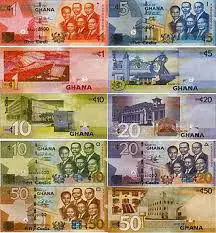
In 2025, the Bank of Ghana achieved a significant milestone with the cedi appreciating by 40.7 percent against the US dollar, marking its first annual gain in over three decades. This performance was the strongest among African currencies, according to IMF data. Concurrently, the bank recorded a substantial loss of GHS 34.95 billion, pushing its cumulative negative equity to approximately GHS 96.3 billion.
The cedi's appreciation was accompanied by a decline in headline inflation from 54.1 percent in late 2022 to 5.4 percent by the end of 2025. The bank's gross international reserves also rose to a record US$13.83 billion. However, the bank's audited statements for 2025, released on April 30, 2026, revealed a net operating loss of GHS 15.63 billion, up from GHS 9.49 billion in 2024.
The Bank of Ghana's actions are contextualized within the modern international monetary system, which rests on a structural paradox. Capital moves across borders in quantities that dwarf the reserves of any single monetary authority, yet central-bank mandates remain resolutely national. This often results in misalignments being absorbed on central-bank balance sheets.
The Plaza Accord of September 22, 1985, and the Louvre Accord of February 1987, are cited as examples of coordinated exchange-rate statecraft. These accords involved the G-5 economies and demonstrated the efficacy of multilateral intervention in stabilizing exchange rates. However, Ghana, acting as a unilateral stabilizer, has replicated some of these outcomes without the benefit of multilateral credibility or burden-sharing.
The Bank of Ghana's governor, had to intervene alone in the foreign exchange market to stabilize the cedi, trading institutional equity for currency stability. This action was taken under a US$3 billion IMF Extended Credit Facility and amid a legacy of fiscal dominance and structural excess liquidity.
The research defines an institution like the Bank of Ghana as a "solitary stabiliser," characterized by its solo intervention, lack of multilateral signal, and absence of a formal guarantee of recapitalization. The costs of stabilization are thus borne entirely by the bank's balance sheet, with losses accumulating against an implicit and untested promise of fiscal support.
The Bank of Ghana's experience highlights the challenges faced by central banks in emerging markets in maintaining exchange rate stability amid capital mobility and monetary policy constraints. Despite these challenges, the bank's actions have yielded positive outcomes, including a stable cedi and low inflation, albeit at a significant financial cost.
Key points
- The Bank of Ghana's 2025 performance, marked by a 40.7% cedi appreciation and record losses, underscores the complexities of unilateral monetary policy actions in stabilizing exchange rates.
- The solitary stabilizer model, as demonstrated by the Bank of Ghana, involves significant financial costs, including a GHS 34.95 billion loss, but can achieve macroeconomic stability.
- The experience of the Bank of Ghana offers insights into the challenges and potential outcomes of unilateral exchange rate stabilization in emerging markets.