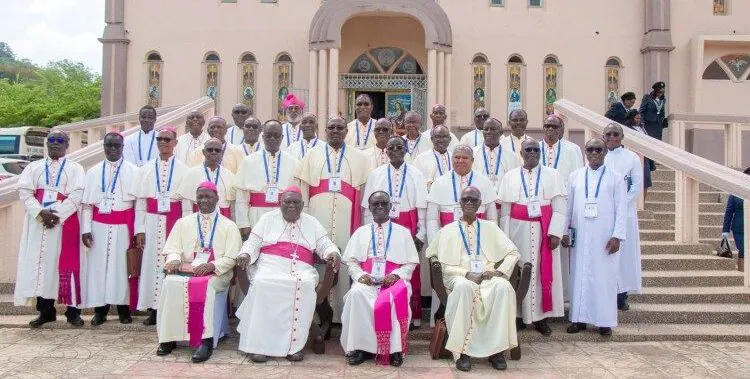
Ghana's Catholic bishops have expressed their support for a proposed parliamentary probe into the country's drug trafficking crisis. The bishops, through the Ghana Catholic Bishops' Conference (GCBC), have urged lawmakers to scrutinize how narcotics consignments have passed through the country's ports and borders. They also demand accountability from relevant state institutions. This call for action follows a recent seizure of a large quantity of cocaine by French customs authorities.
The seizure, which occurred on September 10, involved nearly 3.9 tonnes of cocaine concealed in a container of plastic waste that had arrived from Ghana and was reportedly destined for Antwerp, Belgium. The shipment had a street value of £225 million ($305 million). The bishops described the parliamentary inquiry as a "legitimate and necessary step" that should proceed without delay and with the cooperation of all institutions involved.
The GCBC has emphasized the need for all institutions to cooperate fully and transparently in the parliamentary process. The bishops have also urged lawmakers to conduct the probe with "sobriety" rather than partisan point-scoring. This comes as more than 40 members of parliament have petitioned the Speaker to recall the House from recess under Article 112(3) of Ghana's 1992 Constitution and Order 53 of Parliament's Standing Orders.
The proposed parliamentary scrutiny would involve ministers responsible for the Interior, Transport, and National Security, together with officials from the Narcotics Control Commission (NACOC), Ghana Ports and Harbours Authority, Ghana Revenue Authority, Ghana Immigration Service, and National Intelligence Bureau. The probe aims to uncover the extent of drug trafficking networks in Ghana and identify areas for improvement in the country's fight against the menace.
The Catholic bishops' endorsement of the parliamentary probe is seen as a significant development in the country's efforts to combat drug trafficking. The bishops' call for cooperation and transparency is expected to resonate with lawmakers and the general public. The parliamentary inquiry is also expected to shed light on the role of state institutions in the drug trafficking crisis.
The drug trafficking crisis in Ghana has been a major concern for authorities in recent years. The country's strategic location and porous borders have made it a transit point for narcotics bound for other countries in Europe and beyond. The government's efforts to combat the menace have been hampered by a lack of resources and corruption.
The parliamentary probe into Ghana's drug trafficking crisis is expected to get underway soon. The outcome of the inquiry will be crucial in determining the next steps in the country's fight against drug trafficking. The Catholic bishops' support for the probe is expected to help build momentum for the inquiry and ensure that it is conducted in a thorough and transparent manner.
Key points
- The Catholic bishops of Ghana have backed a parliamentary probe into the country's drug trafficking crisis, urging lawmakers to investigate how narcotics pass through ports and borders.
- A large quantity of cocaine was recently seized by French customs authorities, with a street value of £225 million ($305 million).
- The parliamentary inquiry aims to uncover the extent of drug trafficking networks in Ghana and identify areas for improvement in the country's fight against the menace.