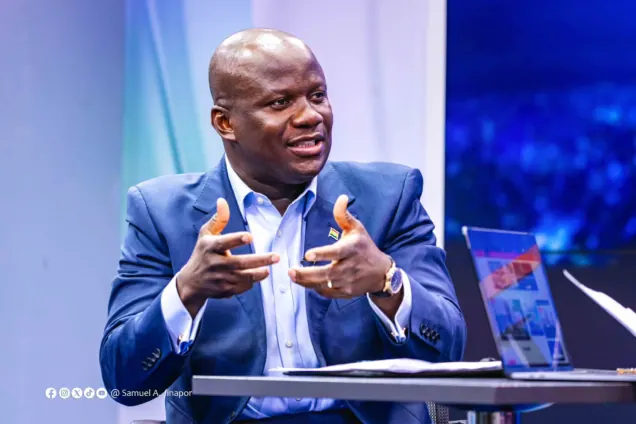
The Ghanaian government's decision to apply for membership in the BRICS economic bloc has raised concerns about the potential implications for the country's national interests. Samuel Abu Jinapor, Ranking Member of Parliament's Foreign Affairs Committee, has cautioned that while membership could provide new opportunities, including access to funding and diversified international partnerships, it is crucial to carefully assess the risks and benefits.
Foreign Affairs Minister Samuel Okudzeto Ablakwa announced that Cabinet had approved Ghana's decision to formally apply to join BRICS, as part of efforts to diversify the country's international partnerships and deepen South-South cooperation. Jinapor emphasized that Ghana's foreign policy must prioritize the country's national interest, stating that there is no benefit in a foreign policy move if it does not serve the national interest.
Jinapor questioned the potential implications of Ghana's membership, particularly with regards to funding from the New Development Bank (NDB). He noted that access to funding from the NDB requires authorization from the International Monetary Fund (IMF), raising concerns about Ghana's financial independence. The former Lands and Natural Resources Minister stressed that Parliament must thoroughly examine the possible impact of increased economic and political influence from major BRICS countries such as China and Russia.
Jinapor also urged the government to study the experiences of countries that have already joined BRICS, citing Ethiopia as an example. Ethiopia has benefited from assistance and funding opportunities through the NDB but has also faced concerns over its trade imbalance and increased imports from BRICS countries, particularly China. Ghana can learn valuable lessons by examining how membership has affected the economies and international relationships of countries that have already joined the bloc.
BRICS currently has 11 full members, including Brazil, Russia, India, China, South Africa, Egypt, Ethiopia, Iran, Indonesia, Saudi Arabia, and the United Arab Emirates. Jinapor also questioned how Ghana's existing relationship with South Africa, one of the founding members of BRICS, could affect its participation in the bloc. He noted that Ghana's bilateral relationship with South Africa is currently poor, which could have implications for Ghana's participation in BRICS.
The government says the BRICS bid is intended to give Ghana greater options for development financing, trade, investment, and industrialization while complementing, rather than replacing, its existing relationships with traditional development partners. Jinapor acknowledged the government's objective of diversifying Ghana's international partnerships and strengthening cooperation with developing countries but stressed that Ghana's long-standing policy of non-alignment must also be considered.
Jinapor said Parliament's Foreign Affairs Committee had only received a general briefing from the Foreign Affairs Minister on the government's intention to pursue BRICS membership and had yet to fully interrogate the decision. He emphasized that more reflection is needed on this move, considering both the potential benefits and adverse implications for Ghana's national interest.
Key points
- The Ghanaian government has approved a bid to join BRICS, seeking to diversify international partnerships and access new funding sources.
- Samuel Abu Jinapor cautions that Ghana must carefully assess the risks and implications of BRICS membership to ensure it serves the country's national interests.
- The potential implications of BRICS membership for Ghana's economy, international relationships, and national interests require thorough examination and consideration.