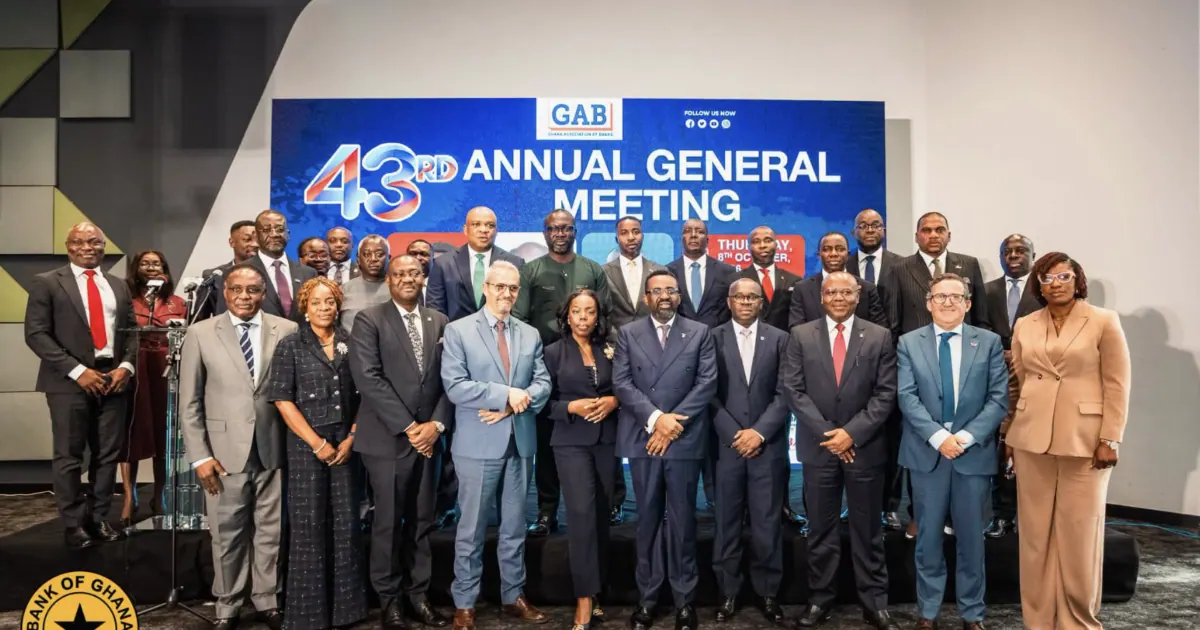
The banking sector in Ghana has experienced significant growth, with total assets rising to GH¢500.20 billion at the end of August 2026. This represents a 20.47% increase from the GH¢415.20 billion recorded in 2025. According to Dr. Johnson Pandit Asiama, Governor of the Bank of Ghana (BoG), this growth reflects improvements in the banking sector, supported by better macroeconomic conditions and regulatory and supervisory reforms undertaken by the central bank.
The Capital Adequacy Ratio of the banking sector has also improved, increasing from 18.28% in August 2025 to 19.10% in August 2026. This is significantly above the regulatory minimum of 13%. Additionally, asset quality has improved, with the Non-Performing Loans (NPL) ratio declining from 20.77% in August 2025 to 15.66% in August 2026. These indicators suggest a positive trend in the banking sector's performance and stability.
Dr. Asiama noted that all 23 banks operating in Ghana have met regulatory capital requirements, following capital restoration efforts after the economic crisis and financial asset impairments associated with the Domestic Debt Exchange Programme (DDEP). Previously, 13 banks had breached regulatory capital requirements in their 2022 audited financial statements. However, efforts involving banks, shareholders, investors, the Government, and the BoG have helped restore compliance across the sector.
Despite the progress made, Dr. Asiama cautioned that capital restoration alone is insufficient to guarantee long-term stability. He urged banks to strengthen their business models, risk management, and capacity to withstand future economic shocks. The BoG has undertaken a comprehensive thematic review of the viability and long-term sustainability of banks' business models in 2025, identifying vulnerabilities and sharing them with the respective institutions.
The BoG has commenced engagements with the boards and senior management of the affected banks and plans a second round of Business Model Analysis for 2027. These reviews aim to ensure that banks maintain sustainable business models and adequately identify, measure, monitor, and manage risks embedded in their operations. Dr. Asiama also reminded banks of the requirement to reduce their NPL ratios to the prudential limit of 10% by the end of December 2026.
The Governor emphasized that the central bank will continue to strengthen its regulatory and supervisory frameworks to preserve the gains made by the banking sector. This will ensure that stronger balance sheets translate into sustainable operations and greater support for productive economic activity. The BoG's efforts are crucial in maintaining stability and promoting growth in the banking sector.
The growth in the banking sector's assets and improvements in capital adequacy and asset quality are positive indicators for Ghana's economy. The BoG's regulatory and supervisory reforms have contributed to these improvements, and continued efforts are necessary to ensure the long-term stability and sustainability of the banking sector.
Key points
- The banking sector's assets have increased by 20.47% to GH¢500.2 billion as of August 2026.
- The Capital Adequacy Ratio has improved to 19.10% in August 2026, above the regulatory minimum of 13%.
- All 23 banks operating in Ghana have met regulatory capital requirements following capital restoration efforts.