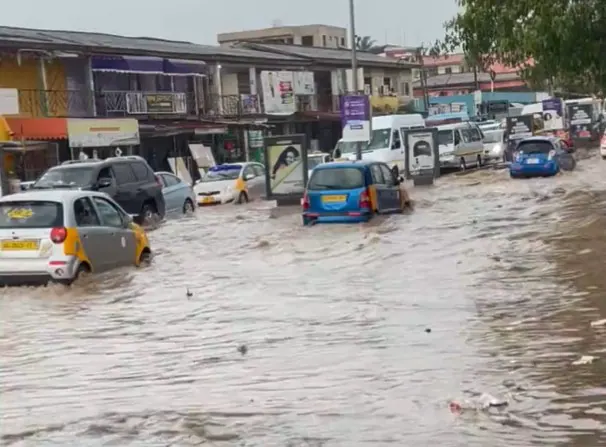
Ghana's capital Accra is bracing for another season of flooding as the rains descend upon the city, bringing with them a familiar scenario of submerged vehicles, stranded commuters, and frightened residents wading through chest-high floodwaters. The yearly event has become a ritual, with television and radio stations interrupting regular programming to bring images of the devastation to the public. Social media is also filled with posts of videos showing flooded streets, homes, and market stalls, as well as reports of human lives lost.
The affected areas, including parts of Kaneshie, Alajo, Adabraka, Weija, Tetegu, Ashaiman, Tema, and several low-lying areas, are no strangers to the annual floods. The Odaw River bursts beyond its banks, causing widespread inundation. Government officials, as is customary, visit affected individuals and communities, announcing emergency interventions to alleviate the suffering. However, this annual cycle of flooding and response has led to accusations of incompetence against the government, with opposition politicians quick to point fingers.
The causes of the flooding are multifaceted, with various stakeholders pointing to different factors. Civil engineers blame poor drainage systems, while environmentalists point to the disappearance of wetlands beneath concrete. Citizens accuse Metropolitan, Municipal and District Assemblies (MMDAs) of failing to desilt drains, and the assemblies in turn blame indiscriminate dumping of refuse and unauthorized developments. Despite the various attributions of blame, one thing is clear: the annual floods have become a predictable and recurring phenomenon in Accra.
According to studies, the principal drivers of urban flooding in Accra are the interaction between rapid urbanization, inadequate drainage infrastructure, encroachment upon waterways, weak enforcement of planning regulations, and increasing rainfall variability. These factors have been consistently known by government agencies, researchers, and international organizations for decades. The question remains as to why the government and other stakeholders have been unable to mitigate the effects of the floods, despite having advance warning of the impending disaster.
The Ghanaian government has been criticized for its response to the floods, with many arguing that more needs to be done to prevent the annual occurrence. The government has pointed to climate change, unprecedented rainfall, and inherited planning challenges as contributing factors, but critics argue that these excuses do not absolve the government of its responsibility to protect its citizens. As the floods recede and life slowly returns to normal, the cycle of blame and recrimination is likely to continue.
The impact of the floods on the city's infrastructure and economy is significant, with many businesses and homes affected by the inundation. The government has announced emergency interventions, including the provision of relief items and financial assistance to affected individuals and communities. However, the long-term solution to the problem remains elusive, and it is clear that more needs to be done to prevent the annual floods from occurring.
As the rainy season comes to an end, the people of Accra can only hope that next year's floods will be less severe. However, given the predictable nature of the phenomenon, it is likely that the same areas will be affected again. The government and other stakeholders must take concrete steps to address the root causes of the flooding, including inadequate drainage infrastructure, encroachment upon waterways, and weak enforcement of planning regulations. Only then can the cycle of flooding and response be broken.
Key points
- The annual floods in Accra have become a predictable and recurring phenomenon, with familiar areas affected and a recurring cycle of response and blame.
- The principal drivers of urban flooding in Accra are the interaction between rapid urbanization, inadequate drainage infrastructure, encroachment upon waterways, weak enforcement of planning regulations, and increasing rainfall variability.
- The government and other stakeholders must take concrete steps to address the root causes of the flooding to prevent the annual occurrence.