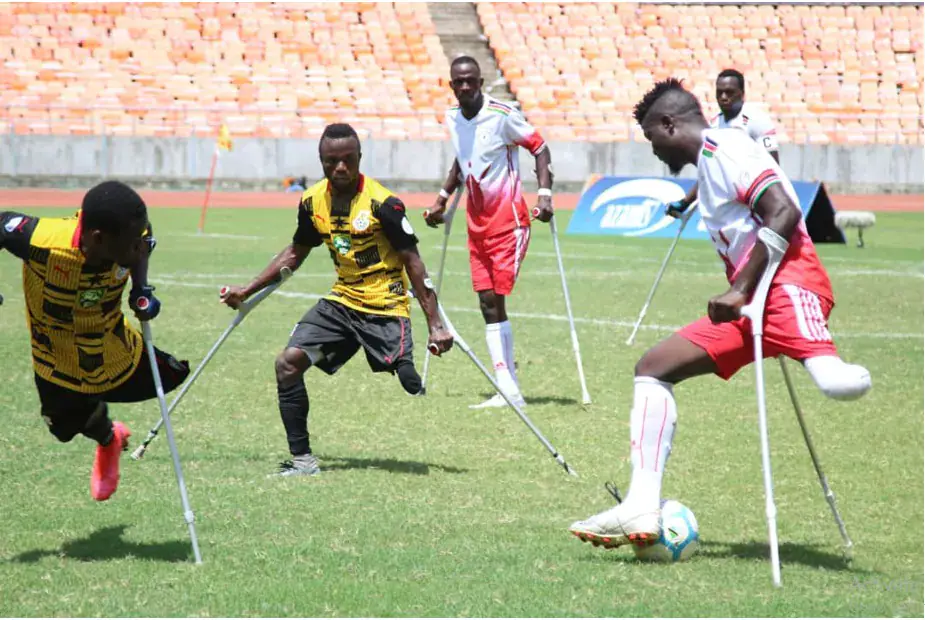
Ghana's national amputee football team, the Black Challenge, has achieved significant success in recent years, winning African titles, an African Para Games gold medal, and securing a spot at the 2026 Amputee Football World Cup. Despite their accomplishments, the team is still seeking financial support for their upcoming campaign in Mexico, where they will face Angola, Colombia, and Iraq in Group D. The team's financial struggles highlight the challenges faced by para-athletes in Ghana.
The team's captain, Richard Arthur Opentil, publicly raised concerns about outstanding bonuses and inadequate support in May 2024, during the Amputee Africa Cup of Nations in Cairo. In an October 17, 2026 phone interview, Opentil stated that two winning bonuses remained outstanding: one for the Para Games and another for the Africa Cup of Nations in Egypt. He emphasized that the state needs to reward its athletes when they win.
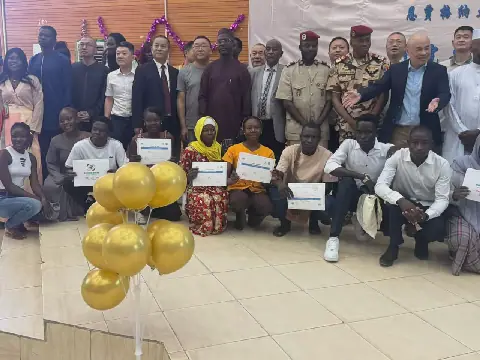
The National Paralympic Committee Ghana (NPC-Ghana) president, Samson Deen, called on the government to settle outstanding bonuses and per diems and allocate at least 5% of the Black Stars budget to amputee football at the team's unveiling in Accra on September 28. The NPC-Ghana also announced bonuses of GH¢10,000 for each player and GH¢5,000 for each official under its "Target the Podium" initiative. Deen believes that the Black Challenge "deserves everything that sports winners win for the nation."
The government has made some commitments to support the team. Minister of Sports and Recreation Kofi Adams stated that he has asked the team's leaders to submit documentation so that the government could follow up on pledges and promises "that have been made verbally." Gold Fields Ghana pledged US$500,000 in support of disability sport, with US$250,000 earmarked for the group's World Cup preparations. The company also announced a two-year partnership worth US$5 million with the Ghana Football Association (GFA).
However, the team's administrators have not yet received the pledged funds. The Secretary-General of the National Amputee Football Association of Ghana, Mohammed Harmis Muzair, explained that there was an understanding that the Black Challenge would receive US$500,000 from the wider partnership. However, requests for funding had to go through the GFA, which would review its proposals before forwarding them to KPMG, the administrator of the funds. Muzair stated that the team had not received any funds yet.
The challenges faced by Ghana's para-athletes extend beyond financial support. Research on disability sport in Ghana identifies inadequate funding, limited access to appropriate training facilities and equipment, and weaknesses in the implementation of inclusion policies. Para-athletes often train on rough dirt pitches, open school fields, and improvised spaces that are not designed with disabled athletes in mind. Ghana's legal framework recognizes responsibilities towards accessibility and sport, but the implementation of these policies remains a concern.
The governance of amputee football in Ghana has also been a challenge. For 13 years, the sport was caught in a dispute over who had the legitimate authority to govern and recognize it. On July 30, 2026, the High Court's Commercial Court 6 in Accra ruled in favor of the National Sports Authority (NSA) and the NPC-Ghana in a case brought by the Ghana Amputee Football Federation (GAFF). The ruling clarifies who is recognized to oversee amputee football, but it remains to be seen whether this will lead to increased funding, facilities, and grassroots development.
Key points
- The Black Challenge is seeking financial support for their 2026 World Cup campaign.
- The team has achieved significant success in recent years, but still faces challenges in terms of funding and support.
- The governance of amputee football in Ghana has been clarified, but the implementation of inclusion policies and the provision of adequate facilities and equipment remain concerns.