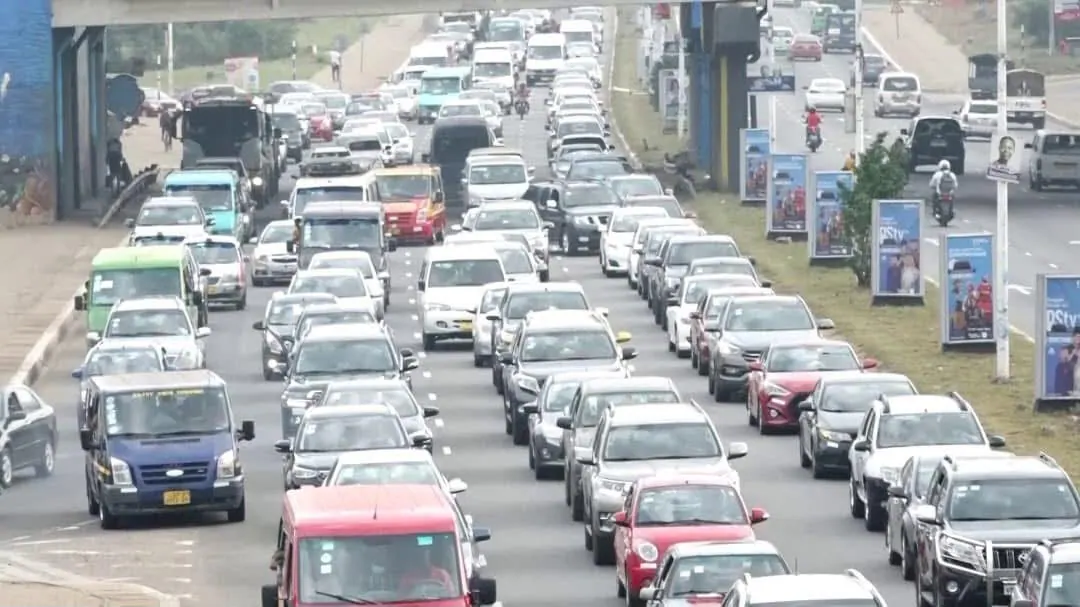
The Aayalolo contra-flow program, which began on September 29, is an initiative by the Ghanaian government to reduce traffic congestion in Accra by giving priority to high-capacity Aayalolo buses on existing roads. The program's objective, according to Local Government Minister Mahama Ayariga, is to attract private car users to public transport, rather than displacing trotro operators. The program's success will depend on various factors, including its impact on reducing traffic congestion and encouraging private car users to switch to public transport.
Accra's traffic crisis is a complex issue, fundamentally a public-transport, urban-planning, and commuting crisis. Thousands of workers commute long distances to work every morning due to the lack of affordable housing near employment centers. The unreliability of public transport forces many to opt for private cars, which contributes to the city's traffic congestion. To effectively address the issue, the government needs to make public transport reliable, frequent, affordable, comfortable, and predictable to compete with the convenience of private cars.
The Aayalolo contra-flow program raises questions about its potential impact on Accra's traffic crisis. While it may make Aayalolo buses faster, it is unclear whether it will significantly reduce the number of private cars on the road. If the buses mainly attract passengers who would otherwise use trotros, the number of vehicles removed from the roads may be relatively modest. The government has explained that Aayalolo will handle longer-distance journeys, while trotros continue to serve shorter routes.
To measure the program's success, several key indicators need to be tracked, including the number of private vehicles removed from the roads, the number of commuters carried daily, the time saved, and the impact on total congestion. The program's effectiveness will also depend on its integration with other transportation initiatives, such as reliable mass transit, better interchange systems, and improved pedestrian infrastructure.
Experts argue that a sustainable solution to Accra's traffic crisis requires a comprehensive approach that addresses the root causes of the problem. This includes coordinated land-use planning, stronger traffic management, and a serious effort to bring jobs and housing closer together. While the Aayalolo contra-flow program is an experiment worth watching, it should not be mistaken for a comprehensive solution to the city's traffic woes.
The government deserves credit for attempting to address Accra's traffic crisis, but it must also be prepared to measure the results honestly. The real test of the program's success is whether it can get ordinary Ghanaian workers to work and back home faster, cheaper, and with less stress. Until that happens, it is premature to hail the Aayalolo contra-flow program as a solution to Accra's traffic crisis.
The Aayalolo contra-flow program is part of a broader effort to improve Ghana's transportation infrastructure. The government has committed to investing in skills development and training, with Germany recently committing $132 million to support this initiative. As the government continues to experiment with innovative solutions to Accra's traffic crisis, it must prioritize a comprehensive approach that addresses the root causes of the problem.
Key points
- The Aayalolo contra-flow program may not be a comprehensive solution to Accra's traffic crisis.
- The program's success will depend on its impact on reducing traffic congestion and encouraging private car users to switch to public transport.
- A sustainable solution to Accra's traffic crisis requires a comprehensive approach that addresses the root causes of the problem.