Ghana's educational landscape includes seven female-only Colleges of Education, each with a unique history. These institutions were primarily established by missionary organisations to expand education for girls and train women to become teachers. The colleges have played a significant role in training generations of women teachers across Ghana.
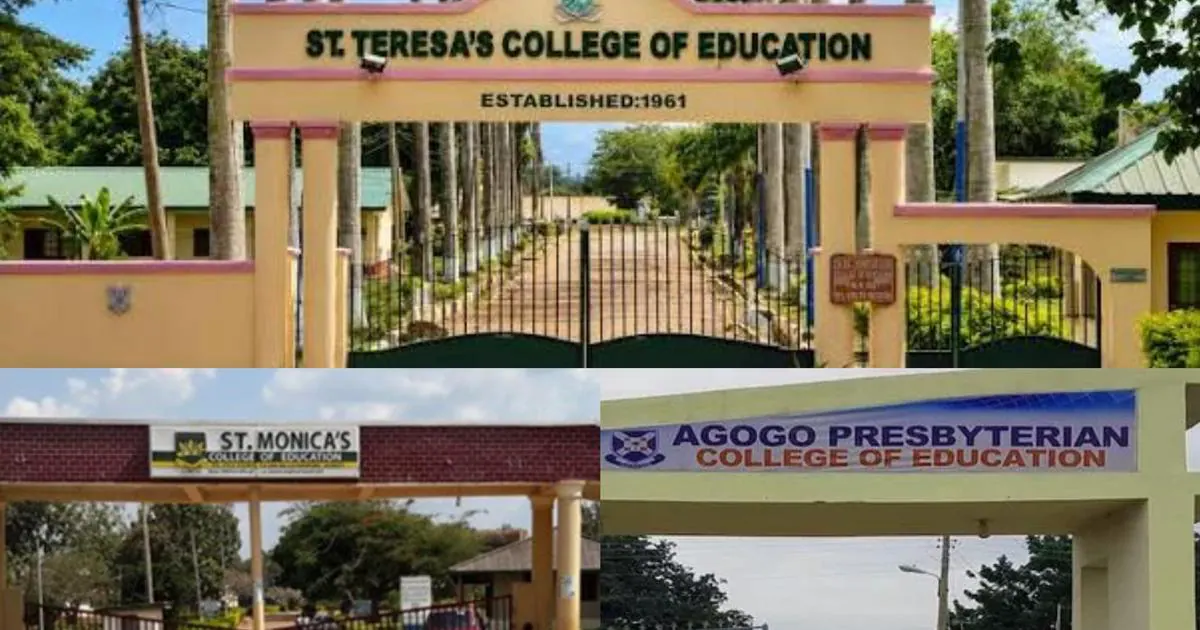
The Agogo Presbyterian Women’s College of Education in the Ashanti Region was established from a girls’ boarding school created by the Basel Mission in 1931. It developed into a teacher-training institution and was taken over by the Presbyterian Church in 1950. Interestingly, the college once admitted male students on a trial basis but returned to being a single-sex institution due to accommodation challenges.
The Presbyterian Women’s College of Education at Aburi has an even older connection to girls’ education, dating back to 1858 when the Basel Mission established a girls’ boarding school. The college began offering a two-year teacher-training course for women in 1928. Aburi also experimented with co-education in the 1960s but discontinued it due to inadequate facilities and disciplinary challenges.
OLA College of Education in Cape Coast was established in 1924 by the Catholic Missionary Sisters of Our Lady of Apostles. The college aimed to provide trained Ghanaian women to teach in elementary schools. It started with six students and has since grown into a degree-awarding institution. OLA identifies itself as the first all-female College of Education in sub-Saharan Africa.
St. Monica’s College of Education in Mampong, Ashanti Region, was established following a request by Asantehene Nana Agyemang Prempeh I for an institution of higher learning for women in Ashanti. The institution opened in Cape Coast in 1930 and moved to Mampong in 1936. Today, it remains a female institution and describes itself as Ghana’s only female Anglican College of Education.
Other notable institutions include St. Louis College of Education in Kumasi, established in 1960 by the Catholic Diocese of Kumasi as a female counterpart to St. Joseph's Training College. St. Teresa’s College of Education in Hohoe was established in 1961 as a Catholic teacher-training institution for women. Holy Child College of Education in Takoradi, established in 1946, has also remained associated with the training of women teachers.
The histories of these institutions reflect a period when expanding girls’ education was crucial to Ghana’s educational development. Missionary organisations established schools specifically for girls and created teacher-training programmes to produce women educators. These seven institutions remain an important part of Ghana’s teacher-training history, preserving a tradition that began when providing women with access to professional education was still a relatively new development.
Key points
- The colleges were established by missionary organisations to expand education for girls and train women to become teachers.
- Some of the colleges, including Agogo, Aburi, and St. Teresa’s, briefly admitted male students before returning to female-only education.
- The institutions have played a significant role in training generations of women teachers across Ghana.