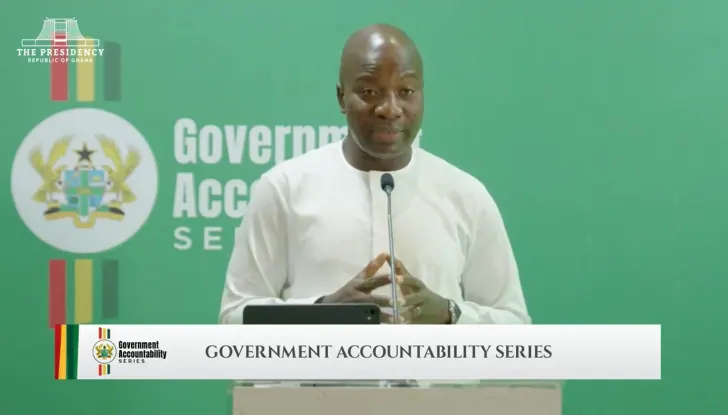
The Ghanaian government's initiative to construct "24-hour economy markets" across various districts has been officially rebranded as "District Economy Markets." This change was announced by Minister for Local Government, Chieftaincy and Religious Affairs, Mahama Ayariga, during a press briefing in Accra on October 5, 2026. The rebranding aims to clarify that the government's flagship economic policy is not solely focused on local marketplace projects.
According to Minister Ayariga, the previous name created the impression that the government's 24-hour economy programme was limited to markets. The new name better reflects the purpose of the projects and their role in supporting economic activity across the districts. This change is part of a broader effort to make local government authorities more responsive to citizens' daily needs and improve service delivery at the local level.
The market projects have been divided into two phases to accelerate their delivery. Phase One will cover the construction of market stores, sheds, and other commercial spaces, while Phase Two will provide social amenities, including police and fire stations. The government targets 100 per cent completion of Phase One by 2028. A committee has been set up to monitor progress on the projects, and contractors who fail to perform will have their contracts terminated.
Minister Ayariga also addressed the issue of property rates, citing inefficiencies, inconvenience, and corruption in the existing collection system. To address this, a new system will eliminate cash collection, requiring property owners to pay through mobile money, digital money platforms, or electronic bank transfers. This new arrangement aims to make property rate payments easier and provide residents with a clearer link between their payments and local services.
The new property rate collection system will be controlled centrally, with revenue accounted for and transferred to the assemblies for local development. Minister Ayariga expressed confidence that compliance will improve when property owners see the benefits of paying their rates, such as paved roads, drains, street lighting, and greenery. This change is expected to increase transparency and accountability in property rate collection.
Minister Ayariga provided an update on the Kejetia Market Phase Two project, stating that contractors are expected to return to the site after approval from the Finance Minister. Negotiations are also ongoing for Phase Three of the project. The government remains committed to improving conditions for market women, with Minister Ayariga describing the administration as "a pro-women's government."
Additionally, Minister Ayariga confirmed that the Board of Trustees of the National Cathedral has been formally dissolved, and the site has been handed over to the Ministry of Local Government pending further directives. He also announced a stakeholders' meeting scheduled for October 7 to review the Ayalolo bus contraflow system and determine how to make it permanent.
Key points
- The Ghanaian government has rebranded its "24-hour economy markets" initiative as "District Economy Markets" to separate infrastructure projects from policy discourse.
- The market projects have been divided into two phases, with a target of 100 per cent completion of Phase One by 2028.
- A new property rate collection system will be implemented, eliminating cash collection and requiring payments through mobile money, digital platforms, or electronic bank transfers.