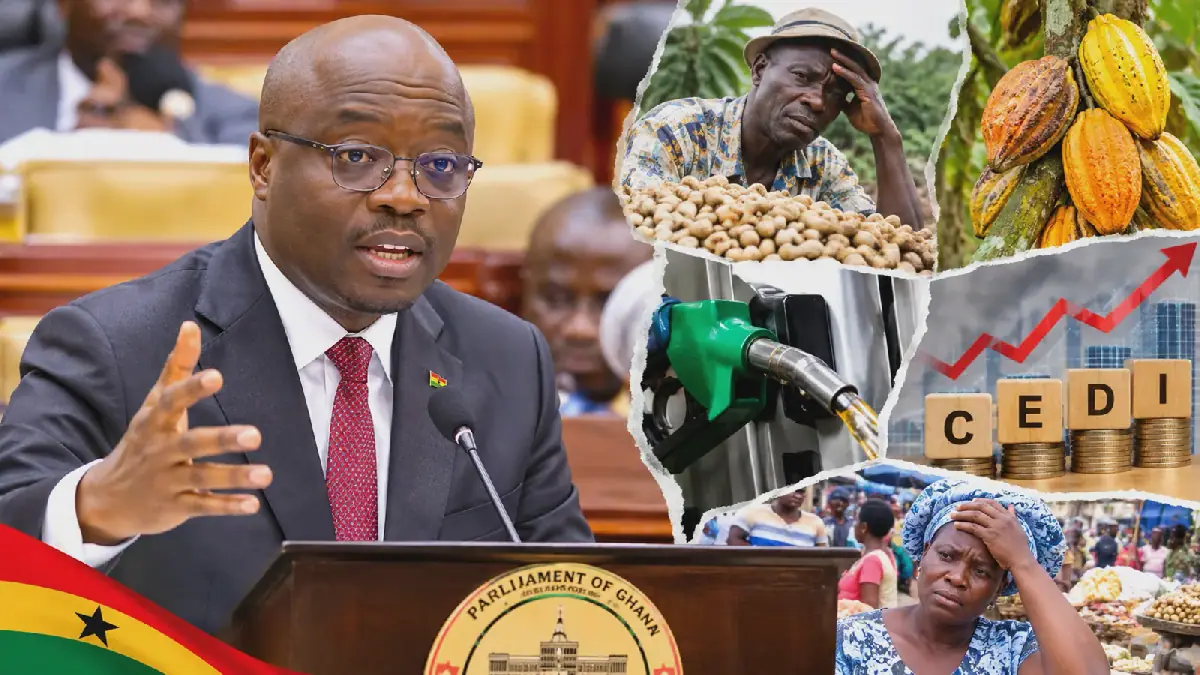
As Dr. Cassiel Ato Forson prepares to present the 2027 Budget on November 12, the government faces a critical test: translating macroeconomic stabilisation into tangible improvements in household incomes, agricultural earnings, business confidence, and the cost of living. The budget must confront the persistent pressures facing households, farmers, manufacturers, and businesses, particularly the renewed increase in inflation, deteriorating conditions in parts of the agricultural economy, elevated energy costs, and vulnerabilities in the foreign exchange market.
The Finance Minister will present the government's fiscal and economic programme at a time when the administration has considerable macroeconomic improvements to showcase. However, the central question confronting the government is whether those improvements are translating into meaningful economic relief for ordinary Ghanaians. The distinction matters, as an economy can record stronger growth, accumulate foreign reserves, reduce its inflation rate, and improve its debt position without necessarily delivering comparable improvements in the financial circumstances of households and productive enterprises.
One of the most important issues requiring a clear explanation in the forthcoming budget is the renewed increase in inflation. Ghana's disinflation programme has produced substantial improvements compared with the severe price instability experienced in previous years. However, the latest figures indicate that the downward movement has encountered resistance. Data released by the Ghana Statistical Service on November 4, 2026, showed that year-on-year consumer inflation increased to 5.5 per cent in October, from 5.2 per cent in September and 4.6 per cent in July.
The distinction between the overall inflation rate and the actual movement in individual prices is particularly important. Although headline inflation remains substantially below the 8 per cent recorded in October 2025, this does not mean that the general cost of living has returned to previous levels. It means that prices are increasing more slowly than they were a year earlier. Indeed, the October statistics reveal significant pressures beneath the headline figure, with services inflation accelerating to 11.5 per cent from 8.3 per cent in September, while non-food inflation increased to 7.9 per cent from 6.2 per cent.
Another issue deserving substantial attention is the deteriorating position of Ghanaian cashew farmers, particularly those operating in the Bono, Bono East, and other major producing regions. Cashew has become an important source of agricultural income and rural economic activity. Yet, complaints from producers suggest that the commercial benefits of the industry's expansion are not being distributed fairly across the value chain. A report by the Association of Cashew Processors Ghana documented concerns about declining farmgate prices, weak support for domestic processing, and the growing preference among farmers to sell their produce to foreign buyers with greater purchasing capacity.
The announcement of the presentation was made by Parliament's Majority Leader and Chairman of the Business Committee, James Agalga, who confirmed that the Finance Minister would submit the 2027 Budget in accordance with Article 179 of the 1992 Constitution. A credible budget should establish how government expenditure, taxation, utility pricing, transportation policy, and productivity interventions will work together to prevent renewed inflationary pressures. It must also demonstrate how the government intends to protect vulnerable households without creating unsustainable expenditure commitments or undermining the fiscal consolidation programme.
The 2027 Budget Statement and Economic Policy must go beyond an impressive recital of economic recovery statistics and demonstrate the credibility of its interventions, the resources allocated to them, and the measurable outcomes they are expected to produce. The Finance Minister must explain how the 2027 fiscal programme will address the cost pressures that headline inflation alone cannot adequately communicate.
Key points
- The budget must address the renewed increase in inflation, deteriorating conditions in parts of the agricultural economy, elevated energy costs, and vulnerabilities in the foreign exchange market.