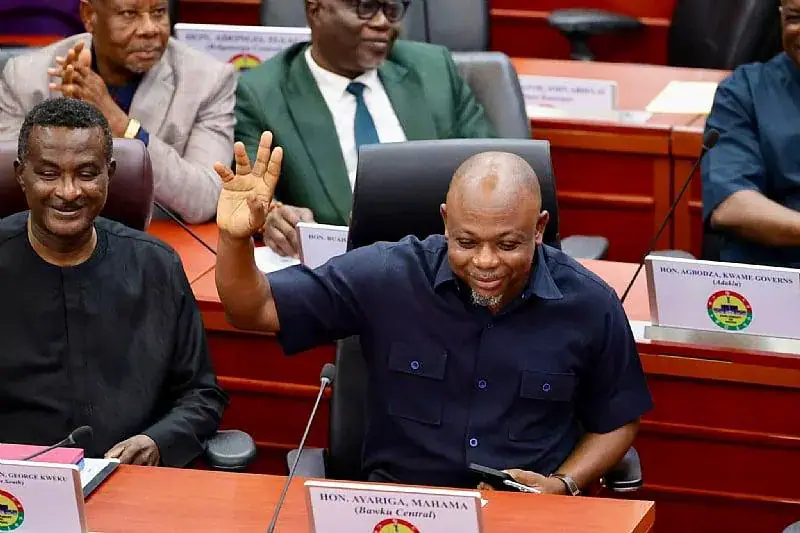
Ghana's Majority Leader James Agalga has defended the government's 2027 Budget Statement, describing it as a people-centred fiscal programme that fulfils key campaign commitments. The budget prioritizes the interests of ordinary Ghanaians while creating room for major infrastructure investments without accumulating additional public debt. Agalga cited the proposed Accra to Kumasi Expressway and the Western Corridor Railway Line as examples of major development projects to be undertaken without relying on fresh borrowing.
Agalga emphasized that the budget represents a departure from economic management approaches that depend heavily on additional taxation and borrowing to finance national development. He stated that Ghana's development should not continually be financed through increased indebtedness, warning that excessive borrowing places an unfair financial burden on future generations. The government aims to pursue infrastructure development and economic progress through greater fiscal discipline and more responsible management of public resources.
The Majority Leader defended the government's economic performance, citing a reduction in inflation. He reported that the October 2026 inflation rate stood at 5.5 per cent, a 2.5 percentage point decline from the 8 per cent recorded in October 2025. Agalga maintained that this progress demonstrates the administration's commitment to restoring macroeconomic stability.
Agalga also referenced the country's public debt position, disclosing that Ghana's total public debt stock stood at GH¢759.3 billion, representing approximately 47.5 per cent of gross domestic product, as of the end of October 2026. He stated that the administration had made progress in curbing excessive government expenditure and reducing its dependence on borrowing to finance public activities.
The government's defence of the 2027 Budget comes amid its continued emphasis on improving macroeconomic conditions, particularly declining inflation and relative stability in the foreign exchange market. However, the Minority has argued that improvements in national economic indicators have not sufficiently translated into financial relief for ordinary Ghanaians, especially households, traders and small business operators still grappling with the cost of living.
The debate on the 2027 Budget Statement is expected to conclude with a parliamentary vote on the government's proposed fiscal programme. The administration is defending its economic achievements, while the opposition continues to question the extent to which those gains are improving everyday living conditions.
Key aspects of the budget include investments in infrastructure development, such as the Accra to Kumasi Expressway and the Western Corridor Railway Line, without new taxes or borrowing. The government aims to balance economic growth with fiscal responsibility, ensuring that development does not come at the expense of future generations.
Key points
- The 2027 budget prioritizes economic growth without new taxes or borrowing.
- Ghana's inflation rate has decreased to 5.5 per cent as of October 2026.
- The government's public debt stock stands at GH¢759.3 billion, representing 47.5 per cent of gross domestic product.