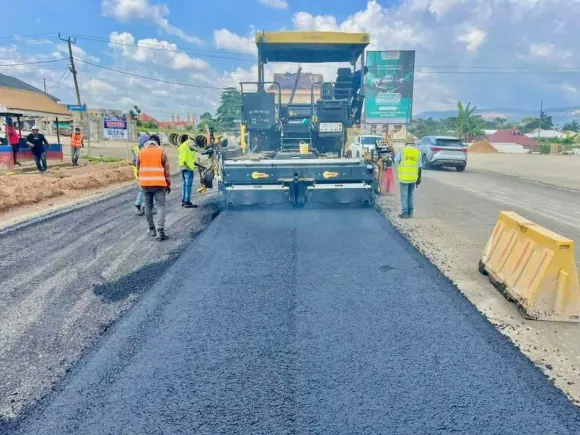
Ghana's Roads Minister, Governs Kwame Agbodza, has called for a change in the one-year defect liability period agreement in road contracts to ensure contractors are held accountable for poor road construction. The Minister believes that the current practice of declaring contractors and consultants' defect liability period over after just one year is inadequate. He made these comments during an inspection of ongoing construction works on the Accra-Kumasi N6 highway on September 29.
Minister Agbodza noted that with billions of cedis spent on road construction, it is essential to extend the defect liability period to make contractors responsible for road defects that may emerge after completion. He stated that if a road is built to last 30 years, the contractor's liability should not end after just one year. The Minister is currently engaging with the Ministers of Finance and Works and Housing to change the one-year defect liability period.
The proposed change aims to protect public investments in road infrastructure and encourage contractors to deliver high-quality works. Minister Agbodza emphasized that extending the liability period would provide an additional incentive for contractors to pay greater attention to the quality and durability of their work. His ministry is committed to enforcing quality standards and ensuring contractors comply with project specifications.
According to Minister Agbodza, although the ministry is committed to ensuring roads are constructed to required standards, there is a need to strengthen contractor accountability beyond the current liability period. He expressed confidence in the capacity of Ghanaian engineers and contractors to design and execute road projects to international standards. The government is relying on local expertise to deliver quality road infrastructure that will withstand the test of time.
Minister Agbodza urged contractors to see the delivery of durable roads as a professional responsibility, taking full account of contract specifications and quality requirements. He stated that the ministry will continue to monitor construction works closely to ensure contractors deliver value for money and that public funds invested in road infrastructure produce lasting benefits for motorists and communities.
The Minister's efforts to improve road infrastructure quality include strengthening supervision, enforcing specifications, and promoting greater accountability among contractors. He pointed out that the objective is to ensure completed road projects remain in good condition for longer periods, enabling the government to direct limited resources towards expanding road infrastructure to other communities.
By extending the defect liability period, the government aims to ensure that contractors are held accountable for the quality of their work, and that public investments in road infrastructure yield long-term benefits. This move is part of the ministry's efforts to improve the quality of road infrastructure in Ghana.
Key points
- The proposed change to the defect liability period aims to hold contractors accountable for poor road construction.
- The change will encourage contractors to deliver high-quality works and provide an additional incentive for them to pay greater attention to the quality and durability of their work.
- The ministry is committed to enforcing quality standards and ensuring contractors comply with project specifications.