The government of Ghana has abolished the 20 percent excise duty on locally produced fruit juices, providing significant relief to manufacturers and strengthening efforts to expand Ghana's agro-processing industry. This move is expected to reduce financial pressure on companies, improve competitiveness, and encourage greater demand for locally grown agricultural produce. The tax, introduced in 2023, was removed under the Excise Duty Act, 2026, following its passage by Parliament and assent by President John Dramani Mahama.
The exemption took effect on October 1, 2026, and was announced by Finance Minister Dr Cassiel Ato Forson during the presentation of the 2026 Mid-Year Budget Review. The decision responds to years of appeals from local beverage manufacturers, who argued that the tax increased production costs and weakened their ability to compete with imported products. The Food and Beverages Association of Ghana has welcomed the measure, commending the Finance Minister for responding decisively to the industry's concerns.
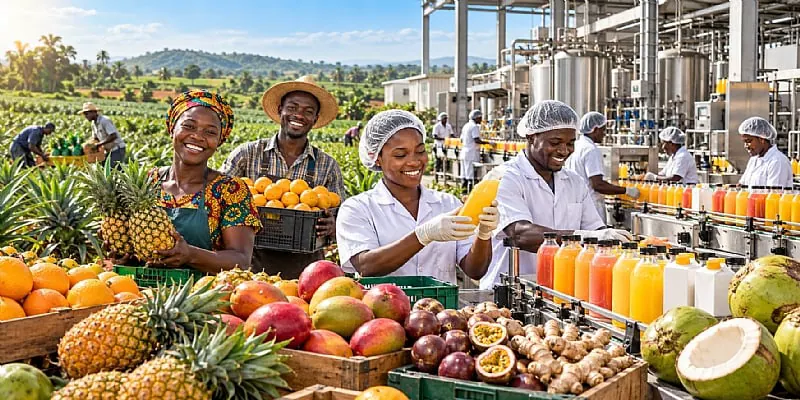
Local producers maintained that taxing fruit juices manufactured in Ghana discouraged investment and undermined the use of locally grown agricultural produce. Removing the duty is expected to encourage greater demand for pineapple, citrus, mango, passion fruit, ginger, coconut, and other locally available raw materials. This could also strengthen the connection between farms and factories, allowing manufacturers to have more capital for equipment, expansion, product development, and marketing.
Increased production could generate a more reliable market for farmers, reduce post-harvest losses, and encourage the cultivation of fruits on a larger scale. Consumers may also benefit through lower or more stable prices for locally produced juices, although this will depend on how much of the tax savings manufacturers pass on to the market. The Finance Minister has encouraged the Food and Beverages Association to work with the government to develop practical solutions to seasonal fruit gluts.
Such cooperation could help factories absorb surplus produce during peak harvest periods while protecting farmers from losses caused by inadequate storage and limited market access. The exemption forms part of the government's broader industrialisation programme and its efforts to unlock Ghana's agro-industrial potential. It also supports the 24-Hour Economy initiative, which seeks to promote multi-shift production, create employment, and expand domestic manufacturing.
Under the programme, qualifying factories may receive tax and import-duty incentives when acquiring machinery and equipment for expansion or retooling. Combined with targeted tax relief, these measures are expected to encourage investment, stimulate rural employment, and reduce Ghana's dependence on imported products. The removal of the excise duty is therefore more than a concession to beverage companies; it has the potential to support farmers, strengthen local manufacturing, and retain more value within Ghana's economy.
The real test will be whether manufacturers respond by purchasing more local produce, expanding production, creating jobs, and making Ghanaian fruit juices more affordable and competitive. If properly implemented, this policy could have a positive impact on Ghana's economy, and its effects will be closely monitored in the coming months. The government's efforts to support the agro-processing industry are expected to continue, with further measures likely to be announced in the future.
Key points
- The removal of the 20% excise duty on locally produced fruit juices aims to support Ghana's agro-processing industry and encourage investment in the sector.
- The policy is expected to reduce financial pressure on companies, improve competitiveness, and promote the use of locally grown agricultural produce.
- The exemption forms part of the government's broader industrialisation programme and its efforts to unlock Ghana's agro-industrial potential.