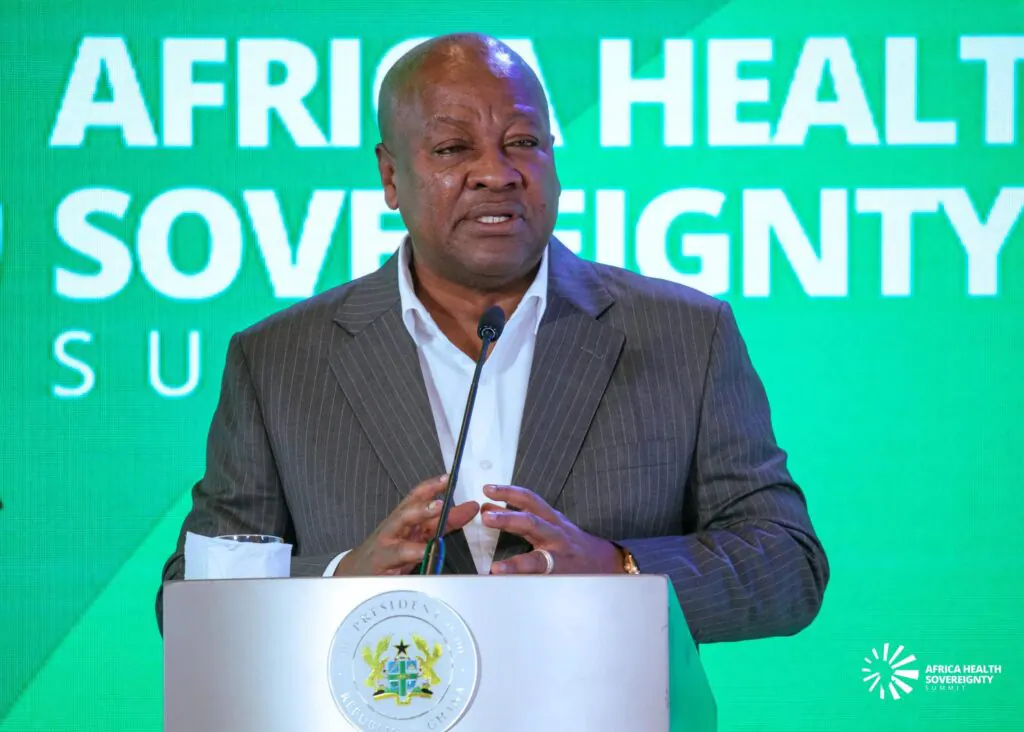
President John Dramani Mahama disclosed that Ghana rejected a proposed health compact from the United States due to unacceptable provisions. The compact was presented as part of a new framework for American health assistance following the restructuring of programmes previously supported through the United States Agency for International Development. The Ministry of Health examined the proposed agreement and submitted an Information Paper to Cabinet, which raised concerns about the extent of information Ghana would be expected to provide and the conditions attached to the proposed assistance.
One of the provisions that raised concerns was access to health information. The proposed arrangement required Ghana to provide the United States with the country's pathogen profile and medical records. President Mahama questioned the basis for such a requirement, particularly in relation to handling sensitive medical information belonging to citizens. The issue of health data has become increasingly significant in international health policy, particularly in questions surrounding national control, privacy, research, and management of information generated within domestic health systems.
The proposed compact also contained a counterpart financing requirement, under which Ghana would have been expected to contribute a specified amount of its own resources towards the programme. Another provision that attracted Cabinet's attention related to the regulatory responsibilities of Ghana's Food and Drugs Authority. President Mahama stated that the proposed arrangement would have prevented the FDA from exercising its normal inspection powers over medicines and other medical products supplied under the programme.
President Mahama linked the health data provisions, financing requirement, and restrictions on FDA inspection powers to Cabinet's decision to reject the proposed compact. He characterised the terms as "humiliating" and said Cabinet reached its decision with unusual speed. Following Cabinet's decision, the Minister of Health was instructed to communicate Ghana's position to the United States Ambassador.
The proposed health arrangement forms part of a wider debate over the future of international health financing following major changes to United States foreign assistance. President Mahama has argued that disruptions to external funding have exposed vulnerabilities within African health systems that have historically depended on substantial support from international development partners.
The Presidency has said Ghana's experience has strengthened the case for greater domestic capacity in areas including pharmaceutical manufacturing, medical research, vaccine production, and health financing. The government has framed this approach within the broader Accra Reset initiative, which seeks to promote stronger national and regional capacity while maintaining international cooperation.
President Mahama launched A Sovereign Future for Health, a report prepared by the High Level Panel on Reform of the Global Health Architecture and Governance under the Accra Reset initiative. The report sets out proposed political shifts and recommendations aimed at restructuring aspects of global health governance while strengthening national and regional capacity.
Key points
- Ghana rejected a US health compact due to concerns over medical data, financing, and regulatory authority.
- The proposed compact required Ghana to provide the US with its pathogen profile and medical records.
- Ghana's experience has strengthened the case for greater domestic capacity in areas including pharmaceutical manufacturing and health financing.