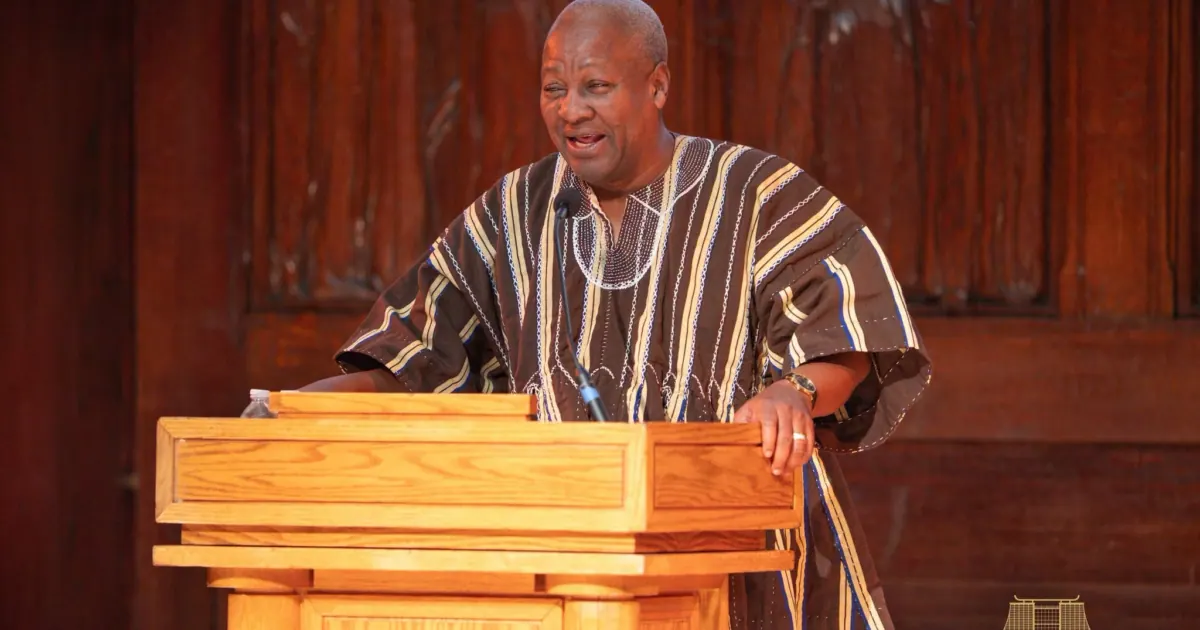
Ghana's President John Dramani Mahama has described a proposed health compact from the United States as "humiliating" and revealed the reasons behind Ghana's rejection of the agreement. The compact was intended to replace some of the health funding previously provided through the United States Agency for International Development (USAID). According to President Mahama, the Ministry of Health reviewed the document before submitting it to Cabinet, where several provisions were flagged as unacceptable.
One of the provisions that raised concerns required Ghana to provide the United States with its pathogen profile and medical records. President Mahama questioned the rationale behind such a demand, stating that it was unreasonable for one country to request another country's medical records. The agreement also required Ghana to commit a specified amount of counterpart funding, which added to the concerns.
Another provision that sparked concerns would have meant that medicines and other medical products supplied under the programme would not be subject to inspection by Ghana's Food and Drugs Authority (FDA). President Mahama emphasized that this would have undermined Ghana's regulatory authority and compromised the safety of its citizens. These provisions contributed to Cabinet's decision to reject the proposed agreement.
The proposed compact was rejected unusually quickly after it was presented to Cabinet, with President Mahama stating that he had never seen anything thrown out as fast. The Minister of Health was subsequently directed to inform the US Ambassador of Ghana's decision. The rejection of the compact was part of negotiations over new US health assistance arrangements following the restructuring of American foreign aid.
President Mahama has linked the withdrawal and restructuring of US foreign assistance to the emergence of the Accra Reset initiative and renewed calls for greater health sovereignty. He argued that the disruption to external health financing exposed the vulnerability of health systems that depend heavily on foreign assistance. In response, President Mahama launched a report, A Sovereign Future for Health, containing recommendations aimed at strengthening health systems in the Global South and reducing dependence on external funding.
The report aims to build more equal and sustainable partnerships, with greater investment in local production of medicines and vaccines, research capacity, and health systems. President Mahama emphasized that the objective is not to isolate Ghana from international partners but to create a more balanced and sustainable relationship. Other African countries have also raised concerns over aspects of the new arrangements.
Ghana's rejection of the proposed compact has sparked discussions on the country's health sovereignty and its relationships with international partners. President Mahama's comments on the issue have highlighted the need for Ghana to assert its authority and prioritize the safety and well-being of its citizens. The country's decision to reject the compact reflects its commitment to protecting its regulatory authority and ensuring that its health systems are not compromised.
Key points
- Ghana rejected a proposed US health compact due to concerns over medical records and FDA authority.
- The compact required Ghana to provide the US with its pathogen profile and medical records.
- Ghana aims to build more equal and sustainable partnerships with international partners to strengthen its health systems.