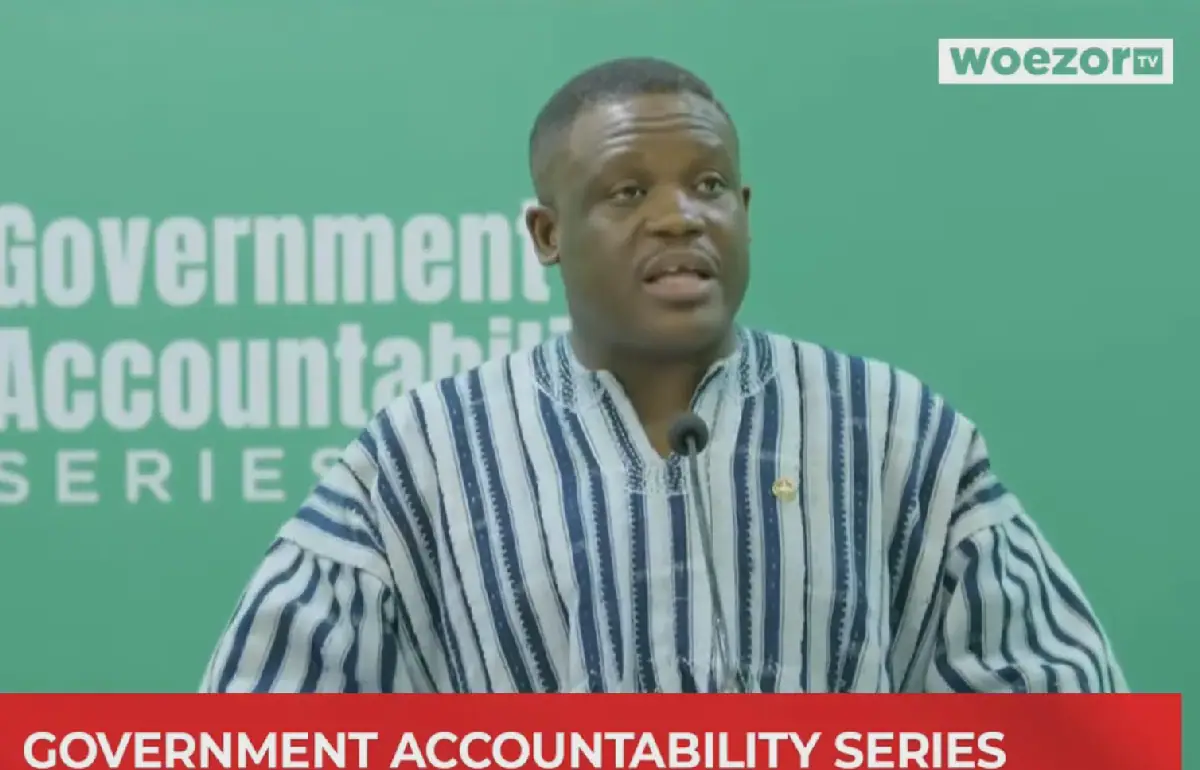
The government of Ghana has generated over $240 million from the sale of 5G spectrum licences, following the removal of Next-Gen InfraCo's (NGIC) exclusive wholesale arrangement. This move has opened up the 5G market to more telecommunications operators, allowing them to acquire spectrum licences and participate directly in deploying the technology. The announcement was made by Minister of Communication, Digital Technology and Innovations, Samuel Nartey George, during the debate on the 2027 Budget in Parliament.
In July 2026, the National Communications Authority (NCA) removed NGIC's exclusive wholesale licence and invited applications for spectrum licences in the 700 MHz, 2.3 GHz, and 3 GHz bands. This revised the 5G policy inherited from the previous Akufo-Addo administration, which had designated NGIC as Ghana's exclusive wholesale provider of 5G infrastructure. Under the previous arrangement, mobile network operators were expected to purchase 5G capacity from NGIC rather than build competing networks using their own spectrum.
Minister George contrasted the current administration's progress with the previous government's launch of its 5G policy in November 2024, which had not resulted in a service accessible to consumers. He stated that despite the launch, "we are yet to see one 5G signal in this country." The current administration's efforts have yielded results, with the government generating revenue from the sale of spectrum in the three frequency bands, with the proceeds accruing to the state.
Ghana is expected to join over 140 countries with operational 5G networks before the end of 2026, with consumers expected to start accessing the service in early 2027. Minister George disclosed that President John Dramani Mahama would announce the official launch date before the end of the year. The President's announcement will mark a significant milestone in Ghana's adoption of 5G technology.
In September 2026, Scancom Plc (MTN Ghana), Ghana Telecommunications Company Limited (Telecel Ghana), and Goal Telecommunications Ltd were cleared to advance to the final stage of Ghana's 5G spectrum licensing process. The NCA announced that the three companies had qualified to proceed to Stage 3 after completing the eligibility review and technical qualification assessment. Four applications were received by the August 27, 2026 deadline, but Infrava Ltd failed to meet the qualification requirements.
The NCA's decision to clear the three companies for the final stage of the licensing process brings them closer to securing 5G spectrum licences. The financial offers submitted by the qualified companies will be opened and ranked in the next stage of the process. This development is expected to facilitate the deployment of 5G services in Ghana, providing consumers with faster and more reliable connectivity.
The successful sale of 5G spectrum licences and the expected launch of 5G services in early 2027 mark a significant achievement for the current administration. The government's efforts to democratize the 5G market and generate revenue for the state are expected to have a positive impact on Ghana's telecommunications sector and economy. The rollout of 5G services is anticipated to drive growth, innovation, and job creation in the sector.
Key points
- The government generated $240 million from the sale of 5G spectrum licences.
- The removal of NGIC's exclusivity has opened up the 5G market to more telecommunications operators.
- Ghana is expected to launch 5G services in early 2027, with consumers expected to start accessing the service before the end of 2026.