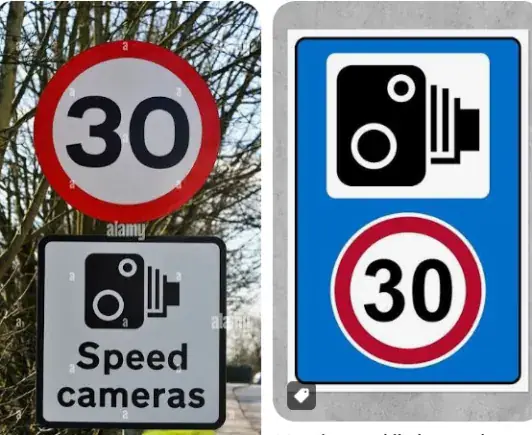
The Ghana Police Motor Transport and Traffic Department (MTTD) has addressed concerns about inadequate road signs by outlining landmark speed limits for roads without physically installed signs. With the deployment of Traffitech-Gh cameras to enforce traffic laws, the MTTD emphasized that the absence of speed limit signs does not excuse speeding. According to Assistant Commissioner of Police (ACP) Alexander Kwaku Obeng, the Department has identified specific landmarks to determine speed limits.
ACP Obeng explained that the Road Traffic Regulation 2026, L.I. 2519, Regulation 211 (General speeds), includes these landmark speed limits. He noted that while there are inadequate speed limit signs on many Ghanaian roads, motorists and cyclists must be aware of these conventional rules. The MTTD's Director of Education, Research and Training stated that these landmarks have been used since before 1968, when the UN imposed the one road engineers deployed on the road.
The MTTD has highlighted four lawful landmark speed limits for Ghanaian roads. In built-up areas with buildings, the speed limit is 50 km/h. In community areas with congregate facilities, such as health services, educational institutions, and markets, the speed limit is 30 km/h. On open field roads or highways with grasslands, trees, or forested areas, and no human habitation, the speed limit is 90 km/h, provided the road conditions allow.
ACP Obeng also mentioned that on motorways, such as the road constructed between Tema and Accra, the speed limit is 100 km/h when signs are not present. He emphasized that these landmark speed limits are part of the education and testing process for driving licenses. Motorists are expected to be aware of these limits to avoid engaging in speeding above the limits.
The deployment of Traffitech-Gh cameras aims to deter speeding, a leading cause of road crashes in Ghana. The MTTD reported that intensified public education campaigns and electronic caution notices have contributed to a reduction in road crashes, injuries, and deaths. ACP Obeng assured that the MTTD's systems are SMART, ensuring that motorists are aware of the enforcement measures.
The MTTD's initiative seeks to promote road safety and reduce accidents. By using these landmark speed limits, motorists can gauge their speed and avoid potential fines or penalties. ACP Obeng encouraged motorists to familiarize themselves with these landmark speed limits, emphasizing that drivers are expected to be aware of these regulations.
The landmark speed limits are an addition to the speed limits installed by road engineers. The MTTD hopes that this measure will result in a drastic drop in road fatalities. With the public education campaign and enforcement measures in place, the MTTD aims to promote a culture of road safety and responsible driving practices in Ghana.
Key points
- The Ghana Police MTTD has outlined four lawful landmark speed limits for roads without signs: 50 km/h in built-up areas, 30 km/h in community areas, 90 km/h on open field roads, and 100 km/h on motorways.