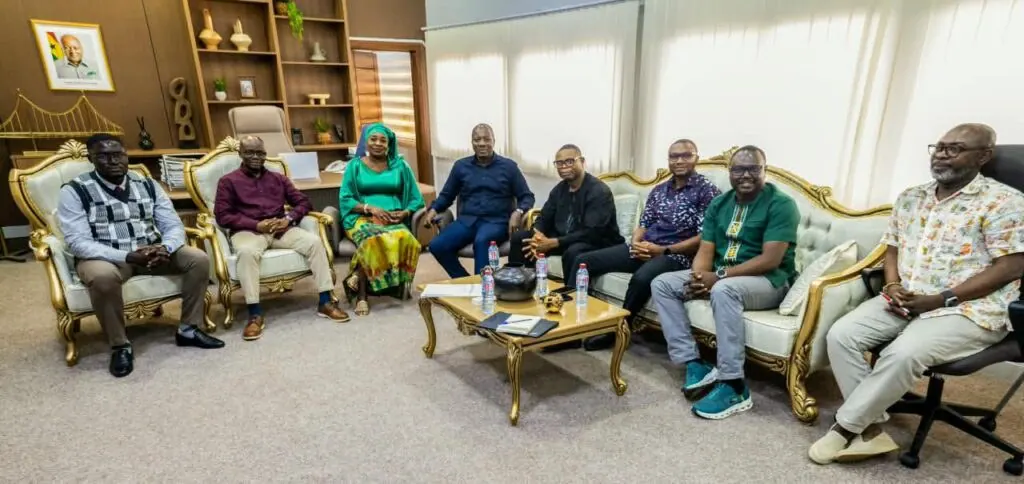
The Ministry of Local Government, Chieftaincy and Religious Affairs and policy think tank IMANI Africa have held talks to reform Accra's waste collection and sanitation. On 18 September 2026, the Local Government Minister, Chief Director, Chairperson of Parliament's Committee on Local Government, and IMANI Africa representatives met to discuss the issues. The meeting covered sanitation reform, local revenue mobilisation, urban mobility, and market redevelopment.
A key proposal involves dividing the Greater Accra Region into three operational blocks for waste collection, each with dedicated disposal infrastructure. These blocks would be further divided into smaller zones with transfer stations approximately every five kilometres. Under this plan, smaller vehicles like tricycles would transport waste from households to transfer stations, where it would be loaded onto larger trucks for disposal.
The proposed system also includes a two-bin system requiring households to separate organic from non-organic waste. Digital monitoring and possible automated penalties for those who mix the two are being considered. Additionally, a cashless, mobile-money-based fee system tied to the weight of waste delivered has been suggested. Large waste trucks might be restricted to nighttime hours to reduce their impact on daytime traffic.
These discussions build on the ministry's efforts to strengthen Metropolitan, Municipal and District Assemblies (MMDAs) and grow their internally generated funds (IGF). The engagement also revisited plans for the Agbogbloshie enclave, including redevelopment plans that involve dredging the lagoon and clearing accumulated waste. Minister Mahama Ayariga has assured Agbogbloshie traders that their businesses will not be taken away.
Market redevelopment was also on the agenda, with a focus on the stalled Kejetia Market Phase II project in Kumasi. Officials are exploring ways to cut costs and secure financing to complete the project. Similar financing issues have plagued other market projects, such as the Takoradi Market Circle project, which stalled after an Italian loan fell through.
The proposed zoning system could lead to more regular waste collection if transfer stations are placed every five kilometres, reducing the distance trucks must travel. The revenue proposals discussed could also impact how quickly assemblies can fund community projects. IMANI Africa is expected to develop detailed policy papers covering urban transport, housing, water, and economic transformation.
The participants are due to reconvene in about two weeks for a further review. The proposals discussed represent areas for further policy development rather than formally adopted measures. The reforms aim to improve sanitation, increase local revenue, and enhance urban infrastructure in Accra.
Key points
- The proposed 5km waste blocks aim to improve Accra's waste collection efficiency.
- A two-bin system and cashless fee system are being considered to support the new waste collection plan.
- The reforms also focus on market redevelopment and strengthening local government units.