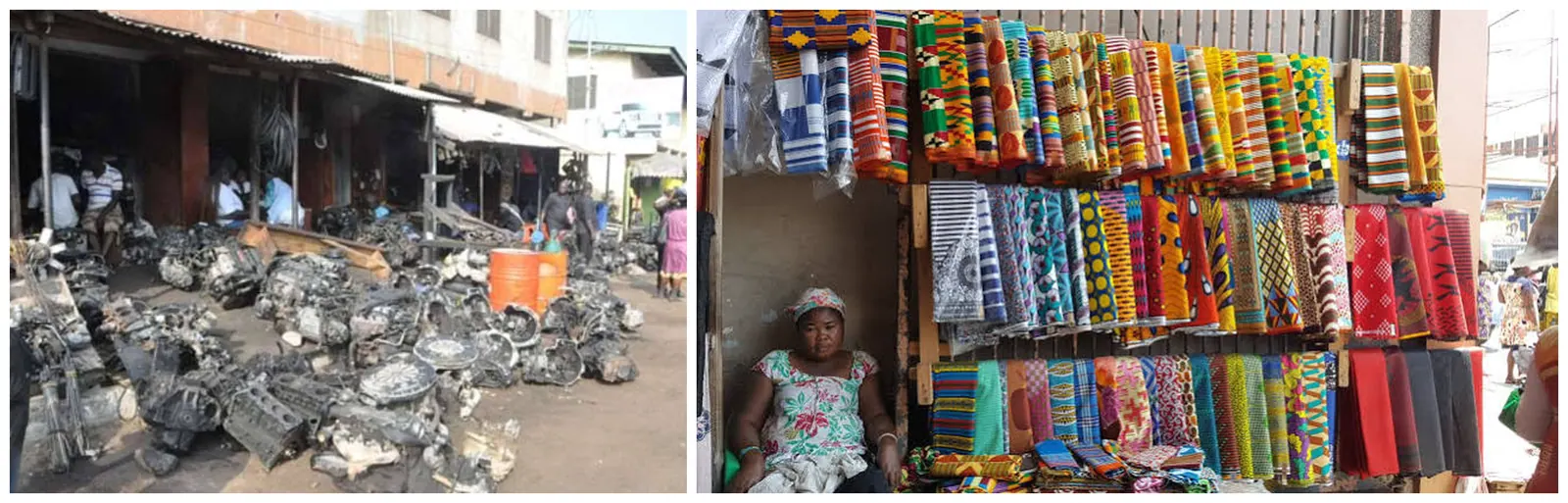
The 2025 Organised Crime Index, a report by the Global Initiative Against Transnational Organized Crime and the ENACT project, has named Makola and Abossey Okai markets in Ghana as places where fake goods are commonly sold. The report highlights that the trade in counterfeit goods is becoming a bigger problem in Ghana, scoring the country's trade in counterfeit goods at 5.5 out of 10, an increase of 0.5 from the previous edition.
According to the report, counterfeit goods are widely available in markets such as Makola, which is known for textiles, and Abossey Okai, which is known for car spare parts. The report also indicates that most electrical products sold in Accra are estimated to be counterfeit and fail to meet safety standards. Furthermore, the illegal trade of counterfeit medicines has been a long-standing issue in Ghana.
The report reveals that many of these counterfeit goods are produced in Chinese factories and smuggled into Ghana through the Port of Tema. The country's porous borders, particularly with Togo and Burkina Faso, make it easier for smugglers to operate. The port of Lomé serves as a key transit hub for illicit goods.
The 2025 Organised Crime Index also reports that smuggling of tobacco and alcohol has worsened since the last edition, with illicit trade in excisable goods scoring 5.0, up 0.5. High excise taxes encourage smuggling and illegal production, which is facilitated by organized groups and enabled by corruption within customs and law enforcement.
Ghana ranked 68th out of 193 countries, 21st out of 54 African countries, and 6th out of 15 in West Africa, with an overall criminality score of 5.77. The report highlights that the country's high ranking is due to various factors, including the growing trade in counterfeit goods and smuggling of tobacco and alcohol.
The Global Initiative Against Transnational Organized Crime and the ENACT project have been tracking organized crime trends in Ghana and other countries. Their report provides an overview of the current state of organized crime in Ghana and highlights areas that require attention from law enforcement and policymakers.
The Ghanaian government has not officially commented on the report, but it is expected that the authorities will take steps to address the growing trade in counterfeit goods and smuggling of tobacco and alcohol. The government has been working to improve border security and combat organized crime, but more needs to be done to tackle these issues.
Key points
- Makola and Abossey Okai markets in Ghana have been identified as major hubs for counterfeit goods.
- The 2025 Organised Crime Index scores Ghana's trade in counterfeit goods at 5.5 out of 10, an increase of 0.5 from the previous edition.
- The report highlights that high excise taxes encourage smuggling and illegal production, which is facilitated by organized groups and enabled by corruption within customs and law enforcement.