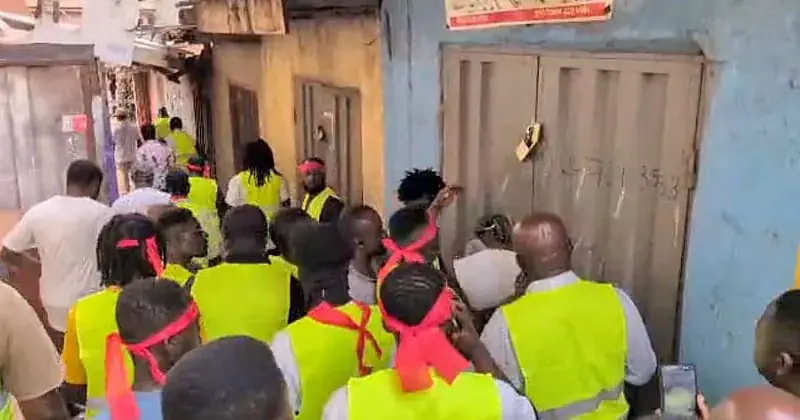
The reported decision by some Ghanaian artisans at Suame Magazine in Kumasi to forcibly close shops belonging to Nigerian spare-parts dealers is unacceptable and must be condemned. Ghana has every right to regulate commercial activities and enforce its investment laws. However, such enforcement must be undertaken by authorised state institutions, not individuals or trade groups who choose to take the law into their own hands.
Ghana's investment laws place restrictions on certain categories of trading activities reserved for citizens. Section 32(1)(a) of the Ghana Investment Promotion Authority Act, 2026 (Act 1173), prohibits non-citizens and enterprises not wholly owned by Ghanaian citizens from engaging in activities such as selling goods in markets, petty trading, hawking and operating stalls. Section 31 also establishes conditions for foreign participation in trading enterprises.
These legal provisions, however, do not confer powers on local traders or associations to intimidate, assault or arbitrarily shut down businesses operated by other Africans. The authority to enforce the law belongs to the relevant state agencies. Where there are suspected breaches, the appropriate institutions must investigate and take action in accordance with established legal procedures.
The developments at Suame Magazine raise serious questions about the willingness of some local traders to embrace competition. There have been complaints from consumers about the high prices charged by some Ghanaian spare-parts dealers, while Nigerian traders are often perceived to offer more affordable alternatives. Rather than examining their pricing structures and improving the quality of their services to attract customers, some local operators appear to be seeking to drive competitors out of the market.
In the absence of a comprehensive price-control system covering every spare part, competition plays an important role in protecting consumers from excessive charges. No trader should assume that market dominance gives them the right to dictate prices or deny consumers the opportunity to purchase goods from alternative suppliers. It is particularly unfair for businesses to charge high prices and then attempt to eliminate competitors whose products are available at lower costs.
The matter also has broader implications for Ghana's relationship with other West African countries. Ghana and Nigeria are both members of the Economic Community of West African States (ECOWAS), an organisation established to promote regional cooperation, economic integration and the movement of people and goods across the sub-region. While membership of ECOWAS does not exempt foreign businesses from complying with the laws of their host countries, it should encourage mutual respect and cooperation among citizens of member states.
The government must therefore take a firm but balanced approach. The relevant authorities should establish which businesses are operating in violation of Ghana's investment laws, distinguish between wholesale and prohibited retail activities, and ensure that any enforcement action is carried out through the appropriate legal channels. Ghanaian businesses deserve protection under the law, but consumers equally deserve access to fair prices and competitive markets.
Key points
- The government must take a firm but balanced approach to address the issue.
Reporting sources
- Suame Magazine shop closu... · ModernGhana