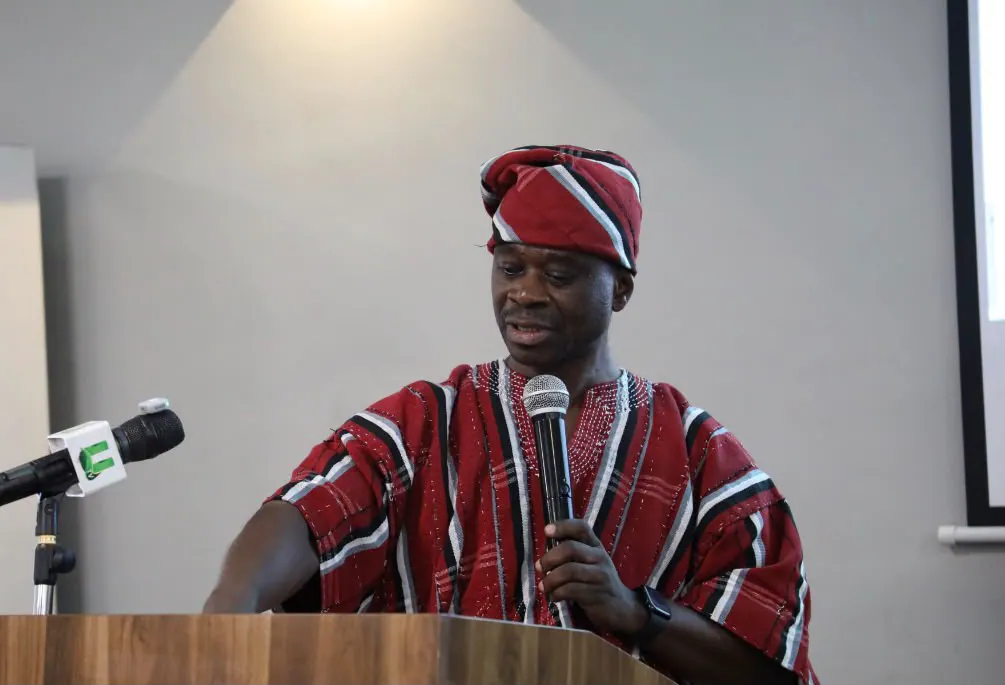
Ghana requires more effective systems to monitor climate adaptation efforts and assess their impact on farmers. The current approach merely counts projects implemented, without providing evidence on whether adaptation measures are improving agricultural livelihoods and helping communities withstand climate shocks. This was stated by Nana Dr. Antwi-Boasiako Amoah, Chair of the African Group of Negotiators (AGN), at a stakeholder workshop in Accra.
The three-day workshop brought together government institutions, research organisations, and other stakeholders to examine ways to improve the collection, coordination, and use of climate adaptation information in agriculture. Agriculture is particularly vulnerable to climate change in Ghana, as it is largely rain-fed and dominated by smallholder farmers whose livelihoods are exposed to changing rainfall patterns, rising temperatures, droughts, floods, and pests.
Nana Dr. Amoah noted that Ghana is implementing various measures to address climate change, including promoting climate-resilient crop varieties, improving climate information and early warning systems, irrigation, livelihood diversification, and better natural resource management. However, the country needs to establish whether these interventions are reducing vulnerability and strengthening farmers' resilience.
The AGN Chair emphasised that adaptation must ultimately be measured by the difference it makes in people's lives. He called for adaptation monitoring systems to capture whether women, young people, persons with disabilities, and other vulnerable groups are benefiting from climate investments. This is crucial, as differences in access to land, finance, and other resources can determine how various groups experience climate risks and benefit from adaptation measures.
Nana Dr. Amoah recommended that Ghana strengthen and connect existing reporting systems rather than create a parallel system for adaptation. He suggested that adaptation information should feed into the National Adaptation Plan, Nationally Determined Contributions, agriculture-sector planning, national statistics, and Ghana's climate reporting obligations. The preparation of the country's Second Biennial Transparency Report (BTR2) provides an opportunity to improve institutional coordination, data collection, and reporting.
The workshop also examined how Ghana's existing adaptation indicators and data can align with the Belém Adaptation Indicators under the Global Goal on Adaptation. Nana Dr. Amoah stressed that credible adaptation data would help Ghana identify gaps, improve policies and investments, and strengthen the case for adaptation finance. The workshop was supported by various organisations, including the Alliance of Bioversity International and CIAT, and the African Group of Negotiators Expert Support (AGNES).
The event brought together representatives from various government ministries, agencies, and organisations, including the Ministries of Environment, Science and Technology, Finance, and Food and Agriculture. Nana Dr. Amoah noted that lessons from Ghana could contribute to wider African efforts to strengthen adaptation tracking and reporting, emphasising that the negotiating room and the farmer's field cannot exist as two separate worlds.
Key points
- Ghana needs stronger systems to track climate adaptation and determine if interventions are reducing farmers' vulnerability to climate change.
- The country should strengthen and connect existing reporting systems rather than create a parallel system for adaptation.
- Credible adaptation data will help Ghana identify gaps, improve policies and investments, and strengthen the case for adaptation finance.