Ghana is facing a critical deadline to take full financial responsibility for its own vaccines, with just under four years left before it exits the Global Alliance for Vaccines and Immunisation (GAVI) support by January 2030. The country's health system is already under strain, with nurses leaving for placements abroad and local hospitals running short-staffed. Health experts are pressing the government to act now to avoid a funding gap that could directly affect vaccine availability for Ghanaian families.
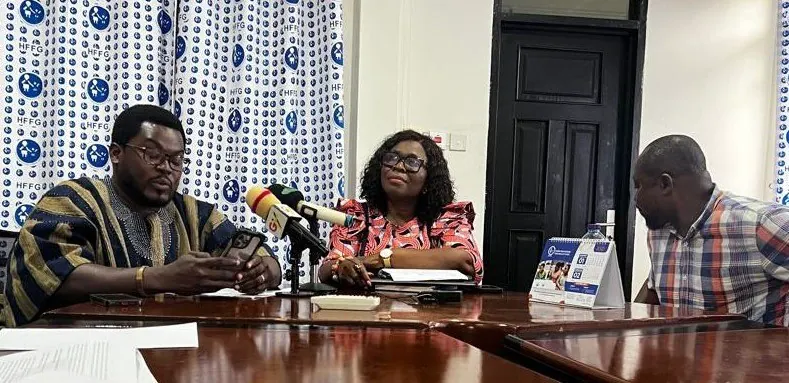
The call to action came from a group of academics, government officials, civil society representatives, and development partners who issued a position statement at the close of a symposium on sustainable financing for primary healthcare in Ghana. The event was organised by the University of Health and Allied Sciences (UHAS), Hope for Future Generations (HFFG), and the Global Health Advocacy Incubator (GHAI). The stakeholders warned that if the government waits until the transition deadline to take on full financing, decades of progress in child health could unravel.
Ghana's health budget has averaged between six and eleven percent of the national budget, falling short of the 15 percent target set under the Abuja Declaration, a commitment African Union governments made in 2001 to raise health spending. According to GHAI's Country Coordinator, Stephen Atasige, there is currently no clear, dedicated budget line for vaccine procurement, making it difficult for Parliament to track how much money actually goes into sustaining immunisation programmes.
Immunisation programmes protect children against diseases such as measles, polio, and tuberculosis. Stakeholders proposed several solutions, including explicitly embedding immunisation financing within the Free Primary Healthcare framework and creating clear budget lines for vaccines and related supplies. Atasige suggested earmarking a share of excise taxes on tobacco and alcohol, along with mining and petroleum royalties, specifically for primary healthcare and immunisation.
Other proposals included a standardised, salary-based National Health Insurance Scheme premium for formal-sector workers, as well as exploring alternative financing tools such as an airline-ticket solidarity levy, health bonds, and vaccine bonds. Atasige also called for accelerated local vaccine manufacturing and regional procurement through the National Vaccine Institute to cut dependence on outside funding.
HFFG's Executive Director, Cecilia Senoo, described immunisation as central to preventive healthcare and said the country cannot achieve Sustainable Development Goal 3 on health without sustaining primary healthcare. She added that Ghana must take ownership of its health financing to protect future generations. The government has not given a specific date for when it will respond to the stakeholders' position statement or introduce dedicated vaccine budget lines.
The country's transition out of GAVI support is expected to be completed by January 2030, after which it must cover the full cost of procuring and delivering vaccines on its own. Health experts are urging the government to speed up domestic resource mobilisation and prioritise health spending to protect the gains the country has made in immunisation.
Key points
- Ghana must take full financial responsibility for its own vaccines by January 2030 or risk a funding gap that could unravel decades of child health gains.
- The country's health budget has averaged between six and eleven percent of the national budget, falling short of the 15 percent target set under the Abuja Declaration.
- Stakeholders propose several solutions, including explicitly embedding immunisation financing within the Free Primary Healthcare framework and creating clear budget lines for vaccines and related supplies.