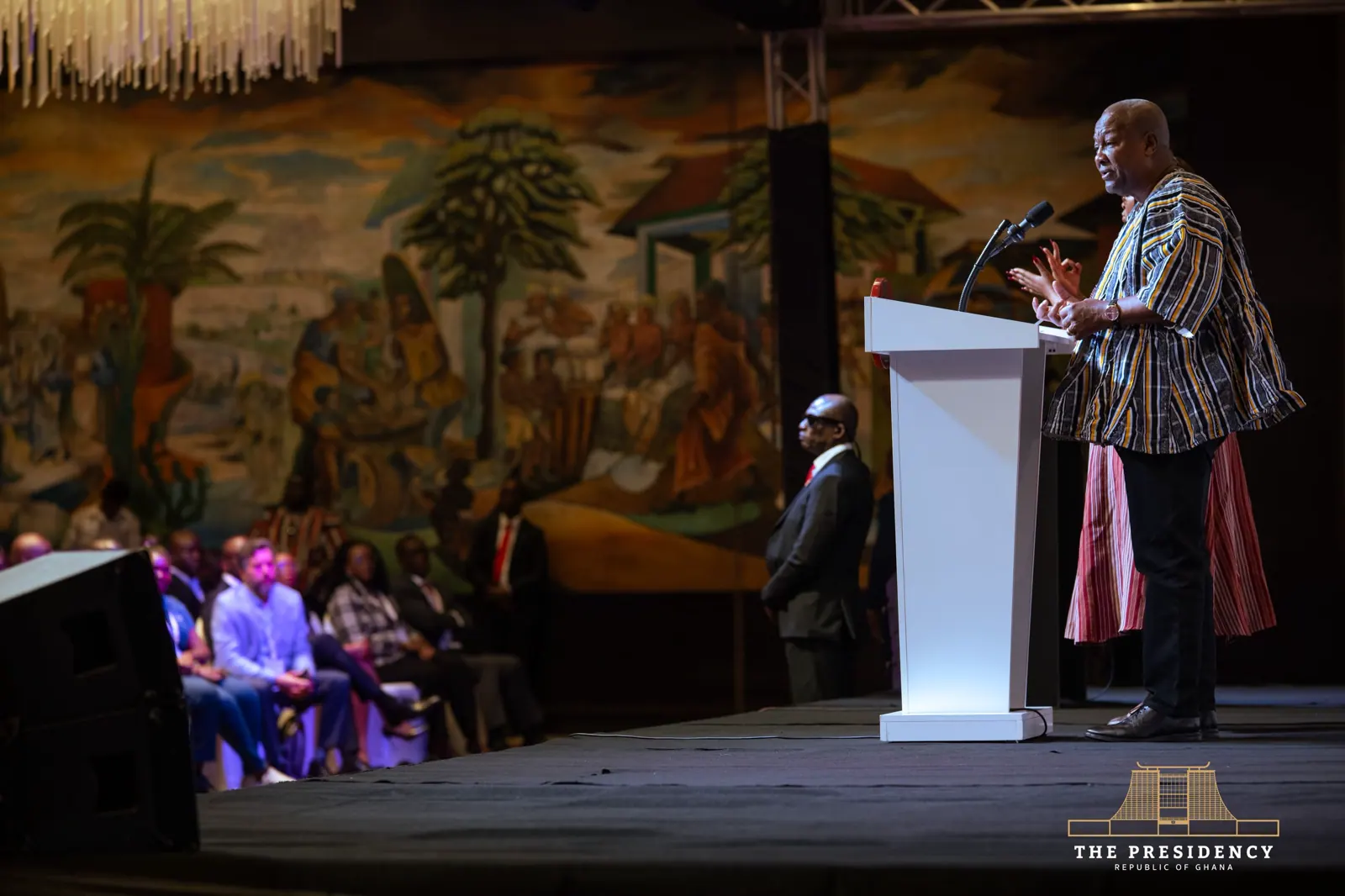
President John Dramani Mahama of Ghana has emphasized the need for the country to significantly increase its housing delivery to address the estimated 1.8 million-unit deficit. He made these remarks at the opening of the National Conference on Housing Finance in Accra on October 7, 2026. According to President Mahama, the scale of the housing challenge requires a dramatic acceleration in the delivery of affordable homes across Ghana.
Existing interventions have made some progress, but the pace must increase considerably, President Mahama noted. The National Home Ownership Fund, in partnership with institutions such as GCB Bank, Stanbic Bank, and Republic Bank, has helped over 1,000 people own homes. Additionally, the City Mortgage rate under the National Mortgage Scheme currently stands at 8.4 percent. President Mahama described this development as a good start but stressed that the country must move beyond the current scale of delivery.
To address the housing deficit, President Mahama emphasized that Ghana must count new homeowners in the hundreds of thousands each year. He said the government would work to expand access to long-term, local-currency housing finance with manageable repayments. The President noted that the housing challenge is not simply about constructing more buildings but ensuring that the homes delivered are affordable to those who need them.
More than 30 percent of Ghana's existing housing stock is inadequate, meaning the country must improve existing settlements while constructing additional homes. President Mahama called for attention to issues such as overcrowding, poor sanitation, insecure tenure, and inadequate access to utilities. He stressed that the success of the housing agenda would ultimately depend on whether the homes delivered are within the financial reach of ordinary Ghanaian households.
The government is committed to reviving stalled housing projects and making effective use of government and institutional land banks. President Mahama disclosed that the government is targeting the completion of 1,500 housing units at Saglemi by next year and is piloting a district housing program in eight districts. Projects such as Oxygen City in Ho and Green City in Dedesua would also contribute to increasing Ghana's housing stock.
President Mahama's housing agenda involves a multi-faceted approach to address the deficit. The government aims to increase the housing stock while ensuring that homes are affordable and accessible to the target population. By expanding access to long-term housing finance, the government hopes to make homeownership a reality for many Ghanaians.
The President's call to action emphasizes the need for a collaborative effort to address Ghana's housing challenge. With a focus on affordability, accessibility, and sustainability, the government aims to make significant progress in reducing the country's housing deficit. The success of this initiative will depend on effective implementation and the involvement of various stakeholders.
Key points
- Ghana needs to build hundreds of thousands of homes annually to address its 1.8 million-unit housing deficit.
- The government aims to expand access to long-term, local-currency housing finance with manageable repayments.
- Over 30 percent of Ghana's existing housing stock is inadequate, requiring improvement of existing settlements and construction of additional homes.