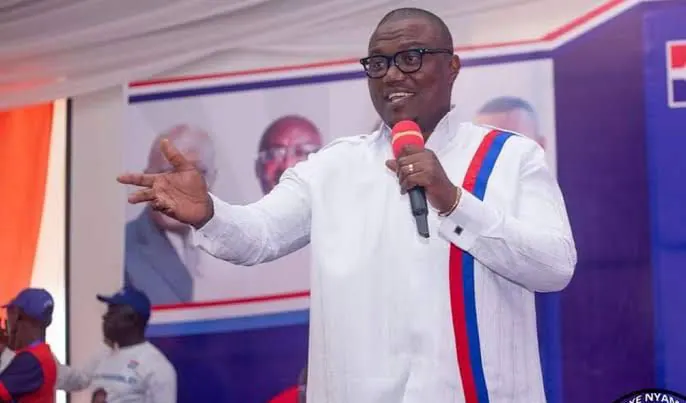
Ghanaian Member of Parliament for Effiduase-Asokore, Dr. Nana Ayew Afriye, has demanded a bipartisan parliamentary investigation into the country's vulnerability to international drug trafficking networks. He cited the alarming frequency of major narcotics seizures linked to Ghana, which has triggered concerns about national security and the country's international reputation. Dr. Afriye's call comes amid a series of high-profile drug seizures involving consignments linked to Ghana. The issue has moved beyond individual seizures, with Dr. Afriye questioning how enormous quantities of narcotics can enter Ghana's commercial networks undetected.
Recent seizures of cocaine, methamphetamine, and other narcotics connected to Ghanaian commercial channels have raised fundamental questions about the effectiveness of security controls at Ghana's ports, airports, borders, and strategic exit points. In June 2026, Australian authorities intercepted approximately 320 kilogrammes of methamphetamine concealed in a consignment declared as charcoal and allegedly shipped from Ghana. This prompted investigations by the Narcotics Control Commission and other agencies. The growing pattern of seizures threatens not only Ghana's national security but also its international reputation, legitimate businesses, and credibility as a trusted trading hub.
The concerns were further heightened by the seizure in August of 866 parcels of suspected cocaine concealed in sacks of gari within the Tema Harbour enclave. Three suspects, including a Dutch national and two Ghanaians, were arrested. Then, on September 10, French customs authorities seized 3.9 tonnes of cocaine at Dunkirk from a container carrying plastic waste that had arrived from Ghana. The drugs were estimated to have a street value of about €225 million, or approximately US$261 million. These incidents have sparked fears about the potential consequences for Ghana's economy and international relationships.
Dr. Ayew Afriye argues that every stage of the supply chain, from exporters and freight forwarders to scanning systems, port controls, customs processes, and intelligence operations, must be subjected to rigorous scrutiny. He maintains that the critical national question is how such enormous quantities of narcotics can enter Ghana's commercial and logistical networks and, in some cases, leave the country undetected before being intercepted thousands of kilometres away. The MP wants Parliament to establish the facts, identify weaknesses in the national security chain, and determine whether there has been negligence, institutional failure, or criminal collusion.
Dr. Ayew Afriye warns that the consequences of inaction extend far beyond the narcotics themselves. Repeated international interceptions of consignments connected to Ghana could expose legitimate Ghanaian exporters, shipping companies, businesses, and travellers to heightened scrutiny, while potentially increasing the reputational and commercial costs associated with Ghanaian trade. He wants Parliament to pay particular attention to allegations that some government appointees may have been involved in narcotics-related activities. The investigation must not become a political witch-hunt, but rather a genuine effort to uncover the truth and hold those responsible accountable.
To address the issue, Dr. Ayew Afriye proposes upgrading security at Ghana's major gateways, including Tema Port, Takoradi Port, and Kotoka International Airport, through advanced scanning technology, specialised detection dogs, and stronger cargo-screening protocols. He also advocates for deeper intelligence cooperation with international partners, including Interpol and the United States Drug Enforcement Administration. Real-time intelligence sharing is crucial to identifying trafficking networks before illicit consignments leave Ghanaian territory. By taking these steps, Ghana can work towards preventing future seizures and restoring its reputation as a trusted trading hub.
The MP emphasizes that if officials, private-sector actors, security personnel, financiers, facilitators, or members of organised criminal networks are found to have participated in narcotics trafficking or deliberately compromised state security systems, they must face the full force of the law. The bipartisan parliamentary investigation will help to identify areas for improvement and ensure that those responsible are held accountable. By working together, Ghana can address the issue of drug trafficking and prevent further damage to its international reputation and economy.
Key points
- Dr. Nana Ayew Afriye demands a bipartisan parliamentary investigation into Ghana's vulnerability to international drug trafficking networks.
- Recent seizures of narcotics connected to Ghanaian commercial channels have raised concerns about national security and the country's international reputation.
- The MP proposes upgrading security at major gateways and deeper intelligence cooperation with international partners to address the issue.