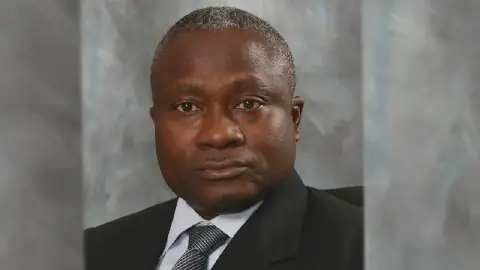
The Economic and Organised Crime Office (EOCO) has revealed that it invited MP for Manhyia, Nana Agyei Baffour Awuah, to assist in an investigation as far back as February this year, but he refused to show up. According to EOCO, the MP's law firm represents a company under investigation. A senior partner at the law firm attended EOCO and answered questions on the firm's behalf. The MP has stated that he was not under investigation.
The attempted arrest has reignited the debate about parliamentary immunity and the general conduct of EOCO. Legal experts have explained that MPs are immune from arrest only when attending parliament or traveling to and from parliament. Some MPs have misinterpreted this to mean immunity from arrest while they are MPs. This has raised concerns about lawmakers respecting the laws of the land and not engaging in criminal conduct.
The debate on parliamentary immunity has been ongoing, with some arguing that lawmakers should not be above the law. A sitting Ghanaian MP, Eric Amoateng, was jailed in the United States for drug offenses. The current MP for Asante Akyem, OK Frimpong, is under arrest and detention abroad. This has led to calls for a review of parliamentary immunity and its application.
The conduct of EOCO has also been questioned, particularly with regards to bail conditions. In the case of PDS officials and their lawyers, EOCO set bail conditions of GHS 50 million, which was later revised to GHS 100 million. The accused were also required to report to EOCO three times a week and were not allowed to travel outside Ghana or undertake long trips outside Accra.
The PDS case has raised concerns about the use of detention and bail conditions by EOCO. A senior government official involved in the case explained that the probe was necessary, even if it doesn't lead to prosecution. However, the lengthy detention and stringent bail conditions have been criticized. The case has also highlighted the need for a review of EOCO's mandate and its application.
The issue of parliamentary immunity and EOCO's conduct has sparked a wider debate about the rule of law and accountability in Ghana. Some have argued that lawmakers should be held to a higher standard and that EOCO should be more transparent in its investigations and bail conditions. The debate is expected to continue, with calls for a review of the laws governing parliamentary immunity and EOCO's mandate.
The outcome of the debate on parliamentary immunity and EOCO's conduct remains to be seen. However, it is clear that the issues raised will have significant implications for the country's governance and accountability. The case of Baffour Awuah and the PDS officials has highlighted the need for a more nuanced approach to parliamentary immunity and bail conditions.
Key points
- The debate on parliamentary immunity has been reignited, with some arguing that lawmakers should not be above the law.
- EOCO's conduct has been questioned, particularly with regards to bail conditions in the PDS case.
- The issue of parliamentary immunity and EOCO's conduct has sparked a wider debate about the rule of law and accountability in Ghana.