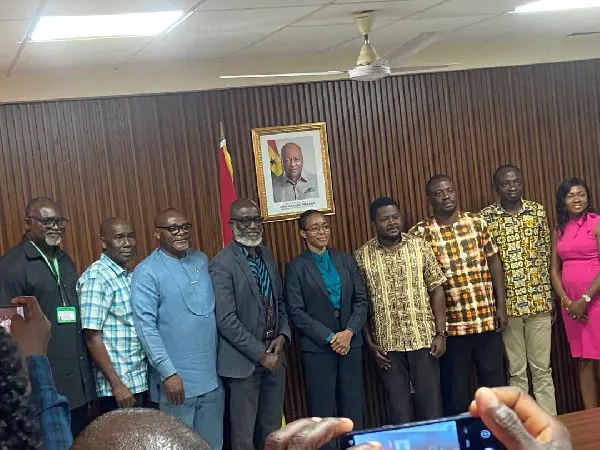
The government of Ghana is planning to upgrade the Ghana Space Science and Technology Institute (GSSTI) into a full Ghana Space Agency. This move comes after Cabinet approved plans to draft legislation for the transformation. The Minister of Environment, Science and Technology, Dr Zanator Agyeman-Rawlings, announced the development while addressing stakeholders in Accra on Friday, October 2, 2026. The upgrade will give Ghana the legal, technical, and operational backing needed to coordinate its space-related activities and run national space programmes.
According to Dr Agyeman-Rawlings, Ghana can no longer treat space science and technology as a peripheral interest. Satellite-based systems now underpin everyday essentials such as telecommunications, broadcasting, weather forecasting, navigation, mobile money transactions, agriculture, disaster response, maritime surveillance, national security, and scientific research. The proposed agency will be tasked with coordinating Ghana's space activities, facilitating research and innovation, promoting partnerships between government and the private sector, deepening international cooperation, and supporting the build-out of space infrastructure.
The minister tied the space push directly to problems many Ghanaians face daily. She said satellite imagery, drones, geospatial mapping, and artificial intelligence could help authorities track illegal mining, monitor deforestation and water pollution, and provide early warnings for flooding and coastal erosion. Such tools could also sharpen agricultural decision-making and help the country shift from reacting to environmental damage toward predicting and preventing it. This practical payoff of a space agency would be faster, more precise data to guide enforcement and emergency response.
The broader space agenda rests on five strategic pillars: institutional transformation, space infrastructure development, environmental sustainability, human capital development, and private-sector participation. Under the infrastructure pillar, the government intends to pursue partnerships and investment to strengthen the country's space-related data systems. On the human capital side, Dr Agyeman-Rawlings said Ghana's most valuable space asset would ultimately be the Ghanaian experts who design, build, and operate space technology.
Dr Agyeman-Rawlings called for closer collaboration between universities, research bodies, industry, and government, and urged more young Ghanaians to take up careers in fields such as aerospace engineering, satellite engineering, astrophysics, remote sensing, robotics, data science, and space law and policy. With Cabinet's approval secured, the next formal step is the drafting of legislation to legally establish the Ghana Space Agency. However, key implementation details, including funding and staffing, remain unclear.
The Ghana Space Science and Technology Institute (GSSTI) is the government body currently responsible for the country's space science research and satellite-related work. A space agency, as proposed, would be a more formal national institution with legal powers to coordinate space policy, manage infrastructure such as satellites and ground stations, and represent Ghana in international space cooperation. The sources do not indicate when the bill will be presented to Parliament or when the GSSTI's transition into the new agency would be completed.
The establishment of a Ghana Space Agency will enable the country to join the growing list of African nations with a dedicated space agency. The agency will help Ghana to develop its space capabilities and provide solutions to the country's environmental and socio-economic challenges. The implementation of the agency's plans and programmes will be closely watched by stakeholders, including the private sector, academia, and the general public.
Key points
- The Ghanaian government plans to transform the Ghana Space Science and Technology Institute into a fully-fledged Ghana Space Agency.
- The proposed agency will coordinate Ghana's space activities, facilitate research and innovation, and promote partnerships between government and the private sector.
- The establishment of the agency will help Ghana to develop its space capabilities and provide solutions to the country's environmental and socio-economic challenges.