Ghana's government has approved plans to formally apply for membership in the BRICS economic bloc. The move aims to expand the country's economic partnerships, attract investment, create jobs, and accelerate industrialisation. The decision was announced by Ghana's Foreign Affairs Minister, Samuel Okudzeto Ablakwa. He stated that the Cabinet of President John Mahama had authorised preparations for the country's application.
Ghana is seeking support from existing BRICS members, particularly India, Brazil, and China, for its application. The government wants to leverage its expanding relationships with BRICS countries to attract investment into domestic industries and strengthen the processing of raw materials within the country. Bilateral trade between Ghana and India has more than doubled, rising from approximately $3 billion in 2024 to around $7 billion.
Joining BRICS would provide Ghana with additional opportunities to attract investment, create employment, promote industrial development, and strengthen the country's capacity to derive greater economic value from its natural resources. The proposed membership would complement Ghana's existing international partnerships while giving the country more options in pursuing its economic development objectives.
Ghana's decision to pursue BRICS membership reflects its broader objective of moving away from dependence on the export of raw commodities by encouraging domestic processing and manufacturing. The government is particularly interested in partnerships that can help develop industries around Ghana's natural resources, enabling the country to capture more value locally and generate additional employment.
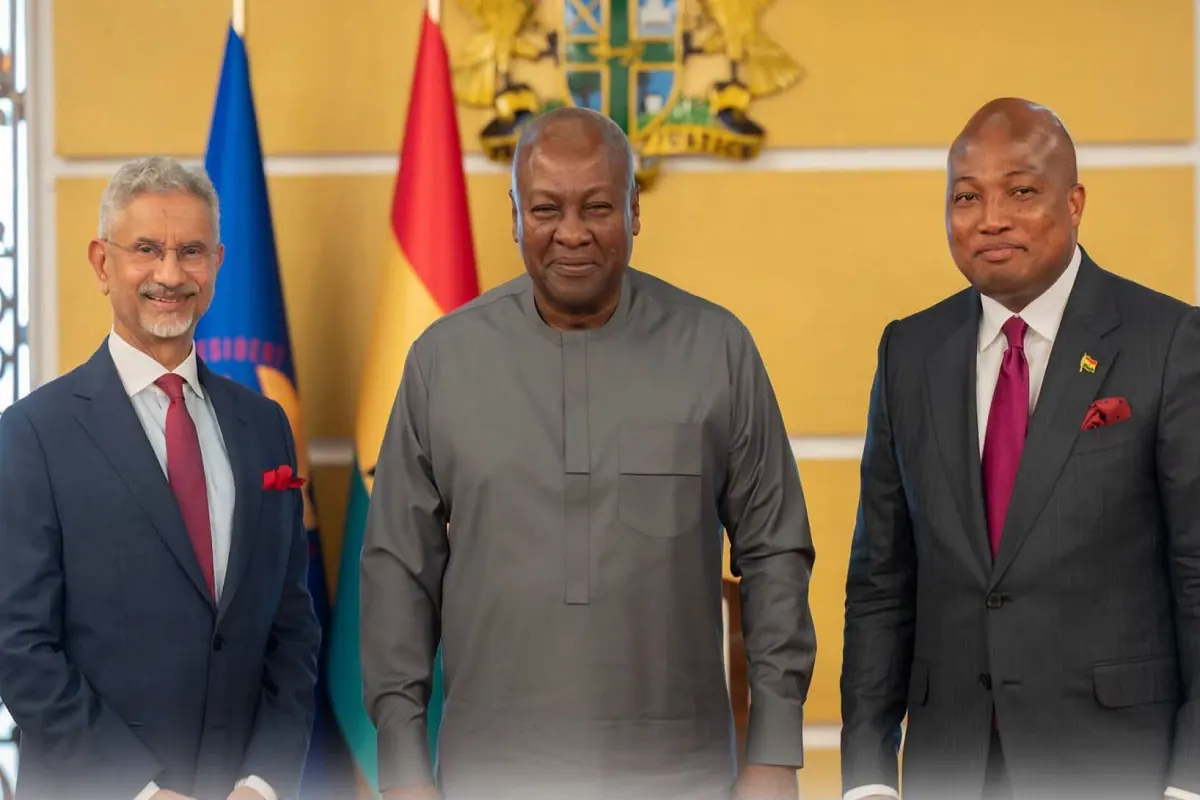
As part of efforts to advance its BRICS ambitions, Ghana has sought India's assistance with its proposed accession. Indian External Affairs Minister Subrahmanyam Jaishankar expressed support for Ghana's aspirations but stressed that the admission of new members remains a collective decision for BRICS countries.
BRICS was originally established by Brazil, Russia, India, and China, with South Africa joining the grouping in 2010. The bloc has since expanded its membership and emerged as an important platform for economic and political cooperation among emerging economies. Its growing influence has attracted interest from developing countries seeking to deepen trade, investment, and development cooperation with emerging economic powers.
For the Mahama administration, the proposed BRICS membership is being positioned primarily as an economic strategy rather than a replacement for Ghana's existing international relationships. The government believes that cooperation with BRICS countries could open additional channels for investment, trade, and industrial development while strengthening Ghana's ability to pursue its economic transformation agenda.
Key points
- Ghana's government has approved plans to formally apply for BRICS membership.
- The move aims to expand the country's economic partnerships, attract investment, create jobs, and accelerate industrialisation.
- Ghana is seeking support from existing BRICS members, particularly India, Brazil, and China, for its application.