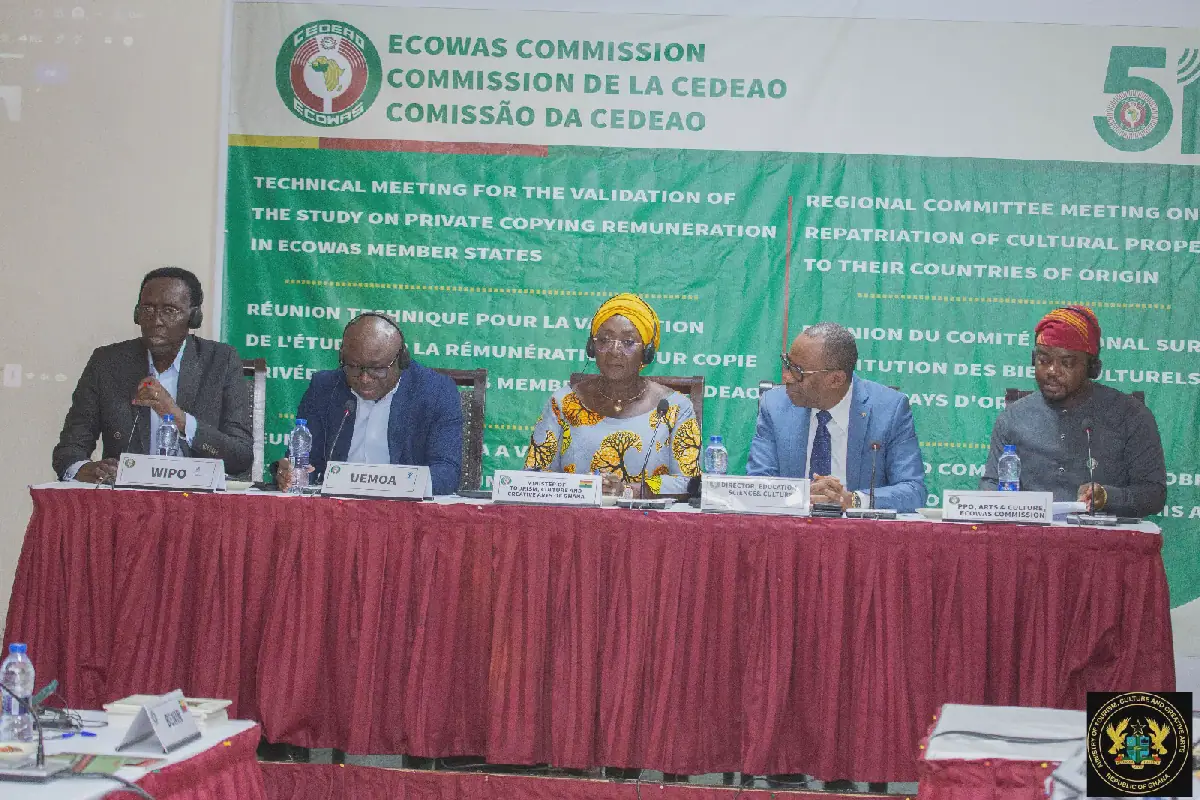
Ghana's Minister for Tourism, Culture and Creative Arts, Abla Dzifa Gomashie, has urged for stronger regional cooperation to ensure fair remuneration for creative professionals and the return of African cultural properties to their countries of origin. Speaking at technical meetings in Accra, she emphasized the importance of protecting intellectual property rights and supporting the creative economy. The meetings brought together policymakers, intellectual property experts, and cultural heritage stakeholders to discuss private copying remuneration and the restitution of cultural properties.
Minister Gomashie, welcoming the team on behalf of President John Dramani Mahama, highlighted the significance of the meetings in strengthening intellectual property protection, supporting the creative economy, and preserving Africa's cultural heritage. She stressed that creative professionals, including musicians, writers, and filmmakers, deserved fair recognition and compensation for their work. Drawing on her experience as a creative artist, she emphasized the need for effective private copying remuneration systems to address the reproduction of copyrighted works for personal use.
The Minister noted that the creative economy continued to contribute significantly to national development, employment creation, and cultural identity, making it essential to establish mechanisms to protect the rights and livelihoods of creators. She also underscored the importance of returning African cultural properties to their countries of origin, describing cultural heritage as an essential part of the continent's identity and development. The meetings aimed to advance regional efforts to protect intellectual property and recover cultural properties.
Dr. Roland Kouakou, representing ECOWAS, said the meetings would help advance regional efforts to protect intellectual property and recover cultural properties. He noted that a study on private copying remuneration, financed by the World Intellectual Property Organization (WIPO), would be validated and extended to ECOWAS member states. The study aimed to produce a roadmap for urgent actions, an action plan for the restitution of cultural properties, and a validated document on private copying remuneration.
According to Dr. Kouakou, the deliberations were expected to produce practical measures to safeguard the rights of creators while advancing the recovery and preservation of Africa's cultural heritage. He recalled previous regional efforts towards restitution, including the adoption of a political declaration by African leaders and the validation of guidelines on the return of cultural properties in Accra in July 2023. These efforts aimed to strengthen regional collaboration and establish effective mechanisms for protecting creators' rights.
The WIPO representative reaffirmed the organization's commitment to listening to member states and working with them to advance cultural development, intellectual property protection, and economic growth. The representative emphasized WIPO's role in supporting regional efforts to protect intellectual property and promote cultural development. The meetings in Accra brought together stakeholders from across the region to discuss key issues affecting the creative economy and cultural heritage.
The meetings are expected to strengthen regional collaboration and establish practical measures to safeguard the rights of creators while advancing the recovery and preservation of Africa's cultural heritage. The outcomes of the meetings will inform regional efforts to protect intellectual property and promote cultural development. Minister Gomashie's call for fair pay for creatives and the return of African cultural properties reflects the growing recognition of the importance of protecting creators' rights and preserving cultural heritage.
Key points
- Ghana's Tourism Minister Abla Dzifa Gomashie calls for fair remuneration for creative professionals and the return of African cultural properties to their countries of origin.
- The meetings in Accra aim to advance regional efforts to protect intellectual property and recover cultural properties, with a focus on private copying remuneration and the restitution of cultural properties.
- The World Intellectual Property Organization (WIPO) is supporting regional efforts to protect intellectual property and promote cultural development, with a focus on validating a study on private copying remuneration and extending it to ECOWAS member states.